

Best Accounting Software for Sole Traders UK in 2026: Xero vs QuickBooks vs FreeAgent
Best accounting software for sole traders UK compared for 2026, with MTD readiness, pricing, feature gaps, and which package suits you.
Best Accounting Software for Sole Traders UK in 2026: Xero vs QuickBooks vs FreeAgent
From 6 April 2026, a lot of people searching for the best accounting software for sole traders UK are no longer just shopping for invoicing and bank feeds. They are trying to avoid a messy first year under Making Tax Digital for Income Tax. If your qualifying income from self-employment and property is over GBP 50,000, software choice now affects your record keeping, quarterly updates, accountant handover, and how painful January feels.
The awkward bit is that “best” depends on what kind of sole trader you are. A designer with simple invoices needs something different from a landlord with one rental property, and both need something different from a consultant who is about to cross the VAT threshold.
Quick summary: if you want the easiest tax-led setup and your accountant already likes it, FreeAgent is often the cleanest fit. If you want a mobile-first workflow with mileage and a clearer upgrade path inside the same product family, QuickBooks is worth a close look. If you expect to grow, need broader integrations, or may outgrow a sole trader setup quickly, Xero can be strong, but you need to check the Simple plan limits carefully.
If you want us to match the software choice to your actual filing and bookkeeping process, we can help through our bookkeeping service, Self Assessment service, and contact page.
Why software choice matters before 6 April 2026
HMRC is not asking sole traders to buy software for the sake of it. It wants digital records and quarterly updates. If you are inside MTD for Income Tax from 6 April 2026, you will need software that can keep compliant records and send updates to HMRC. HMRC also says you can use either one product or a set of linked products, provided the digital journey is intact.
That means the old “I keep notes in one app, receipts in another place, and sort it all out in January” routine gets much harder to defend. It might still be possible in a technical sense, but it is rarely the sensible option once quarterly deadlines arrive.
There is another reason this matters now rather than in June. HMRC says the threshold drops to GBP 30,000 from April 2027. So even if you are slightly below the first wave, choosing software this spring may still save you a second migration next year. We covered the wider deadline pressure in our earlier guide on Making Tax Digital for Income Tax in 2026, but this post is narrower: which package is actually worth using.
Official references:
- Sign up your business for Making Tax Digital for Income Tax
- Use software to send Income Tax updates
- Find software that’s compatible with Making Tax Digital for Income Tax
Best accounting software for sole traders UK: what your package must handle
Before comparing brands, it helps to strip the job back to basics. Good software for a UK sole trader in 2026 should do more than send invoices.
| Requirement | Why it matters in practice |
|---|---|
| Digital record keeping | HMRC wants records kept digitally, not rebuilt from memory months later |
| Bank feeds or fast transaction import | Saves time and cuts down duplicate typing |
| Receipt capture | Useful if you have lots of small costs and want evidence attached to entries |
| Quarterly update support | Essential if you will be inside MTD for Income Tax from April 2026 |
| Accountant access | Makes year-end review and corrections much easier |
| VAT upgrade path | Important if turnover growth could push you above GBP 90,000 |
| Mileage and expense handling | Handy for trades, consultants, and anyone with regular travel |
| Multi-income support | Important if you have both self-employment and property income |
The thing is, plenty of products do four or five of these jobs reasonably well. The differences show up around the edges: whether mileage is included on the base plan, whether the package is only for non-VAT businesses, whether landlord income is supported cleanly, and whether your accountant actually likes working in it.
That last point matters more than people expect. A slightly cheaper subscription can become expensive if your accountant has to untangle exports every quarter.
Xero vs QuickBooks vs FreeAgent at a glance
Here is the practical comparison, based on HMRC guidance and the vendors’ own UK pages checked on 25 March 2026.
| Product | Best fit | Headline watch-out | Published pricing or access point |
|---|---|---|---|
| FreeAgent | Sole traders who want tax-led bookkeeping and easy accountant collaboration | Standard sole trader plan includes up to 10 Smart Capture files before you need the add-on | GBP 19 per month or GBP 190 annually, before VAT, and free for some NatWest, Royal Bank of Scotland, Ulster Bank, or Mettle business customers |
| QuickBooks | Sole traders who want strong mobile expense and mileage handling | Sole Trader plan is aimed at non-VAT users with no employees, payroll, stock, or CIS | Pricing changes with live offers, so check the current UK pricing page before choosing |
| Xero | Sole traders who expect to grow or want stronger ecosystem depth | The Simple plan is for non-VAT businesses, and Xero’s comparison page shows expense claims and mileage tracking are not included on that plan | GBP 7 per month before VAT for Simple, based on Xero’s published UK list price |
That is the short version. Here is the more useful version.
FreeAgent
FreeAgent’s public pricing is unusually clear. Its sole trader plan is listed at GBP 19 per month or GBP 190 annually, before VAT. It also states that some NatWest group business accounts and Mettle accounts include FreeAgent at no extra cost, which can change the value equation completely.
FreeAgent also publishes MTD for Income Tax support pages rather than keeping it vague. It explicitly says the software supports sole traders and unincorporated landlords for the 2026 to 2027 tax year, and it has public guidance on handling multiple businesses and rental properties in one account. For a lot of sole traders, that is reassuringly direct.
Where you need to look closer is document capture volume. FreeAgent says its standard plan includes up to 10 Smart Capture files and that unlimited capture is a GBP 5 per month add-on. If you barely keep receipts, that may not matter. If you photograph every parking ticket, coffee, train fare, and tool purchase, it probably does.
QuickBooks
QuickBooks has taken a more workflow-led angle on its Sole Trader package. The UK product page leans hard into mobile admin, with sorting business and personal transactions, receipt capture, and mileage tracking. Its FAQ also says that if you become VAT registered, take on employees, need payroll, stock, or CIS support, the Sole Trader package is not the right plan and Simple Start is the better route.
That makes QuickBooks attractive if you want to start light and move up later without switching ecosystem. It is also one of the clearer options if your business life is not neat and paper-free. If you are the sort of sole trader who does work on the road, photographs receipts in the van, and wants mileage in the app rather than on a spreadsheet, QuickBooks has a real argument.
Pricing is the messy part. QuickBooks runs live promotions often enough that a screenshot from one week can be stale the next. That is why we are not pinning a single number here for the Sole Trader plan. Check the live UK pricing page on the day you choose, then compare the non-promotional price as well, not just the first-year offer.
Xero
Xero still has a loyal following among accountants, and not by accident. It is often strong on integrations, bank feeds, and the general feel of a more scalable finance system. If your sole trader business is likely to become VAT registered, bring in apps, or move into a limited company later, Xero can make sense.
The catch is that a lot of sole traders see the GBP 7 per month headline for the Simple plan and stop reading. Xero says that plan is for non-VAT businesses and its own comparison page shows that expense claims and mileage tracking are not included on Simple. So if you want the cheaper entry plan, read the feature grid carefully before assuming it covers the full job.
That does not make Xero a poor choice. It just means the lowest advertised price is only the right comparison if your business really is simple.
Worked example 1: a non-VAT freelance designer with simple admin
Assume Mia is a freelance designer with:
- annual turnover of GBP 38,000
- around 12 invoices per month
- about 8 receipts per month
- no staff
- no VAT registration
- no rental income
On paper, Xero’s Simple plan at GBP 7 per month before VAT looks hard to beat. Annual cost at list price would be:
- GBP 7 x 12 = GBP 84 before VAT
FreeAgent at list price would be:
- GBP 19 x 12 = GBP 228 before VAT
So the list-price gap is GBP 144 a year before VAT.
If Mia mostly invoices clients, does not care about built-in mileage, and wants a lower subscription line, Xero Simple could be enough. If she wants stronger tax-facing guidance, cleaner accountant collaboration, or happens to bank with Mettle or NatWest and can get FreeAgent included, the comparison flips quickly.
That is why we do not like software comparisons that stop at the monthly headline. Real value depends on what you are replacing, and who has to touch the books after you.
Worked example 2: a sole trader close to the VAT threshold
Assume Dan is a translator with rolling taxable turnover of GBP 92,000 in June 2026. At that point, VAT is no longer theoretical. He needs software that will still work once VAT filing becomes part of the picture.
That changes the shortlist immediately:
- Xero says Simple is for non-VAT businesses, so the cheapest Xero plan drops out.
- QuickBooks says the Sole Trader package is not the right fit if you are VAT registered, and points you toward Simple Start instead.
- FreeAgent stays in the conversation, though you still need to check it fits the way your accountant handles VAT and year-end adjustments.
The wider point is simple. If turnover growth is real, buy for the next 12 months, not the next 4 weeks.
That is also why a bookkeeping system should be chosen alongside your VAT timetable. Our recent guide on the VAT registration threshold in the UK covers the compliance side. The software choice should follow from that, not sit in a separate box.
Worked example 3: one sole trade plus one rental property
Assume Priya has:
- self-employment income of GBP 39,000
- rental income of GBP 14,000
- total qualifying income of GBP 53,000
That pushes her above the first MTD for Income Tax threshold from 6 April 2026.
HMRC says separate businesses and property businesses need their own digital records and updates. So Priya needs software that can cope with both income sources without turning every quarter into a work-around exercise.
FreeAgent publishes guidance for multiple businesses and rental properties, which is helpful. QuickBooks also positions itself around handling single and multi-income setups on the sole trader side. Xero may still be suitable, but on the public pages we reviewed it is less explicit about that sole trader plus landlord combination than FreeAgent is.
If Priya only compares invoice features, she may pick the wrong product. If she compares record structure, quarterly update support, and accountant workflow, she is much more likely to get this right.
MTD deadlines and workflow still matter more than the logo on the app
Even the best software will not save a habit of late bookkeeping.
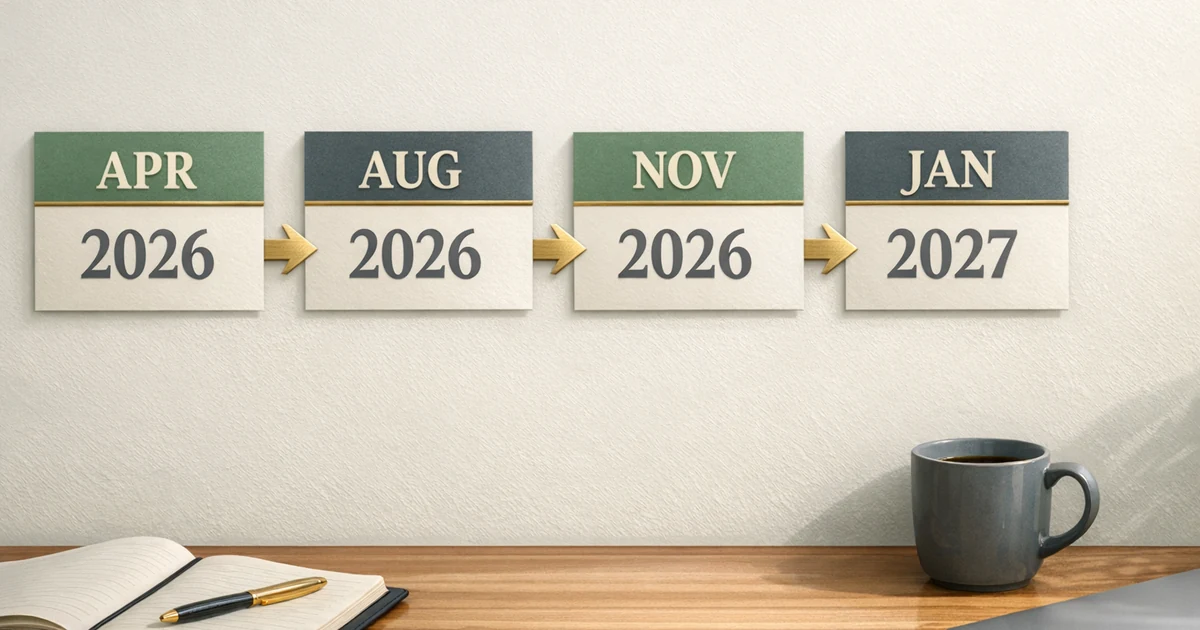
If you come into MTD for Income Tax from 6 April 2026, your first quarterly update deadline is likely to land on 7 August 2026 for the opening quarter. HMRC has also said there will be no penalty points for late quarterly updates during the first year, up to and including 5 April 2027, but that is not permission to ignore the process. It is breathing space, not a free pass.
What good software does is reduce friction:
- bank feeds cut manual typing
- receipt capture keeps evidence near the transaction
- tax estimates stop you guessing
- accountant access stops year-end duplication
What good habits do is turn those features into usable records.
Where community feedback lines up with the official product pages
We also reviewed current discussion threads on Reddit and similar forums to sense-check the official marketing against what people complain about in real life.
The pattern is fairly consistent:
- FreeAgent gets mentioned a lot by people who want something straightforward and tax-focused, especially when it is bundled with a business bank account.
- QuickBooks tends to appeal to people who care about app workflow, mileage, and day-to-day admin speed.
- Xero gets recommended when someone expects a bigger setup, more integrations, or closer accountant involvement, but price rises and plan limits come up regularly.
That is an inference from community discussions rather than an HMRC view. It is still useful, because product pages rarely tell you where users get annoyed after month three.
Our practical verdict on Xero vs QuickBooks vs FreeAgent
If you want the shortest possible answer, here it is.
Choose FreeAgent if:
- you are a straightforward sole trader or unincorporated landlord
- your accountant already uses it happily
- you want a tax-first feel rather than a finance-software feel
- you can get it free through an eligible business bank account
Choose QuickBooks if:
- you do a lot of admin from your phone
- mileage and receipt capture are central to your week
- you want a clear upgrade route when VAT or payroll arrives
- your books tend to get updated in short bursts rather than one desk session
Choose Xero if:
- you expect the business to become more complex quite quickly
- you want broader integrations and a platform many accountants already know well
- you are willing to check the plan grid properly rather than buy on headline price alone
That said, there is no prize for choosing the most “professional-looking” package if it creates extra quarterly work. The best software is the one you will keep up to date.
Questions to ask before you commit
Before you buy anything, ask these five questions:
- Will this still fit if I become VAT registered?
- Can my accountant work directly in it, or will they rebuild the numbers elsewhere?
- Does the base plan include mileage, expenses, and receipt capture at the level I need?
- Can it handle property income as well as sole trader income if that applies to me?
- Am I comparing the real ongoing price, or just the current promo?
One hour spent on those questions is usually cheaper than six months of switching later.
If you want help choosing and then setting up a sensible monthly process, our bookkeeping team and Self Assessment team can map the software around your deadlines, not the other way round. If you are already edging toward the VAT line, bring our VAT returns service into the same conversation.
What we would recommend for most sole traders right now
For a plain-vanilla sole trader who wants the least complicated route into MTD for Income Tax, FreeAgent is often the safest recommendation, especially if the accountant is comfortable in it and the banking bundle removes the subscription cost.
For a sole trader who lives on their phone, tracks mileage regularly, and wants admin to feel quick rather than formal, QuickBooks has a stronger day-to-day case than many people expect.
For a business that is still a sole trade today but looks likely to outgrow that simplicity soon, Xero may be the better long-term home, though often not on the cheapest plan.
That is the honest answer. None of them wins every scenario.

FAQ: best accounting software for sole traders UK
What is the best accounting software for sole traders UK in 2026?
There is no universal winner. For many straightforward sole traders, FreeAgent is the easiest tax-led choice. QuickBooks suits mobile-first admin well. Xero is often stronger if you expect the business to become more complex.
Do I need MTD-ready software if my income is below GBP 50,000?
Not for the first wave from 6 April 2026. HMRC says mandation starts then for those with qualifying income over GBP 50,000, with the threshold dropping to GBP 30,000 from April 2027. Plenty of people below GBP 50,000 still choose MTD-ready software now to avoid switching later.
Can I use spreadsheets instead?
HMRC allows a combination of digital tools if the software journey is compliant, but for most sole traders that is more hassle than using one proper package. A spreadsheet-only process is rarely the cleanest option once quarterly updates matter.
What if I become VAT registered after I choose a sole trader package?
Check the upgrade path before you buy. Xero’s Simple plan is for non-VAT businesses, and QuickBooks says VAT-registered users should look at Simple Start rather than Sole Trader.
Can one package handle both self-employment and rental income?
Some can. FreeAgent publicly states support for multiple businesses and rental properties. QuickBooks also markets support for mixed income workflows. If you have more than one income source, confirm the record structure before you commit.
Your next step before April turns into August
Pick the software that fits the next year of your business, not the cheapest teaser price on the day. If you are torn between two options, ask your accountant which one they can review fastest and keep updated with the least rework. That answer usually tells you more than the sales page does.

About Golden Tree Consulting
AAT Licensed | ACCA Affiliated
Golden Tree Accounting & Business Consulting provides expert tax, bookkeeping, and advisory services to sole traders and SMEs across Croydon, London, Surrey, and Kent. With multilingual support and decades of combined experience, we help businesses stay compliant and grow.
More Articles You Might Like
Continue exploring our financial insights

MTD for Income Tax UK: April 2026 Checklist for Sole Traders and Landlords
MTD for Income Tax starts in April 2026 for many sole traders and landlords. Use this practical checklist to get ready, avoid penalties, and file with confidence.

VAT Registration Threshold UK: When to Register, Deadlines, and Worked Examples for 2026
VAT registration threshold UK rules for 2026 explained with deadlines, worked examples, voluntary registration pros and cons, and common mistakes to avoid.
Allowable Expenses Self-Employed UK: What You Can Claim Before 5 April 2026
Allowable expenses self-employed UK rules explained with practical examples before 5 April 2026, so you can claim correctly and avoid HMRC issues.