

Side Hustle Tax UK: 5 April 2026 Checklist to Avoid Costly Mistakes
Side hustle tax UK rules are easy to get wrong. Use this 5 April 2026 checklist to track income, claim expenses correctly, and avoid HMRC penalties.
Side Hustle Tax UK: 5 April 2026 Checklist to Avoid Costly Mistakes
Side hustle tax UK admin catches people out every March, especially when income has grown quietly through the year and records are still scattered across personal accounts, payment apps, and old invoices. With the tax year ending on 5 April 2026, this is the point to tighten your process, estimate what you owe, and decide whether you need to register for Self Assessment before the 5 October 2026 registration deadline for the 2025 to 2026 tax year.
If your side income started as occasional work and now looks more like a real business, you are not alone. We are seeing freelancers, online sellers, content creators, and part-time consultants hit the same issues: underestimating taxable income, missing allowable expenses, and getting surprised by payments on account. None of those problems are fun, but all of them are fixable if you act now.
Quick summary: get your numbers finalised before 5 April 2026, check if your gross trading income is over the £1,000 trading allowance, build a tax reserve, and diarise the next key dates now.
If you want us to review your figures before year-end, we can help through our Self Assessment service, bookkeeping support, and contact page.
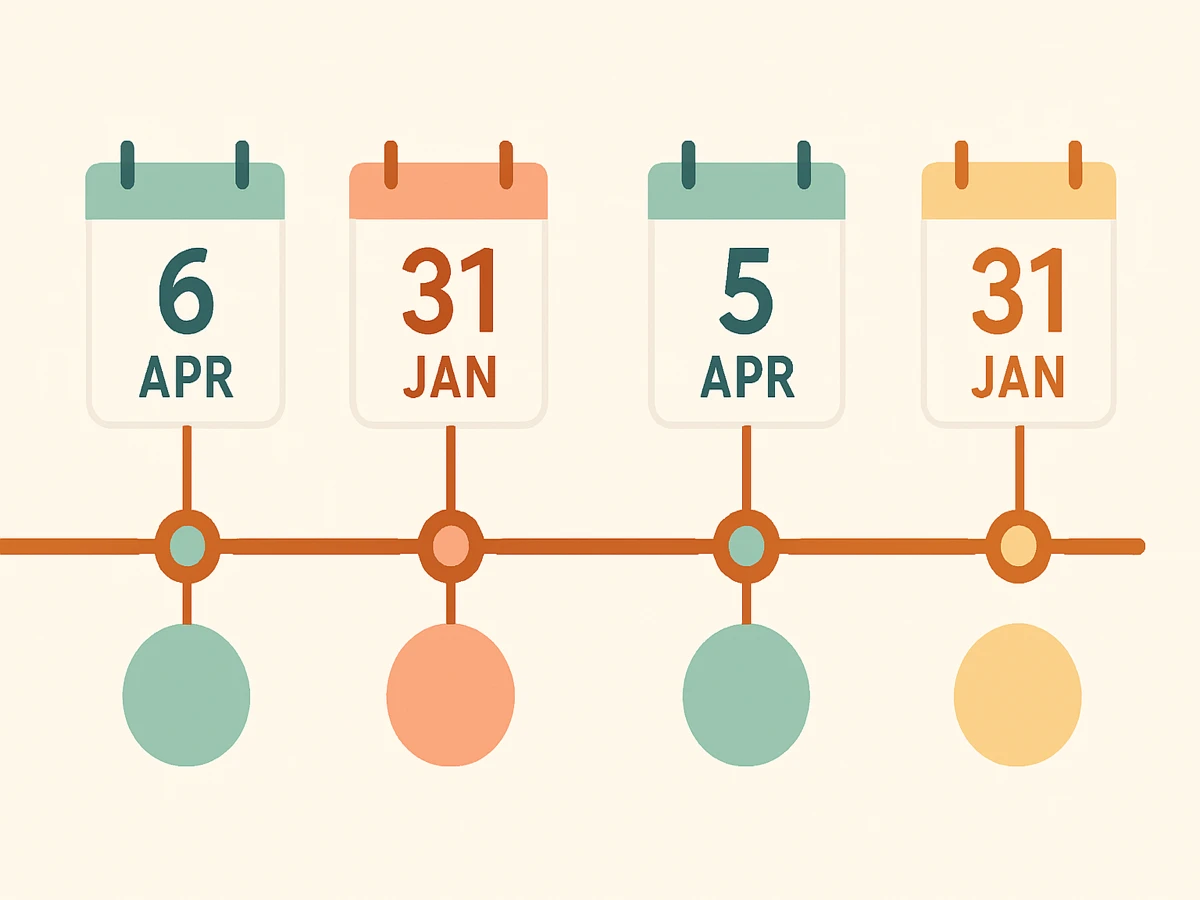
Side hustle tax UK deadlines you need in your diary now
Let us pin down the dates first, because planning gets easier once the calendar is clear.
| Date | What it covers | Why you should care now |
|---|---|---|
| 5 April 2026 | End of tax year 2025 to 2026 | Last day to complete year-end actions and tidy records for this tax year |
| 6 April 2026 | Start of tax year 2026 to 2027 | New year starts, with fresh record-keeping needed from day one |
| 5 October 2026 | Self Assessment registration deadline | Deadline to tell HMRC if you need to file for the first time for 2025 to 2026 |
| 31 January 2027 | Online tax return deadline and balancing payment for 2025 to 2026 | Main deadline that triggers late filing penalties if missed |
| 31 July 2027 | Second payment on account deadline | Cash-flow pressure point for many growing side hustles |
The 5 April date is close enough that waiting for a “better moment” is risky. A two-hour review this week can save you a lot of stress in January.
What actually counts as side hustle income
HMRC does not use a special “side hustle” tax category. It looks at what you are doing and asks whether it is taxable income from trading, property, or another source.
Typical examples we see:
- freelance design, marketing, coding, tutoring, photography, coaching
- online sales through marketplaces and social platforms
- paid content creation, affiliate income, sponsorships, digital products
- weekend service work such as beauty, fitness, repairs, or event support
If your activity is a trade, tax rules usually apply even if this is not your main job. The common misunderstanding is “it is only part-time, so it does not count”. HMRC does not test whether it is full-time. It tests the nature and amount of the income.
For first checks, use the GOV.UK guidance on tax-free allowances on trading and property income and Self Assessment deadlines.
The £1,000 trading allowance explained properly
The trading allowance is useful, but it is often misunderstood.
Here is the practical version:
- it is based on gross trading income, not profit
- if gross trading income is £1,000 or less in a tax year, you may not need to report it
- if gross trading income is over £1,000, you usually need to register for Self Assessment and report the income
Gross means before expenses.
That detail changes the outcome for many people.
Worked example 1: gross income vs profit confusion
Assume your side hustle made:
- sales: £3,800
- direct costs and expenses: £3,050
- profit: £750
A lot of people see £750 profit and assume they are under the allowance. Not quite. Your gross income is £3,800, so you are above the £1,000 trading allowance threshold and should usually report through Self Assessment.
You may still owe little tax after expenses, but reporting is still required.
Record keeping before 5 April 2026: what to fix now
March is when loose admin turns into expensive admin. If your records are not right by year-end, everything downstream takes longer.
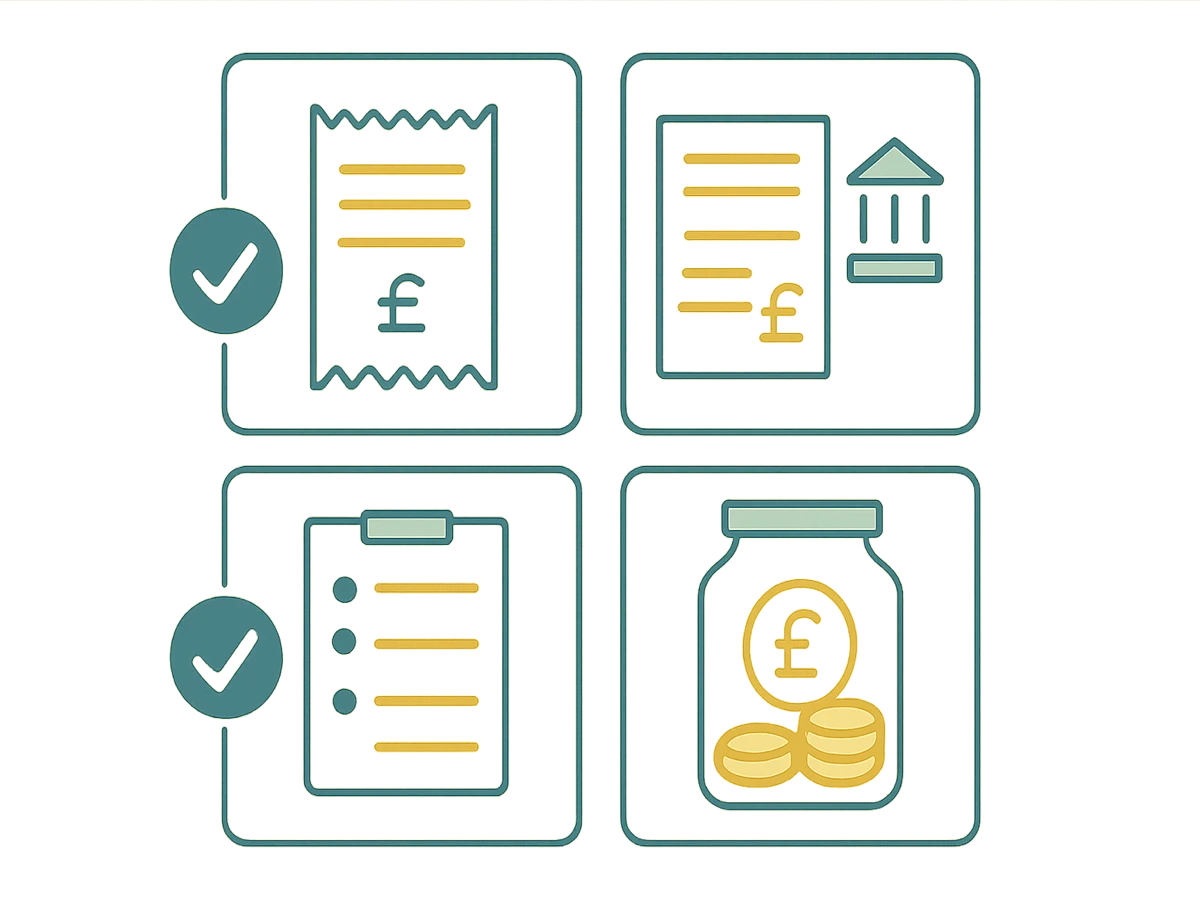
Use this quick cleanup list:
- separate personal and side hustle transactions where possible
- reconcile bank, card processor, and platform payouts to sales records
- pull all receipts and invoices into one place
- tag unusual transactions with a short note while details are fresh
- estimate profit, tax, and National Insurance before 5 April
Do not aim for perfection. Aim for complete and explainable records.
If you are still mixing business and personal spending in one account, start a separate business account from 6 April 2026. Your future self will thank you.
What tax and National Insurance could look like
You need realistic figures, not guesswork. For 2025 to 2026, the standard UK Income Tax Personal Allowance is £12,570, with basic rate tax up to £50,270 for most taxpayers. If your side hustle is self-employment, Class 4 National Insurance is usually 6% between £12,570 and £50,270 profits, then 2% above that band.
Rates can vary with your full circumstances, especially if you already have employment income, student loan deductions, or high-income allowance restrictions. That said, a rough estimate now is far better than a surprise later.
Reference pages:
Worked example 2: employed plus side hustle profit
Assume Priya has:
- employment salary: £38,000 (PAYE)
- side hustle profit: £14,000
- no pension adjustment for this example
Her salary already uses all personal allowance and most of the basic rate band. So side hustle profit largely sits in basic rate tax.
Simple estimate on side hustle profit:
- Income Tax at 20% on £14,000 = £2,800
- Class 4 NI at 6% on £14,000 = £840
- total extra bill from side hustle = £3,640
That is roughly 26% of side hustle profit in this scenario. If Priya has been setting aside 10%, she will be short.
A safer starting reserve for many employed side hustlers is 25% to 30%, then refine once full numbers are known.
Worked example 3: why payments on account can sting
Now assume Matt files his 2025 to 2026 return and final tax plus Class 4 NI on side hustle profits comes to £4,200.
On 31 January 2027, he may need to pay:
- balancing amount for 2025 to 2026: £4,200
- first payment on account for 2026 to 2027: £2,100
Total due on 31 January 2027: £6,300
Then a second payment on account of £2,100 is due on 31 July 2027.
That is where cash-flow pressure appears. People budget for one bill and meet two.
Common side hustle tax mistakes we keep seeing
Mistake 1: assuming platform payouts are already “tax dealt with”
Marketplaces and payment platforms handle transactions, not your tax return. You still need complete records and your own calculation.
Mistake 2: using net deposits as income figure
If a platform takes fees before payout, your bank deposit is not always your gross sales. Report income and expenses correctly, not just net cash received.
Mistake 3: claiming expenses with weak evidence
If you claim a cost, keep the backup. A missing receipt for one small item is usually manageable. Missing evidence across a category is harder to defend.
Mistake 4: ignoring mixed-use costs
Phone, home broadband, and some travel can be partly business and partly personal. Claiming 100% without a fair basis is asking for trouble.
Mistake 5: forgetting registration timing
If 2025 to 2026 is your first year above the threshold, the deadline to tell HMRC is 5 October 2026. Leave it too late and penalties become a real risk.
Mistake 6: no cash reserve for tax
The thing is, tax debt usually arrives when business cash feels healthy. A separate reserve account removes that false confidence.
Mistake 7: treating side income as temporary forever
Many side hustles become stable second incomes. Once that happens, proper monthly bookkeeping is cheaper than annual panic.
A practical March to July action plan
Right, so here is a timeline you can actually run.
March 2026
- reconcile all income sources and payment platforms
- clean up expenses and gather evidence
- run a first estimate for tax and National Insurance
- set aside cash based on the estimate
Before 5 April 2026
- finalise year-end records for 2025 to 2026
- list any missing invoices or receipts and chase them now
- save a copy of reports and summaries in one folder
April to September 2026
- keep monthly records from the start of the new tax year
- decide if bookkeeping software is needed now, not in January
- if you are newly in scope, prepare to register before 5 October 2026
October 2026 to January 2027
- complete Self Assessment registration if needed
- prepare and file earlier than January where possible
- plan for balancing payment plus possible payment on account
How MTD for Income Tax may affect growing side hustles
Even if your side hustle started small, growth can push you into Making Tax Digital for Income Tax over time.
Current rollout dates published by HMRC are:
- from 6 April 2026 for qualifying income over £50,000
- from 6 April 2027 for qualifying income over £30,000
That matters because qualifying income is measured on gross self-employment and property income, not after expenses. If your side hustle is scaling quickly, it is worth choosing software now that can support digital record keeping and quarterly reporting later.
Useful guidance:
Where we can help if you want this sorted quickly
If your records are behind, the fastest route is usually a short catch-up project followed by a monthly routine.
We can help with:
- bookkeeping setup and monthly maintenance
- Self Assessment filing and planning
- VAT support if turnover growth changes your obligations
- payroll support if your side business becomes an employer
A one-off fix is better than doing nothing, but a light monthly process is what keeps penalties and surprises away.
FAQ: side hustle tax UK in 2026
Do I need to pay tax on a side hustle under £1,000?
If your annual gross trading income is £1,000 or less, the trading allowance may cover it. Once gross trading income goes above £1,000, you usually need to report through Self Assessment.
I already pay PAYE through my job, so can I ignore side income?
No. PAYE handles your employment income. Side hustle trading income is separate and may need Self Assessment reporting.
What if I made a loss on my side hustle?
You may still need to register and file, depending on your circumstances. A loss does not automatically remove reporting obligations.
When do I have to register for Self Assessment?
If you need to file for the 2025 to 2026 tax year and are new to Self Assessment, you generally need to tell HMRC by 5 October 2026.
Why is my January bill much higher than expected?
You may be paying both a balancing payment for the previous tax year and the first payment on account for the current one. That combined amount catches many people out.
Is this personal tax advice?
No. This guide is general information for UK side hustlers and small business owners. Your exact tax position depends on your full income, allowable expenses, and personal circumstances.
If you want to avoid a rushed January, the most practical next step is simple: get your 2025 to 2026 records finalised before 5 April, then book a short review so you know your likely bill and payment dates. If you want us to run that review with you, speak to our team.

About Golden Tree Consulting
AAT Licensed | ACCA Affiliated
Golden Tree Accounting & Business Consulting provides expert tax, bookkeeping, and advisory services to sole traders and SMEs across Croydon, London, Surrey, and Kent. With multilingual support and decades of combined experience, we help businesses stay compliant and grow.
More Articles You Might Like
Continue exploring our financial insights

Pension Tax Relief UK Before 5 April 2026: Practical Guide for Sole Traders and Directors
Pension tax relief UK rules explained for 5 April 2026, with annual allowance limits, carry forward, and worked examples for business owners.

MTD for Income Tax UK: April 2026 Checklist for Sole Traders and Landlords
MTD for Income Tax starts in April 2026 for many sole traders and landlords. Use this practical checklist to get ready, avoid penalties, and file with confidence.
Allowable Expenses Self-Employed UK: What You Can Claim Before 5 April 2026
Allowable expenses self-employed UK rules explained with practical examples before 5 April 2026, so you can claim correctly and avoid HMRC issues.