Companies House Identity Verification 2026: Director and PSC Guide
Companies House identity verification explained for directors and PSCs in 2026, with personal codes, deadlines, and examples.
 Golden Tree Accounting 11 May 2026 16 min read
 On this page Show
- Companies House identity verification: what changed in 2026
- Who needs to verify, and when
- How the personal code works
- What you need before verifying
- Why accountants are bringing this up with annual accounts and confirmation statements
- Common mistakes to avoid
- A simple preparation checklist for small companies
- FAQ: Companies House identity verification
- Final practical step
Companies House identity verification is now a live legal requirement, and many small company directors will first meet it through their next confirmation statement in 2026. If you run a limited company, act as a person with significant control, or sit across several companies, this is not a tax return job. It is a Companies House compliance job, and it can still block filings if it is left too late.
The rule started on 18 November 2025. That date was the start of a 12-month transition period, not a single deadline for every existing company. New directors now need to verify before incorporation or appointment. Existing directors need to provide their Companies House personal code with the next confirmation statement during the transition period. PSCs have their own timing rules, including a 14 day window in several cases.
Quick summary: directors and people with significant control, known as PSCs, need to verify their identity for Companies House. After verification, you receive an 11 character personal code. Directors use that code in the company’s confirmation statement. PSCs may need to provide it separately, and some PSCs have a 14 day window tied to their birth month or confirmation statement date.
If you want us to check your company records before the next filing, we can help through our annual accounts service, company formation support, bookkeeping service, or you can send us the details through our contact page.

Companies House identity verification: what changed in 2026
Companies House is tightening the register so it has better evidence of who is setting up, running, and controlling UK companies. The main change for owner-managed companies is simple enough: individuals in key roles need to prove who they are, then connect that verified identity to their Companies House roles.
The official guidance says identity verification became a legal requirement from 18 November 2025. Companies House also says that date began a 12-month transition period, so existing companies have time to get directors and PSCs verified by their due dates. The pressure point is not the same for every person. It depends on your role and when you took it on.
Useful official guidance:
- Verify your identity for Companies House
- When you need to verify your identity for Companies House
- Companies House personal codes for identity verification
Companies House estimated that 6 to 7 million individuals would need to verify by mid-November 2026. That number matters because it shows why waiting until the week of your confirmation statement is not a great plan. If your online identity check needs extra steps, or an older record has the wrong date of birth, a filing that should have taken minutes can turn into a chase.
The change affects limited company directors, PSCs, and equivalent roles. Requirements for some other roles, such as people who file at Companies House, limited partnerships, corporate directors, corporate members of LLPs, and officers of corporate PSCs, are being introduced later. That is one reason the guidance can feel a bit scattered. Your company may have more than one role type, and each role may have a different timing rule.
Who needs to verify, and when
The practical starting point is to list every person connected with the company. Do not just look at the current director list. Check PSCs as well, especially if the company is family owned or has changed shareholders over the years.
| Role | What happens in 2026 | Practical action |
|---|---|---|
| New director from 18 November 2025 | Must provide a personal code as part of incorporation or appointment | Verify before the filing is due |
| Existing director | Must provide the personal code in the next confirmation statement from 18 November 2025 | Verify before the confirmation statement is prepared |
| Director of more than one company | Must provide the code for each company role | Keep one personal code, then use it for each appointment |
| PSC who is also a director | Must provide the code separately for each role | Use the confirmation statement route for the director role, then the PSC service for the PSC role |
| PSC who is not a director | Must provide the code within the first 14 days of their birth month | Check the Companies House register and diary the window |
| New PSC after 18 November 2025 | Can provide the code when added, or within 14 days of being added | Verify before updating the register if possible |
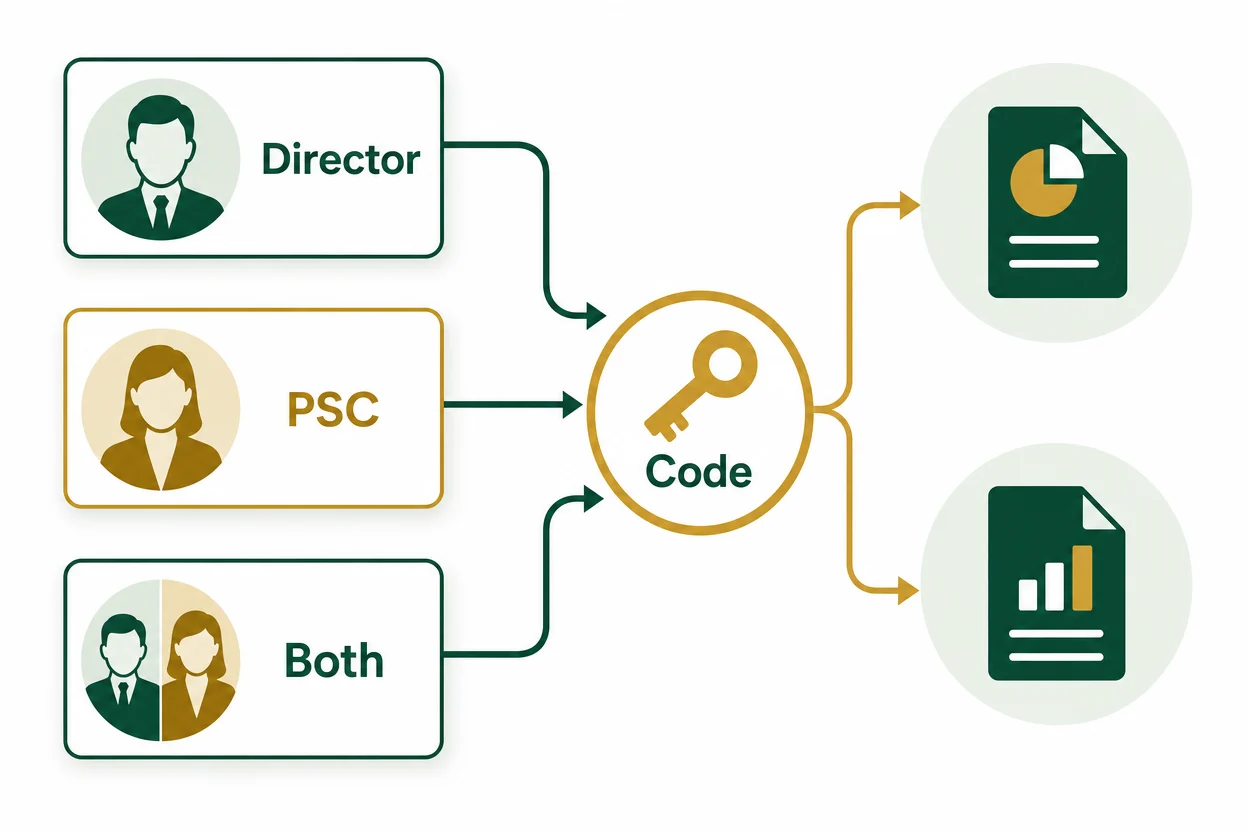
Right, so the awkward bit is that a person can wear two hats. A sole director shareholder will often be both a director and a PSC. That does not mean they verify twice. It means they verify once, receive one personal code, and then use that same code in more than one role.
Worked example 1: one director, one company
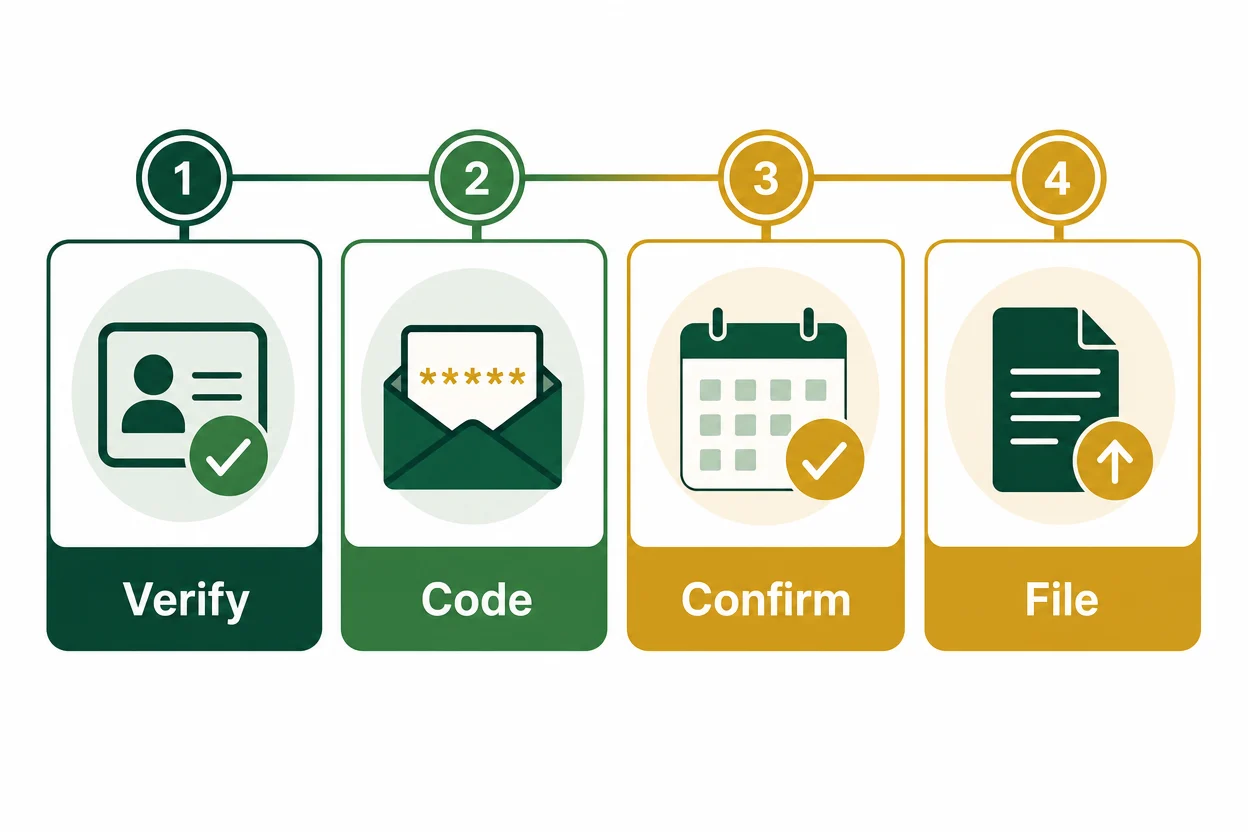
Assume Priya is the only director and shareholder of a small consultancy. The company’s confirmation statement date is 30 June 2026. Priya is both a director and a PSC.
Her practical timetable looks like this:
- verify her identity before the confirmation statement is prepared
- receive her 11 character Companies House personal code
- provide that code in the confirmation statement for her director role
- provide the same code separately for her PSC role through the PSC verification details service
If Priya verifies on 20 May 2026, she gives herself more than a month before the confirmation statement date. If she waits until 29 June 2026 and cannot complete GOV.UK One Login because of an ID issue, the filing window suddenly feels much less comfortable. No one enjoys turning a company law change into a late-night admin event.
Worked example 2: director across three companies
Assume Mark is a director of three companies:
| Company | Next confirmation statement date | What Mark needs to do |
|---|---|---|
| Alpha Trading Ltd | 15 May 2026 | Use his personal code in this confirmation statement |
| Beta Digital Ltd | 3 August 2026 | Use the same personal code again |
| Gamma Property Ltd | 22 October 2026 | Use the same personal code again |
Mark only verifies his identity once. The personal code belongs to him, not to Alpha, Beta, or Gamma. He still needs to use it for each company role, so the admin is not completely finished after the first filing.
That is where directors with several appointments can get caught. They think “I verified already”, which is true, but forget that each company filing still needs the code connected to the role.
How the personal code works
Once your identity is verified, Companies House gives you a personal code. GOV.UK guidance says it is an 11 character code. It is personal to you, not your company, and it is used to confirm that you have verified your identity when you act as a director or PSC.
You should treat it like a sensitive business record. It is not a password in the ordinary sense, and Companies House says you can share it with someone who files on your behalf, such as an accountant. Still, you should know who has it, where it is stored, and when it has been used.
If you verified through GOV.UK One Login, you can sign in to Companies House and find the code in your account. If you verified through an Authorised Corporate Service Provider, often called an ACSP or authorised agent, Companies House sends the personal code to the email address the ACSP provided for you. If that email address is wrong, you may need the ACSP to correct the details.
There is one detail worth checking early: your personal details need to match the Companies House record. If your date of birth is wrong on the register, or your ACSP provided details that do not line up, the code may not connect cleanly. That is not the kind of problem to discover on filing day.
Worked example 3: the code is right, but the company record is wrong
Assume Sara verifies successfully and receives her personal code on 2 June 2026. Her company’s confirmation statement is due soon, but when the code is entered, Companies House cannot match her details.
The problem is not the code itself. The company record shows Sara’s date of birth month incorrectly as July, when it should be June.
The fix is to correct the Companies House record before trying to connect the verification details again. That may not sound dramatic, but it changes the timetable. A simple filing can now involve:
- checking the Companies House record
- correcting the date of birth record if needed
- waiting for the record position to be right
- providing the code again
- filing the confirmation statement
Give yourself a buffer. If the company has not checked its officer and PSC records for years, identity verification is a good reason to tidy them before the filing deadline is close.
What you need before verifying
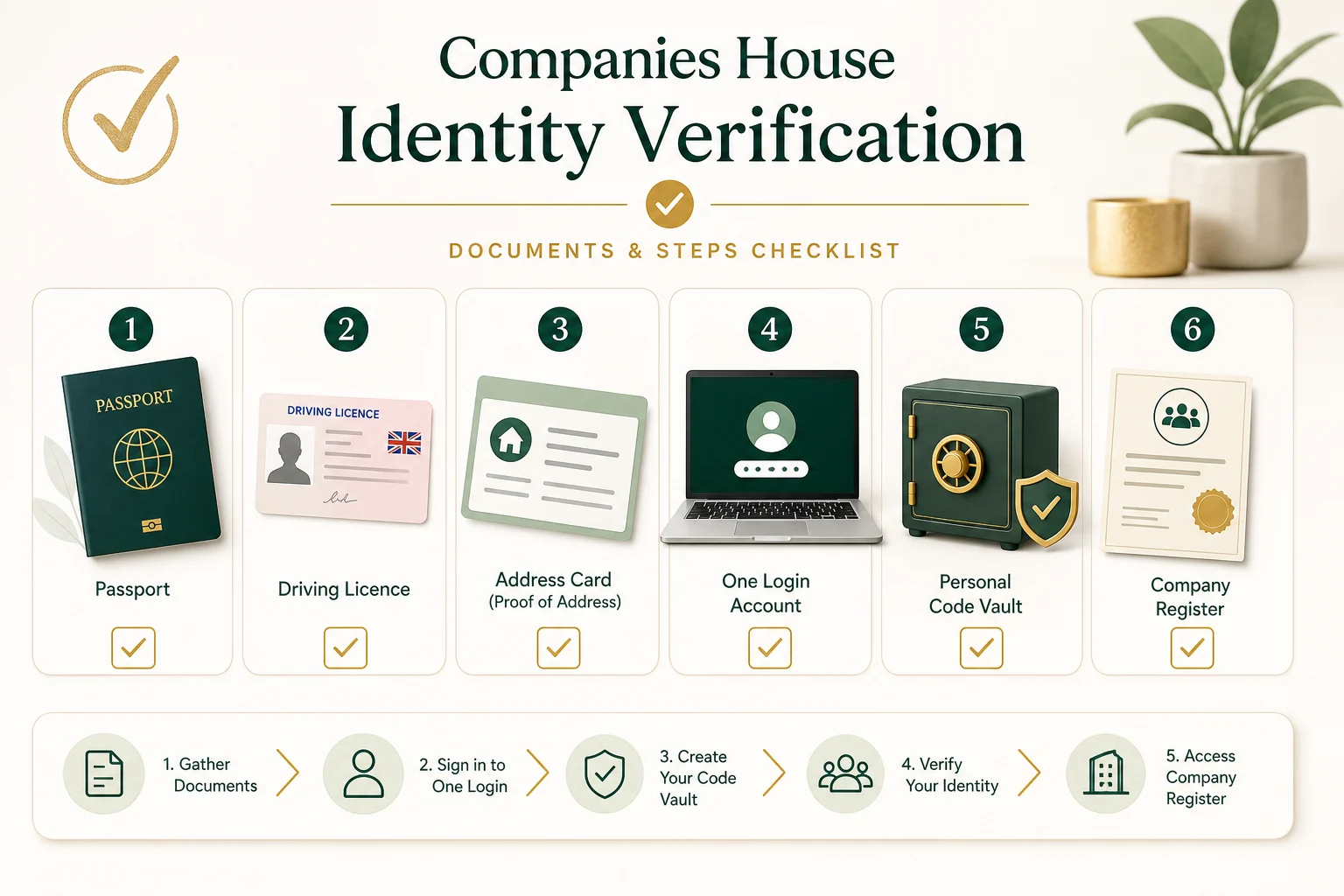
The GOV.UK One Login route can work online if you have suitable ID. The current Companies House guidance says you can verify using one of the following types of photo ID:
- biometric passport from any country
- UK photo driving licence, full or provisional
- UK biometric residence permit
- UK biometric residence card
- UK Frontier Worker permit
You will also need your current address, the year you moved in, and a GOV.UK One Login. The guidance also says one email address can only be used once to verify an identity, so family businesses should avoid sharing one generic email address across several directors.
There are rules on expired documents too. GOV.UK says you cannot use an expired passport with the GOV.UK One Login app. An expired DVLA driving licence may be accepted if it expired in the last 90 days, and an expired BRP, BRC, or FWP may be accepted if it expired in the last 18 months. Those details were updated on GOV.UK on 30 April 2026, so this is a good example of why checking current guidance matters.
If you do not have the listed photo ID, GOV.UK says the service can tell you whether other routes are available. These may include bank or building society details, security questions using your National Insurance number, or in-person verification at the Post Office after entering your photo ID details online. The route you are offered depends on your circumstances.
You can also ask an ACSP, such as an accountant, solicitor, or company formation agent, to verify your identity. That may be useful where a director is less comfortable with online checks, has several company roles, or wants the verification process dealt with alongside company filings. Your specific situation may differ, so it is worth checking the official route before assuming the fastest option.
Why accountants are bringing this up with annual accounts and confirmation statements
Identity verification is not part of your Corporation Tax return, and it is not part of the accounts themselves. It still sits close to the work accountants already help with, because small companies often deal with accounts, confirmation statements, Companies House records, registered office details, and director admin in the same annual cycle.
That is why you may hear about it when preparing annual accounts or updating company records. If a confirmation statement cannot be filed because a director has not verified, the issue can delay a routine compliance job. If a PSC misses their 14 day window, the company may need to deal with a separate follow-up rather than one tidy annual filing.
For owner-managed companies, we would usually check:
- who is listed as a director
- who is listed as a PSC
- whether any director is also a PSC
- the next confirmation statement date
- whether each person has verified
- whether each person knows where their personal code is stored
- whether the registered email address is monitored
That last point matters more than it sounds. Companies House has used registered email addresses to contact companies about identity verification. Since 4 March 2024, companies have been required to provide a registered email address. If that mailbox belongs to someone who has left, or it is never checked, important compliance messages may sit unseen.
If your records are messy, start with the basics before worrying about the code. Our annual accounts service can sit alongside Companies House filing support, and our company formation in the UK service is useful if you are setting up a company and want the director details right from day one.
Common mistakes to avoid
The first mistake is assuming identity verification is only for new companies. New incorporations are affected, yes, but existing directors and PSCs are also brought in through the transition rules.
The second mistake is thinking a director-PSC only has one filing action. They usually verify once, but they may need to provide the personal code separately for the director role and PSC role. The GOV.UK guidance is clear that if you are both a director and a PSC of the same company, the personal code is provided separately for each role.
The third mistake is leaving a non-director PSC out of the diary. A PSC who is not a director of the same company must provide their personal code within the first 14 days of their birth month. If their birth month is July, that means the window starts on 1 July. It is not tied to when the accounts are ready.
The fourth mistake is using shared logins or shared email addresses. Companies House says the verified identity connects to the GOV.UK One Login, and the same email address cannot be used more than once to verify an identity. Each person needs their own setup.
The fifth mistake is storing the personal code too casually. If you use an agent to file, they may need the code. That does not mean it should be floating around in old emails with no record of who received it.
A simple preparation checklist for small companies
Use this before your next confirmation statement, especially if the filing date falls between now and mid-November 2026.
| Check | Why it matters |
|---|---|
| Confirm your next confirmation statement date | Existing directors usually provide the code through this filing |
| List all directors and PSCs | The PSC list is where many small companies forget a role |
| Identify people who are both director and PSC | They may need to provide the code separately for both roles |
| Ask each person to verify early | ID or record-matching problems need time |
| Save the personal code securely | You may need it for more than one company role |
| Check the registered email address | Companies House messages should go to a monitored inbox |
| Review date of birth and name details | Mismatches can stop the code connecting properly |
For a small company with one director, this could be a half-hour task if the ID check works first time. For a family company with three shareholders, two PSCs, a director who lives overseas, and a confirmation statement due next month, it can take longer. The work is not technically difficult, but the timing can be unforgiving if nobody owns it.
FAQ: Companies House identity verification
Is Companies House identity verification mandatory in 2026?
Yes. Identity verification became a legal requirement from 18 November 2025. Existing companies are being brought in through a 12-month transition period, with directors and PSCs having due dates based on their role.
Do I need to verify twice if I am both a director and a PSC?
You usually verify your identity once and receive one personal code. You may then need to provide that same code separately for your director role and PSC role.
What is a Companies House personal code?
It is an 11 character code issued after identity verification. You use it to confirm you are verified when acting as a director or PSC.
Can my accountant use my personal code?
Companies House says you can share your code with someone who files on your behalf, such as an accountant. Keep a record of who has it and avoid sending it around casually.
What if I do not have a passport or driving licence?
The GOV.UK One Login service can tell you whether another verification route is available, such as bank details and security questions, or an in-person Post Office route where suitable. An ACSP may also be able to help.
What should I do before my next confirmation statement?
Check the directors and PSCs, make sure each person has verified, save each personal code securely, and confirm whether any PSC filing action is needed separately from the confirmation statement.
Final practical step
Pull up your Companies House register today and check three things: your next confirmation statement date, your director list, and your PSC list. If any director or PSC has not verified yet, ask them to start now rather than waiting for the filing reminder. A personal code is quick to use once it is ready. Getting it at the last minute is the bit that causes the unnecessary panic.

About Golden Tree Consulting
ACCA Affiliated | MBA Qualified
Golden Tree Accounting & Business Consulting provides expert tax, bookkeeping, and advisory services to sole traders and SMEs across Croydon, London, Surrey, and Kent. With multilingual support and decades of combined experience, we help businesses stay compliant and grow.
Offices in Croydon and London Bridge.
Related guides

Companies House Identity Verification: Director and PSC Guide for 2026
Companies House identity verification explained for directors and PSCs, with deadlines, personal codes, confirmation statements, and penalties.
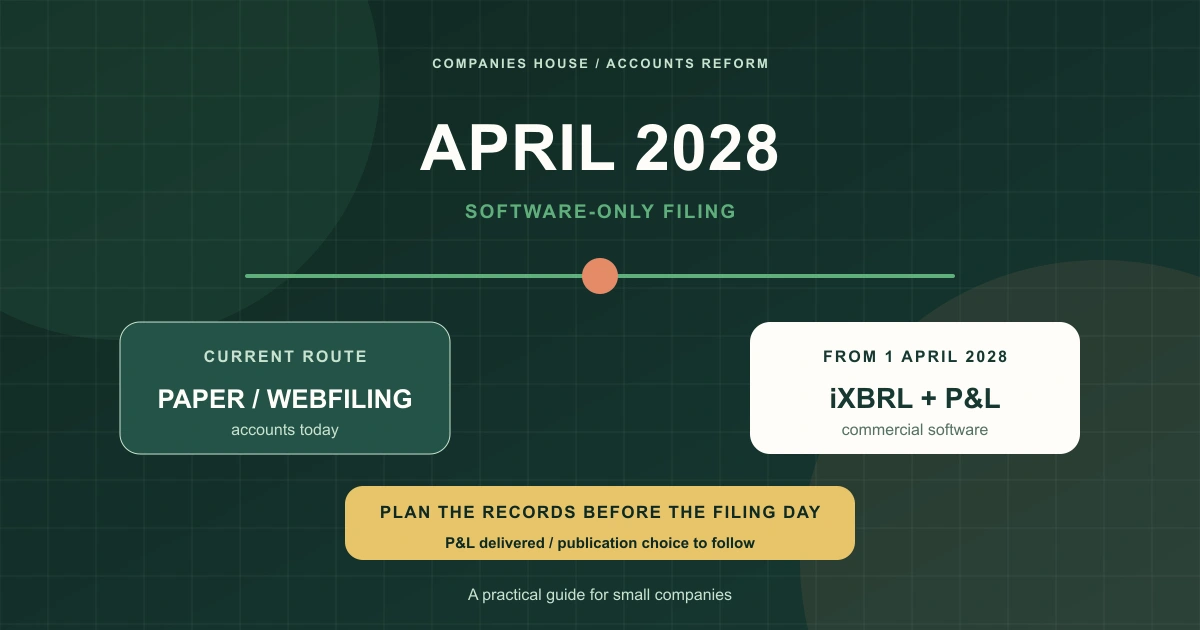
Companies House Accounts Changes 2028: What Small Companies Need to Prepare
Companies House accounts changes 2028 explained for UK small companies: software-only filing, P&L, abridged accounts and a practical preparation checklist.
Limited Company Annual Accounts: 2026 Records and Deadline Checklist
Limited company annual accounts checklist for 2026: records to prepare, Companies House and HMRC deadlines, examples and filing changes.