UK Ltd vs Estonian OÜ in 2026: The Honest Comparison for UK Residents
UK Ltd vs Estonian OÜ compared for UK residents in 2026: real tax rates, formation costs, the company residence trap, and when Estonia genuinely wins.
 Golden Tree Accounting 11 August 2026 8 min read
 On this page Show
An Estonian OÜ (osaühing) is Estonia’s version of a private limited company, and thanks to the e-Residency programme a UK resident can open one entirely online. The pitch you will see in most articles is simple: Estonia charges no corporate tax until you take profit out, so your company grows faster. That pitch is true, but only in specific circumstances, and the articles rarely mention the rule that catches most UK founders.
This guide compares both structures with real 2026 numbers, shows where the Estonian setup genuinely wins, and is direct about the situations where it saves you nothing and adds cost. We set up both: our UK company formation service and our Estonian company formation service exist precisely because the right answer depends on your situation.
Quick summary: a UK Ltd pays Corporation Tax as profits arise, at 19% up to £50,000 and 25% above £250,000, with marginal relief in between. An Estonian OÜ pays 0% on profit it keeps and 22% (calculated as 22/78 of the net amount) only when profit is distributed. The catch: if the OÜ is actually managed from the UK, HMRC can treat it as UK tax resident, and you lose the Estonian advantage while keeping the Estonian paperwork. Estonia works best for founders who genuinely operate from or through Estonia and reinvest most of their profit.

What each structure is
UK private limited company (Ltd). Registered at Companies House, usually within 24 hours, for a £50 incorporation fee. It files annual accounts and a confirmation statement, runs PAYE if it pays salaries, and pays Corporation Tax on profits as they arise. GOV.UK’s limited company guidance covers the mechanics.
Estonian OÜ. Registered in Estonia’s e-Business Register, normally within a few working days once you hold an e-Residency card. The card is a state-issued digital ID that lets you sign documents and manage the company online from anywhere. It is not a visa, not a residence permit, and not tax residence. Minimum share capital is a symbolic amount (from 1 cent), and a company with no board member living in Estonia must appoint a local contact person and legal address.
The headline tax difference
| UK Ltd | Estonian OÜ | |
|---|---|---|
| Tax on retained profit | 19% to 25% as profit arises | 0% |
| Tax on distributed profit | Already taxed at CT level, then UK dividend tax for the shareholder | 22% of the gross distribution (22/78 of the net), paid by the company |
| VAT standard rate | 20% | 24% |
| Filing language and system | Companies House + HMRC | e-Business Register + e-MTA, English available |
Estonia’s model taxes distribution, not profit. A company that earns and reinvests pays no corporate income tax that year. The planned rise to 24% was cancelled in December 2025, so the rate stays 22% for 2026. The Estonian Tax and Customs Board publishes the current rates on emta.ee.
One more UK-side point. As a UK tax resident you pay UK dividend tax on dividends from anywhere in the world, an OÜ included. The Estonian structure changes the corporate layer, never your personal one. Our salary vs dividends guide covers the personal layer for 2026/27.
The trap: company residence
This is the paragraph most promotional articles skip. Under UK rules, a company incorporated abroad is still treated as UK tax resident if its central management and control is exercised in the UK. HMRC’s International Manual sets out the test. In plain terms: if the real decisions are made by you, at home, in the UK, then your Estonian OÜ is very likely a UK resident company. It then owes UK Corporation Tax on its worldwide profits, needs UK filings on top of Estonian ones, and the 0% retention benefit evaporates.
The UK and Estonia have a double tax treaty with a tiebreaker for companies caught by both systems, but relying on it is not a strategy. It is an argument you have with two tax authorities at once.
So the honest first question is not “which country has better rates”. It is “where is this company actually run from”. If the answer is your kitchen table in Croydon, an OÜ does not remove UK tax. It adds Estonian compliance to it.
What each costs in 2026
| Cost | UK Ltd | Estonian OÜ |
|---|---|---|
| State registration fee | £50 | €265 |
| e-Residency card | not needed | €150 state fee, collection at an embassy |
| Legal address / contact person | not needed if UK-based | roughly €200 to €400 per year for non-resident boards |
| Annual accounts | required | required |
| Typical accountant cost | comparable | comparable, often billed in euros |
Timescales differ more than costs. A UK Ltd exists within a day or two. The e-Residency card usually takes several weeks to be issued and collected, and the OÜ follows in days once you have it.
A worked example
A consultant expects £60,000 of company profit and wants to keep £20,000 in the company to fund next year’s growth.
UK Ltd. Corporation Tax applies to the whole £60,000 as it arises. At the 19% small profits rate that is £11,400, whether the £20,000 is retained or not.
Estonian OÜ, genuinely managed from Estonia. The retained £20,000 is taxed at 0%. Distributing the remaining £40,000 as a gross amount costs the company 22%, which is £8,800, leaving £31,200 to pay out. Corporate-level tax: £8,800 against £11,400, plus the whole retained slice compounding untaxed.
Estonian OÜ, actually managed from the UK. HMRC’s residence test applies, UK Corporation Tax is due on the £60,000, and the Estonian filings still have to be done. This is the worst of both worlds, and it is the default outcome for a UK-based founder who changes nothing about how they work.
The pattern generalises: the more profit you retain and the more genuinely Estonian your management is, the better the OÜ looks. The more you pay out each year from a UK armchair, the better the plain UK Ltd looks.
When an Estonian OÜ genuinely fits
- You are reinvesting most profits for several years, and the company has a real Estonian footing: board decisions made there, or a director based there.
- You serve EU clients and want an EU-registered entity for invoicing, VAT registration, or platform requirements after Brexit.
- You are relocating, or splitting your year, and your personal tax residence is moving out of the UK anyway.
- You run a digital product business with no UK premises, staff, or day-to-day UK management.
When it does not fit
- Your clients, your work, and your decision-making all sit in the UK. Company residence rules make the structure pointless.
- You are a contractor supplying personal services to UK clients. IR35 and the residence test both point back at the UK.
- You want SEIS or EIS investment. Those reliefs are built around UK companies.
- You need the company’s income for UK living costs each year. Full distribution gives up the one advantage Estonia offers.
Frequently asked questions
Is it legal for a UK resident to own an Estonian OÜ? Yes, completely. Ownership is not the issue. The tax outcome depends on where the company is managed and where you are personally tax resident, and HMRC expects foreign income to be declared either way.
Does e-Residency change my personal tax position? No. It is a digital ID for accessing Estonian services. You remain a UK tax resident under the normal UK rules, and your dividends from the OÜ are taxable in the UK.
Can my OÜ invoice UK clients? Yes. But if the work is done in the UK and managed from the UK, invoicing through Tallinn does not move the profit for tax purposes. Substance decides, not the letterhead.
How long does the whole setup take? Budget several weeks for the e-Residency card, then a few working days for the company itself. A UK Ltd takes a day or two in comparison.
What does it cost to keep running each year? Annual accounts in both countries’ systems, plus the contact person and legal address service for a non-resident board, typically €200 to €400 a year before accounting fees.
The bottom line
An Estonian OÜ is a precision tool, not a loophole. For a founder with real Estonian substance and a retention strategy, the 0% on reinvested profit is a genuine, legal advantage. For a UK-based freelancer looking for a lower rate on this year’s income, it usually delivers extra admin and no saving. The residence test decides which founder you are.
If you want a structure checked against your actual situation before committing to either register, our Estonian company formation service handles the full OÜ setup, and we will tell you plainly if a UK Ltd is the better fit.
Official sources: GOV.UK Corporation Tax rates, HMRC International Manual INTM120060 on company residence, GOV.UK tax on foreign income, e-Residency official site, Estonian Tax and Customs Board rates.

About Golden Tree Consulting
ACCA Affiliated | MBA Qualified
Golden Tree Accounting & Business Consulting provides expert tax, bookkeeping, and advisory services to sole traders and SMEs across Croydon, London, Surrey, and Kent. With multilingual support and decades of combined experience, we help businesses stay compliant and grow.
Offices in Croydon and London Bridge.
Related guides

Why UK Startups Are Choosing Estonia for Company Formation
Explore why Estonia is ideal for UK startups. Learn how digital-first systems, zero corporate tax on retained profits, and fast company formation make Estonia a smart move for growth.
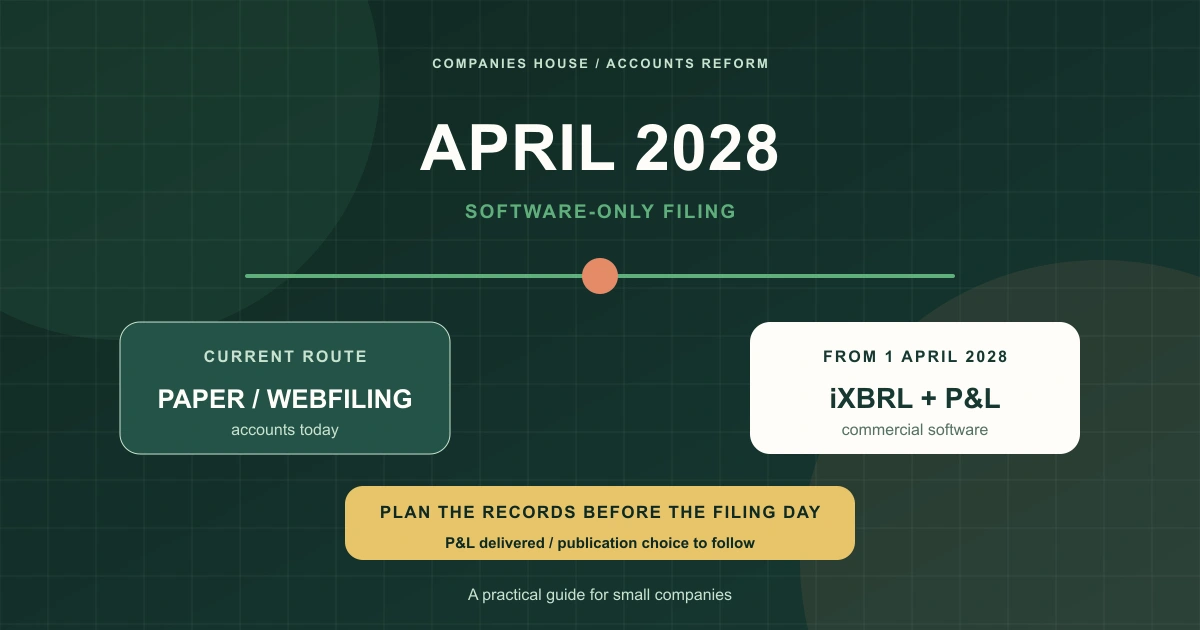
Companies House Accounts Changes 2028: What Small Companies Need to Prepare
Companies House accounts changes 2028 explained for UK small companies: software-only filing, P&L, abridged accounts and a practical preparation checklist.

Corporation Tax Payment Deadline: 9 Months and 1 Day After Your Year End
When UK companies must pay Corporation Tax: 9 months and 1 day after the accounting period ends, with a year-end table, the CT600 deadline, rates, payment methods and what to do if you cannot pay.