Crypto Tax UK 2026: Capital Gains, Staking Income and HMRC Records
Crypto tax UK 2026 explained with Capital Gains Tax rates, staking and mining income, exchange records, reporting routes and worked examples.
 Golden Tree Accounting 23 September 2026 18 min read
 On this page Show
- Crypto tax UK 2026: the rules in plain English
- When does selling or using crypto create Capital Gains Tax?
- Why crypto pooling and the 30-day rule matter
- Staking, mining, airdrops and crypto received for work
- 2026/27 Capital Gains Tax rates and a worked calculation
- How to report crypto to HMRC
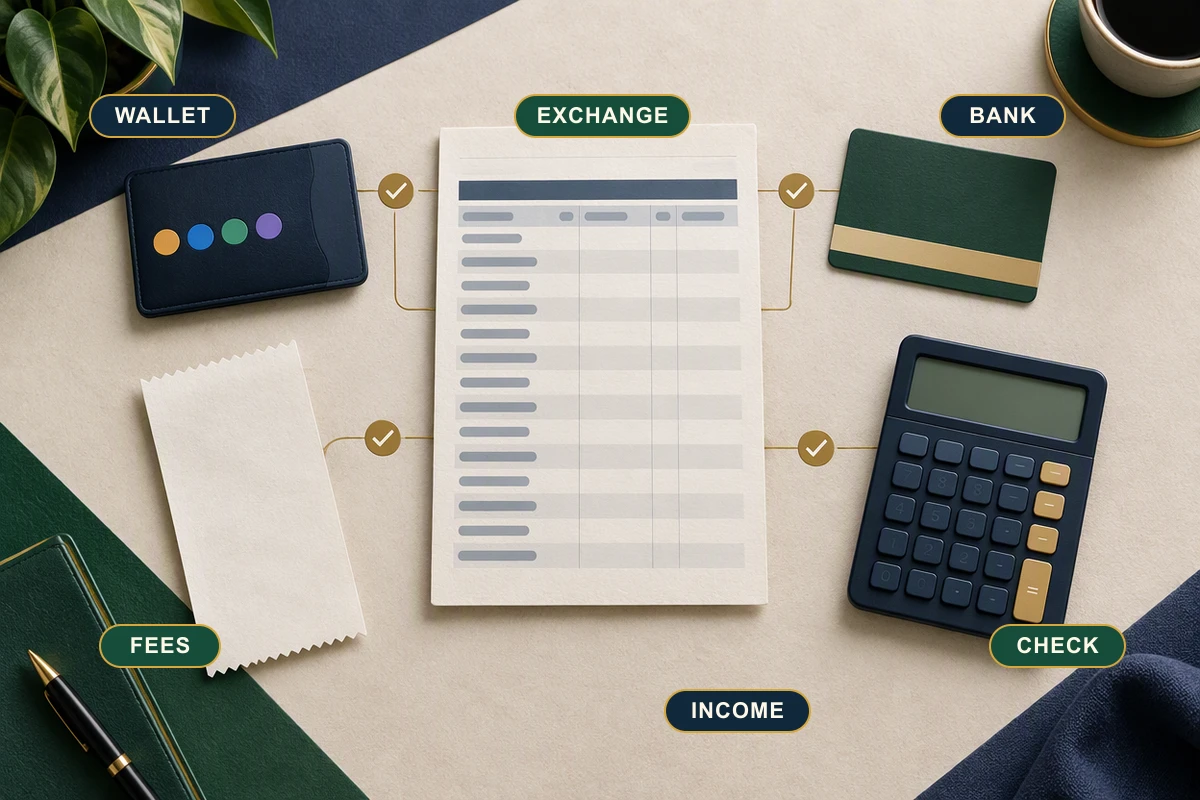
- The records to download before an exchange disappears
- DeFi and future changes need a separate review
- Common crypto tax mistakes to catch now
- A practical crypto tax workflow for 2026/27
- Crypto tax UK 2026 FAQs
Crypto tax UK 2026 is not one flat charge on every coin you own. The result depends on what happened to the tokens, how you received them, what the pound sterling value was at each point, and whether the activity is an investment or a trade.
Selling bitcoin for pounds can create a Capital Gains Tax calculation. Swapping bitcoin for ether can do the same, even if no money reaches your bank account. Staking rewards, mining income and tokens received for work may be income instead. Buying crypto with pounds and leaving it in your wallet is usually not a taxable event by itself.
Quick answer: keep a transaction record for every wallet and exchange, classify each receipt or disposal, calculate the pound sterling value and allowable fees, apply the pooling and 30-day matching rules, then check the 2026/27 allowances and reporting route. A tax report exported from an exchange is useful evidence, but it is not automatically a UK tax calculation.
The rules are manageable when the records are built as you go. They become much less friendly when three exchanges, two wallets and a forgotten staking account are all reconstructed from screenshots in January. HMRC’s current reporting rules also mean that assuming nobody can connect your activity to your tax record is a poor plan.
Crypto tax UK 2026: the rules in plain English
The 2026/27 tax year runs from 6 April 2026 to 5 April 2027. For most individual investors, there are two main tax questions.
| What happened | Usual tax area | The first question to ask |
|---|---|---|
| You sold, swapped, spent or gave away tokens | Capital Gains Tax | What was the disposal value, and what cost belongs to those tokens? |
| You received tokens from staking, mining, lending, work or another activity | Income Tax, and sometimes National Insurance | Why did you receive the tokens, and what were they worth in pounds at that time? |
The boundaries are fact-sensitive. Someone who buys and sells investments occasionally is usually dealing with capital gains. A person carrying on a genuine trading business may have trading profits instead. A company holding or receiving crypto has a different set of Corporation Tax and accounting questions. This guide is for individuals and small business owners dealing with personal crypto activity, not a substitute for advice on a company treasury or a large DeFi operation.
There is a current reporting change worth knowing about. From 2026, cryptoasset service providers must collect identifying details such as your name, date of birth, address and tax identification number. The information is used to connect activity to tax records. It does not produce a completed tax return, and it does not change the date on which a disposal happened. It does make clean records more important.
HMRC’s cryptoassets collection brings together its current guidance for individuals, employers, service providers and technical questions. Read the specific guidance that matches your activity before relying on a general online calculator.
When does selling or using crypto create Capital Gains Tax?
HMRC treats a disposal as more than a sale for pounds. A disposal can include:
- selling tokens for pounds or another fiat currency
- exchanging one type of cryptoasset for another
- using tokens to pay for goods or services
- giving tokens to another person, unless a normal spouse, civil partner or charity exception applies
Holding a token through a price rise is not the same as realising a gain. If you buy £2,000 of bitcoin and it is worth £4,000 six months later, there is no disposal just because the screen shows a higher balance. Sell it, swap it, spend it or give it away and you need to calculate the relevant gain or loss.
Moving tokens between wallets that you own is usually a transfer rather than a disposal, provided the beneficial ownership has not changed. Keep the sending and receiving wallet addresses, transaction ID and date. Without that trail, an ordinary transfer can look like a sale when you later reconcile the records.
Your gain is normally the disposal proceeds minus the allowable cost of the tokens and allowable transaction costs. Fees connected with buying or disposing of the tokens can reduce the gain, but you cannot deduct a cost twice or use a cost that has already been claimed against another type of income.

Worked example 1: a simple crypto disposal
Ayesha buys 0.02 BTC for £600 and pays a £10 purchase fee. She later sells the same holding for £1,850, paying a £15 selling fee.
| Step | Calculation | Amount |
|---|---|---|
| Net disposal proceeds | £1,850 less £15 selling fee | £1,835 |
| Allowable acquisition cost | £600 plus £10 purchase fee | £610 |
| Gain on this disposal | £1,835 less £610 | £1,225 |
The £1,225 is not automatically the final tax bill. Ayesha must add her other capital gains and losses for the same tax year, then apply the annual exempt amount and the rate that follows from her taxable income. If the only gain in her year is £1,225, it is below the 2026/27 annual exempt amount. If she also has £4,800 of gains from shares, the combined figure is £6,025 before losses and exemptions, so the calculation changes.

Why crypto pooling and the 30-day rule matter
Many people make the same mistake here: they take the average price shown by an exchange and assume it is the allowable cost for every sale. UK Capital Gains Tax uses share-style matching rules for cryptoassets. You need to match disposals in the right order before relying on a pooled average.
The important order is:
- tokens bought on the same day as the disposal
- tokens bought within the following 30 days
- the relevant pooled holding after those matches
Each type of token has its own pool. If you own bitcoin and ether, do not combine their costs. When you buy tokens, add the pound sterling cost and relevant allowable fees to that token’s pool. When you dispose of tokens, remove the matched or pooled cost that belongs to the number disposed of.
Worked example 2: a buy-back within 30 days
James holds 400 ABC tokens in a pool with a total allowable cost of £500. The pooled average is £1.25 per token. He sells 100 ABC tokens for £420 on 10 August.
On 24 August, he buys 100 ABC tokens for £300. That purchase is within 30 days of the disposal, so the 100 sold tokens are matched to the later purchase. James cannot simply use the pooled average of £1.25 for this disposal.
| Step | Calculation | Amount |
|---|---|---|
| Disposal proceeds | 100 tokens sold | £420 |
| Matched acquisition cost | 100 tokens bought within 30 days | £300 |
| Gain before disposal fees | £420 less £300 | £120 |
The remaining ABC tokens still need their own pool calculation. If you use a software report, check that it handles same-day and 30-day matching rather than treating every purchase as a simple average. A tidy-looking PDF can still contain the wrong cost basis.

The same point applies to frequent swaps. A person who moves from bitcoin to a stablecoin, then into another token, may have two disposals even though the money stays inside the exchange. Record the value of each leg in pounds at the time it happened.
Staking, mining, airdrops and crypto received for work
Crypto received as a reward is a separate question from what happens when you later sell it. HMRC says tokens received from employment, mining, staking, lending and some decentralised finance activity can count as income. If you are not carrying on a trade, the income may be treated as other taxable income. If the activity is a trade, the profit calculation follows the trading rules.
The value to record is the pound sterling value when the tokens are received, not the value months later when you remember they exist. Keep the date, token quantity, wallet, transaction ID and valuation source. The same receipt can then form the starting cost for a later Capital Gains Tax calculation.
The £1,000 trading and miscellaneous income allowance is not a separate crypto allowance. It is a shared allowance for relevant income from all sources. If you earn £700 from staking and £500 from another small activity, you should not assume both amounts are covered because each is below £1,000. The choice between the allowance and actual allowable expenses can also depend on the activity.
Tokens paid by an employer can create Income Tax and National Insurance issues through PAYE, particularly where the asset is readily convertible into cash. A director paid in tokens should not put the value through personal crypto calculations and leave payroll out of the picture. The employer needs to consider the employment-income treatment at the time of payment.
Worked example 3: staking income followed by a sale
Mina receives 0.1 ETH worth £240 as a staking reward on 12 August 2026. On the facts assumed here, the £240 is recorded as income when received.
In December, Mina sells the same tokens for £420 and pays an £8 disposal fee. The later gain is:
- disposal proceeds: £420 less £8 = £412
- starting cost: £240, the value already used for the income calculation
- Capital Gains Tax gain: £412 less £240 = £172
The £240 is not taxed again as a capital gain. Only the increase after receipt is considered for the later disposal. If Mina also has staking, freelance or other miscellaneous income, she must review the combined amount and the correct Self Assessment position. The facts matter, especially where a platform pays rewards in several forms or where she provides services in return for tokens.
The record should show both calculations. One line for “staking reward received” and a separate line for “ETH disposed of” is much safer than a single exchange total at year end.
2026/27 Capital Gains Tax rates and a worked calculation
For 2026/27, the Capital Gains Tax annual exempt amount is £3,000. After considering taxable income, most individual gains are charged at 18% within the basic Income Tax band and 24% above that band. The rate is not chosen by looking at the crypto gain in isolation.
GOV.UK’s Capital Gains Tax rates and allowances explains the order: calculate taxable income, calculate total taxable gains, deduct the annual exempt amount, add the taxable gain to taxable income, then apply 18% and 24% to the portions that fall in the relevant bands.
| Person | Taxable income | Net crypto gains | Taxable gains after £3,000 exemption | Illustrative CGT |
|---|---|---|---|---|
| Leila | £30,000 | £8,000 | £5,000 | £900 at 18% |
| Omar | £45,000 | £10,000 | £7,000 | £1,680 at 24% |
Leila’s taxable income plus taxable gains is £35,000, below the £37,700 basic-rate band for 2026/27, so the illustration uses 18% on £5,000. Omar’s taxable income has already used the basic-rate band, so the illustration uses 24% on £7,000.
Those figures are deliberately clean examples. Salary sacrifice, pension relief, dividends, Scottish rates, losses, other assets and a different income level can change the result. A gain just under the allowance can also become taxable once another share, fund or crypto disposal is included.
How to report crypto to HMRC
If your total gains are above the annual exempt amount, or you need to report losses or other income, do not wait for an exchange to tell you what to do. The current routes include:
- an online Self Assessment return, using the cryptoasset section for the relevant tax year
- HMRC’s Capital Gains Tax real-time service in situations where that route is suitable
- a disclosure route for unpaid tax from earlier crypto activity
For the 2025/26 tax year, the normal online Self Assessment filing and payment deadline is 31 January 2027. For transactions in 2026/27, the normal online deadline is 31 January 2028. The deadline is not a reason to postpone the record work. You may need time to register, obtain missing exchange data, reconcile wallets and check whether the activity is income or gains.
Cryptoasset service-provider reporting does not replace your return. It also does not mean every figure sent to HMRC will be correct. Your task is to make the calculation from your own evidence and correct any missing or duplicated activity.
If you already file Self Assessment for self-employment or property income, crypto may need to sit alongside those figures rather than in a separate mental folder. Our Self Assessment service can help review the return route and the supporting numbers when several types of income meet in the same tax year.
The records to download before an exchange disappears
HMRC’s crypto guidance puts the responsibility on the individual to keep a complete trail. Download the raw data, not just a dashboard screenshot. For every exchange and wallet, keep:
- the token type and transaction date
- the number of units received, bought, sold or transferred
- the pound sterling value at the transaction time
- transaction, network and platform fees
- the exchange trade ID and wallet address where available
- bank statements showing deposits and withdrawals
- transfer records between your own wallets and exchanges
- staking, mining, lending, airdrop and employment-reward records
- the pooled cost before and after each disposal
- the valuation source used where the platform did not provide a pound figure
Keep the original CSV exports as well as any spreadsheet used for the calculation. Name the files by platform and tax year. “Crypto final final 2.csv” is not a record system, although many January folders seem to disagree.
HMRC’s general Capital Gains Tax guidance says individuals need to keep records for at least a year after the Self Assessment deadline, with longer periods where a return is late or under check. Businesses have longer record-keeping duties. For crypto, keeping the exports and wallet evidence for longer is sensible because an exchange can close, change its download format or limit old history.
If your personal and business activity are mixed, separate the wallets, bank entries and bookkeeping categories before you calculate anything. Our bookkeeping service can help turn exchange exports and bank activity into a record pack, but you still need to confirm that the transactions and ownership details are complete.
DeFi and future changes need a separate review
Decentralised finance is where a general crypto tax article reaches its limits quickly. Lending, liquidity pools, wrapped tokens, collateral, airdrops and protocol rewards can produce more than one tax point. HMRC’s current guidance can treat receipts as income and swaps as disposals, depending on the arrangement.
The government announced a measure on 13 July 2026 for certain cryptoasset loans and liquidity-pool arrangements. It is due to take effect from 6 April 2027, not for ordinary 2026/27 transactions. Do not apply the future “no gain, no loss” proposal to a 2026 disposal without checking the rules in force on the transaction date.
If you are providing liquidity, borrowing against tokens, receiving several reward tokens or moving assets through a company, keep the protocol terms and transaction hashes. A simple buy and sell spreadsheet is not enough evidence for a complex arrangement.
Common crypto tax mistakes to catch now
Counting only sales for pounds
Swaps, spending and many gifts are disposals too. Review every outgoing transaction, not only withdrawals to your bank account.
Trusting an exchange tax report without checking the inputs
Reports may omit a wallet, miss transfers, or use a cost method that does not match UK same-day, 30-day and pooling rules. Treat the report as a starting point.
Taxing staking income twice
Record the income value when the reward arrives. When you later sell, use that value as the starting cost and tax only the later increase as a gain.
Forgetting fees and valuation evidence
A fee can affect the gain calculation when it is an allowable cost, but the fee needs a date, token, pound value and transaction reference. A rounded number copied from memory is hard to defend.
Assuming a wallet transfer is invisible or taxable
An own-wallet transfer is usually not a disposal, but an unexplained transfer can look like one. Keep the trail from the sending address to the receiving address.
Treating the £3,000 exemption as a per-asset allowance
The 2026/27 annual exempt amount applies to your total taxable gains, not £3,000 for bitcoin plus another £3,000 for ether. Add your relevant assets together before applying it.
A practical crypto tax workflow for 2026/27
Set up a monthly or quarterly routine while the transactions are still familiar:
- Export activity from every exchange, wallet and staking platform.
- Label each line as purchase, disposal, own-wallet transfer, income, fee or unknown.
- Convert every taxable event into a pound sterling value using a dated source.
- Build a separate pool for each token and apply same-day and 30-day matching.
- Separate income received from the later disposal of those tokens.
- Add gains and losses from other assets, then test the £3,000 annual exemption and the 18%/24% bands.
- Save the raw files, working calculation and a short note explaining any estimate or missing data.
If you find an unknown line, do not delete it to make the spreadsheet balance. Mark it, trace the wallet or exchange reference, and resolve it before filing. A clean exception list is more useful than a tidy total built on guesses.
The sensible next step is to download the 2026/27 activity from each platform now, even if you have not sold anything. If there are swaps, staking rewards, company involvement or missing records, contact Golden Tree Consulting with the exports and the tax year you need to review. We can help identify the questions the calculation must answer, while your final return still needs to reflect your complete circumstances.
Crypto tax UK 2026 FAQs
Do I pay tax when I sell crypto in the UK?
You may need to pay Capital Gains Tax when you sell, exchange, spend or give away cryptoassets. Work out your total gains for the tax year, deduct the £3,000 annual exempt amount for 2026/27, and apply the rate that follows from your taxable income and gains.
Is swapping one cryptoasset for another taxable?
Usually, yes. Exchanging one type of cryptoasset for another is a disposal for Capital Gains Tax purposes. Record the pound sterling value at the time of the swap and use the correct matched or pooled cost.
Are staking and mining rewards taxed as income?
They can be. Tokens received from staking, mining, lending or some DeFi activity may be other taxable income when you are not carrying on a trade. The facts and activity matter. If you later sell the tokens, a separate Capital Gains Tax calculation may apply to the increase after receipt.
What is the Capital Gains Tax allowance for crypto in 2026/27?
The annual exempt amount is £3,000 for 2026/27. Gains above it are normally taxed at 18% within the basic Income Tax band and 24% above that band for most individuals.
Do I pay tax just for buying or holding crypto?
Buying crypto with pounds and holding it does not usually create a tax charge by itself. Tax can arise when you dispose of it or receive it as income from work, staking, mining, lending or another activity.
What crypto records should I keep for HMRC?
Keep token type, dates, units, pound values, fees, exchange exports, wallet addresses, bank statements, transfers, income receipts and pooled-cost calculations. Keep the raw files as well as the final calculation.
Does HMRC know about crypto transactions?
Cryptoasset service providers must collect identifying details from users under the reporting rules introduced from 2026, and information can be linked to tax records. It does not calculate your tax return, but it makes a complete transaction trail essential.

About Golden Tree Consulting
ACCA Affiliated | MBA Qualified
Golden Tree Accounting & Business Consulting provides expert tax, bookkeeping, and advisory services to sole traders and SMEs across Croydon, London, Surrey, and Kent. With multilingual support and decades of combined experience, we help businesses stay compliant and grow.
Offices in Croydon and London Bridge.
Related guides

Vaping Products Duty UK 2026: Retailer Guide to Stock, Costs and Stamps
Vaping Products Duty UK starts 1 October 2026. See retailer approval rules, £2.20 per 10ml calculations, stamp checks, old-stock dates and records.

HMRC MTD Letter 2026: What to Check If You've Been Signed Up
Received an HMRC MTD letter? Check the £50,000 qualifying-income test, correct changed income sources and catch up with the 2026/27 steps.
VAT Bad Debt Relief UK 2026: How to Reclaim VAT on Unpaid Invoices
VAT bad debt relief UK 2026 explained: check the six-month rule, calculate the VAT on unpaid invoices, claim it on your return and keep the right records.