
HMRC MTD Letter 2026: What to Check If You've Been Signed Up
Received an HMRC MTD letter? Check the £50,000 qualifying-income test, correct changed income sources and catch up with the 2026/27 steps.
An HMRC MTD letter in 2026 is a prompt to check your enrolment and income records. From September, HMRC is signing up some people for Making Tax Digital (MTD) for Income Tax in stages. The first group includes sole traders and landlords who meet the 2026/27 rules and have not already signed themselves up.
The message does not mean HMRC has checked every detail of your business. The sign-up uses information already held on your Self Assessment record, and that record can be out of date. Check the income sources HMRC shows against your own 2024/25 return and current position before you assume the system has got it right.
Quick answer: sign in to HMRC’s online service, confirm which self-employment and property sources it has recorded, and correct any missing or ended sources. If you are in scope, check your software and catch up on any 2026/27 quarterly update already due. A late MTD letter does not by itself change your reporting obligations.
The enrolment letter is not a tax demand. You do not pay a new tax charge because you have been signed up. MTD changes how some people keep records and report income during the year. Your 2025/26 Self Assessment return is still required under the usual timetable.
Why HMRC is sending MTD sign-up messages now
MTD for Income Tax began on 6 April 2026 for people whose qualifying income was over £50,000. HMRC expected many people to sign up themselves. From September 2026 it has started enrolling eligible people who have not done that, in stages. Some people will see a message in HMRC online services; others may be contacted by post, depending on their circumstances.
HMRC uses the information in your tax records to identify people it believes are in the first group. Its guide to checking an HMRC sign-up explains how to check the record, add a source or tell HMRC that an income source has stopped. Use the secure HMRC service by signing in from GOV.UK if you are unsure about an unexpected message.
The sign-up is not an assessment of your tax bill. Nor does it replace the 2025/26 tax return, which covers the year ending 5 April 2026. Keep that return on your list even if you now use MTD for the new tax year.
If you have not received anything yet, do not use the lack of a letter as proof that MTD does not apply. HMRC is contacting people in stages. You can check your account and the eligibility test yourself, then sign up or ask HMRC what to do if the information does not match your circumstances.
Check the £50,000 qualifying-income test behind an HMRC MTD letter in 2026
The first group is based on qualifying income over £50,000, not taxable profit over £50,000. For the phase that began in April 2026, the test looks at qualifying income reported for 2024/25. HMRC says it may also take a 2025/26 return into account if you filed it before automatic enrolment. Compare the return HMRC used with your own records, rather than relying on a figure from a letter without checking its source.
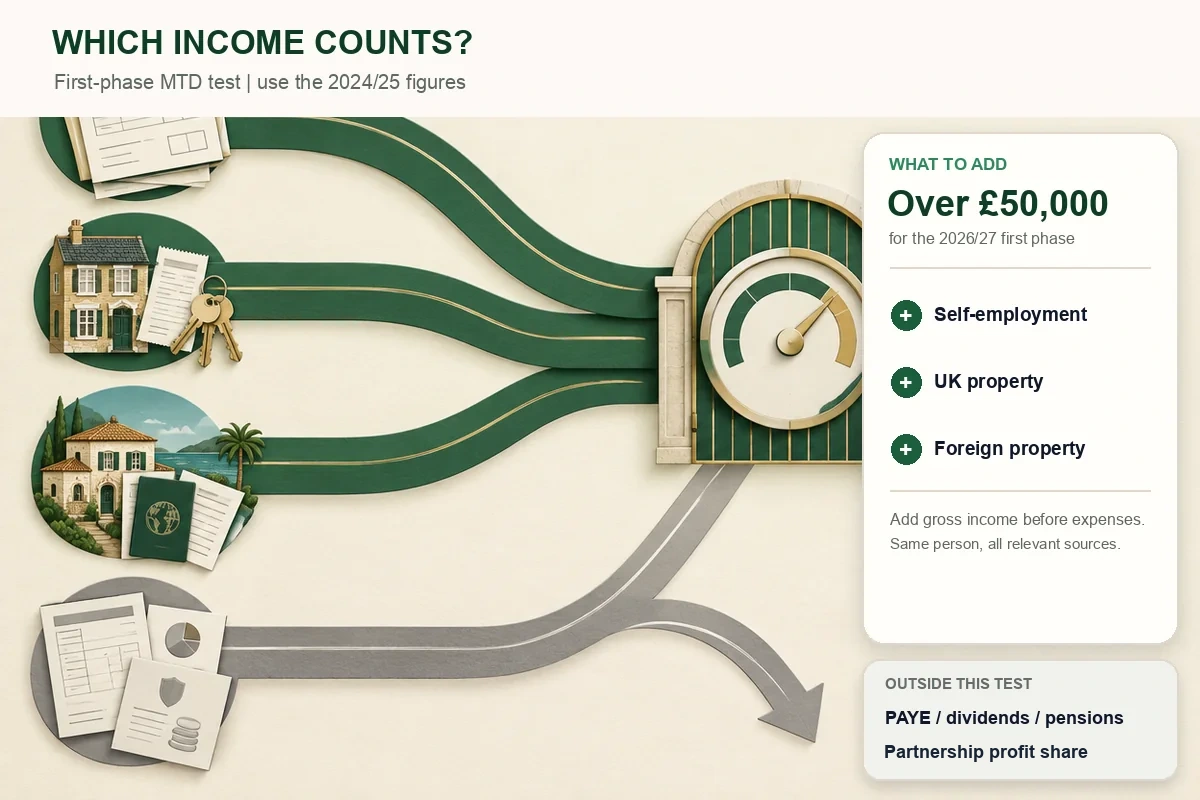
Qualifying income brings together the gross income from your self-employment and property sources before expenses are deducted. It can include several trades or property sources held by the same individual. HMRC has a separate explanation of how to work out qualifying income for MTD.
| Usually counts towards the test | Does not count towards this test |
|---|---|
| Gross receipts from self-employment, before business expenses | PAYE employment salary |
| Gross income from UK property, before property expenses | Dividends |
| Gross income from foreign property | State or private pension income |
| Relevant sources added together for the same person | A partner’s share of partnership profit |
| Income belonging to another person, such as a spouse’s separate business |
The word “gross” matters. A profitable business can have qualifying income above the threshold even if allowable costs bring its taxable profit below £50,000. On the other hand, a high salary from employment does not push a small side business over the MTD qualifying-income threshold by itself.
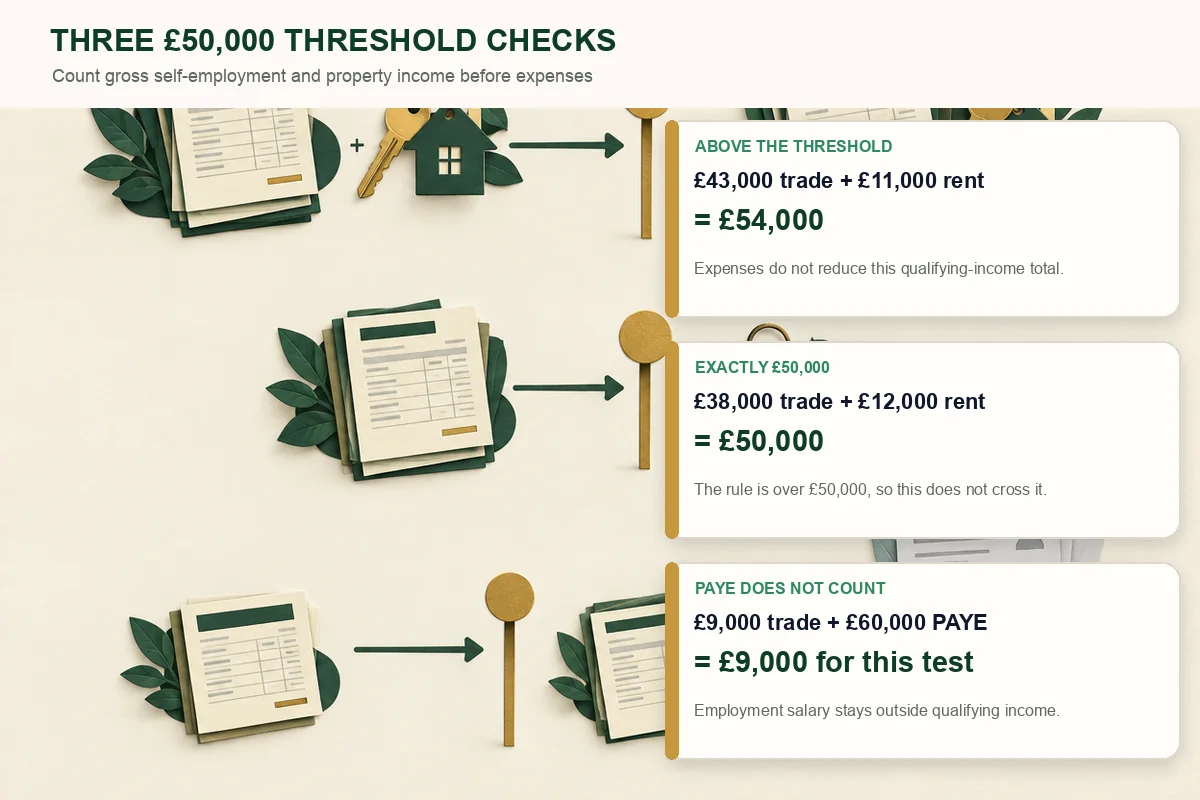
Example 1: trade and rent take the total above £50,000
Amira’s 2024/25 records show £43,000 of self-employed design receipts and £11,000 of gross rental income. Together, her qualifying income is £54,000. She has £7,000 of business costs and £2,000 of property costs, but those costs do not reduce the qualifying-income figure used for this threshold.
If the 2024/25 amounts in HMRC’s record are correct, she is above the £50,000 threshold for the initial MTD group. Her next job is to check that both the design work and property source appear in the sign-up record.
Example 2: exactly £50,000 is not “over £50,000”
Lewis has £38,000 of trade income and £12,000 of gross rent. The combined qualifying income is exactly £50,000. The first-phase rule says over £50,000, so this figure does not cross that line.
Lewis should still check that there are no other qualifying sources or figures that change the total. Do not round the number up or use profit after expenses as a substitute for the income figures in the return.
Example 3: a large PAYE salary does not join the calculation
Priya earns £60,000 in a PAYE job and has £9,000 of gross side-business income. Her qualifying income for this test is £9,000, not £69,000, because employment pay is outside the self-employment and property test.
That does not decide whether Priya has other tax or reporting duties. It only shows why the MTD threshold needs the right income categories. A Self Assessment return may still be needed for other reasons.
Treat HMRC’s income-source list as a record to check
Once you are signed up, open the MTD service and review the income sources HMRC has linked to you. Use your return and business records to check each one. A property you sold, a trade you stopped or a new business can leave the HMRC record different from what is happening now.
Work through the list one source at a time:
- A current source is missing: add the self-employment or property source in the HMRC service, following its instructions.
- A source has ended: tell HMRC the date it ceased. Keep the final invoices, rent records and expenses so you can support the final figures.
- A source is shown but was never yours: check the tax return and ask HMRC to correct the record. Do not submit figures for another person’s income just because they appear on your screen.
- You have several sources: compare the separate trade and property records with the totals on the return. The labels can be easy to mix up if you have more than one activity.
For UK property, HMRC treats a person’s UK properties as one UK property business for this process. Foreign properties are grouped separately as a foreign property business. If you co-own a property, check that the income recorded for you reflects your share, rather than the whole rent collected by all owners.
If the record looks wrong and you cannot amend it in the service, contact HMRC through the MTD or Self Assessment route shown in your account. Keep a note of the date, the source you queried and the return or records you used. If an agent manages your Self Assessment, ask them to check the same figures with you. The taxpayer remains responsible for making sure the sources and returns are complete.
What if your business or property income has stopped?
This is one of the most important checks if HMRC has signed you up based on an older return. If all of your self-employment and property sources stopped before 6 April 2026, update HMRC’s record. HMRC says you will not need to use MTD for Income Tax for 2026/27 in that situation. You still need to file your 2025/26 Self Assessment return if it is due.
The word “all” is important. If one trade stopped but you still have another trade or rental source, check whether the remaining sources mean you are still in scope. Do not close an active source just because one part of the business has ended.
If a source stopped on or after 6 April 2026, the reporting period may already have begun. You may need to keep digital records and send an update covering the source up to the date it ceased. Where there are several sources, the continuing ones still need to be included. Confirm the exact end date in HMRC’s service and follow the steps it gives you.
If a business was dormant rather than closed, or you are unsure when a property source ended for tax purposes, pause before changing the record. “No sales this month” is not always the same thing as the activity having ceased. Your legal and tax position depends on the facts, so check with HMRC or your accountant before submitting a cessation date.
If you are in scope, sort out the reporting that has already started
Being signed up does not set up your software or backfill your records. You still need compatible MTD software, a process for recording business and property income, and a way to send updates for every source included in your MTD record. If you have not chosen software, our MTD preparation checklist for sole traders and landlords explains the wider setup. The article on the first MTD quarterly update deadline covers the Q1 submission separately.
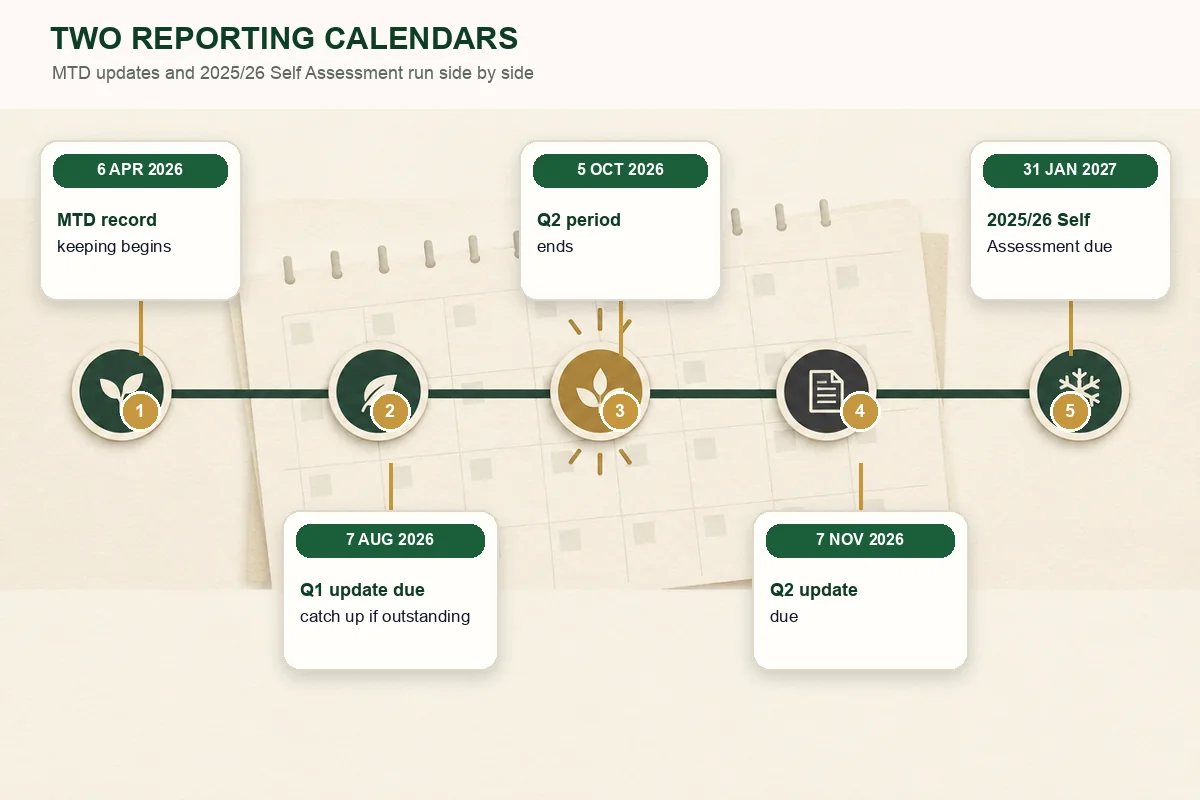
The first standard MTD quarter began on 6 April 2026. If HMRC has only now enrolled you, check the service and software for any update marked as due or overdue. Rebuild the digital records from 6 April where necessary and submit the first quarter as soon as the figures are reliable. Do not skip the quarter because the message arrived after its deadline.
| Item | Period or date | What to check |
|---|---|---|
| First MTD quarter (Q1) | 6 April to 5 July 2026 | Its 7 August update deadline has passed. Check whether HMRC shows it as outstanding. |
| Second MTD quarter (Q2) | 6 July to 5 October 2026 | The standard update deadline is 7 November 2026. Keep records current now. |
| 2025/26 Self Assessment return | Year ended 5 April 2026 | Online filing and payment deadline remains 31 January 2027. |
HMRC says it will not apply penalty points for late quarterly updates during 2026/27. That is a temporary easing of the penalty system, not a waiver of the updates themselves. You still need to send them, and normal penalties can still apply if you file a Self Assessment return late or pay tax late. Keep an eye on the final year-end submission as well as the quarterly dates.
If the figures are incomplete because your records are behind, reconcile the bank transactions, sales invoices, rent receipts and expenses before sending an update. A rough estimate can create more work later. If you cannot finish the full reconciliation immediately, ask your accountant which records are missing and agree what can be submitted safely.
What if you have not received an HMRC MTD letter?
The September enrolment is staged. HMRC may not have reached your account yet, so check your online services rather than waiting for a paper letter. Compare the qualifying-income test with the relevant Self Assessment return. If you believe you are required to use MTD but have not been signed up, follow HMRC’s guidance to sign up yourself or contact HMRC for help.
If you believe the qualifying-income figure is wrong, gather the return and a short calculation showing the gross self-employment and property figures you think should count. Explain any source that ended or changed. This gives HMRC or your agent something concrete to check, rather than a general “I don’t think MTD applies”.
Some people may qualify for an exemption if it is not reasonable for them to use digital tools, for example because of their circumstances or access to the internet. An exemption is not automatic. Contact HMRC and get a decision before relying on one. If you already have an agreed exemption, keep the confirmation with your tax records.
Your next practical step is to open the 2024/25 Self Assessment return and list every self-employment and property source shown there. Mark each one current, missing or ceased, then compare that list with HMRC’s MTD service. If the figures or dates do not line up, check them with your accountant before confirming the record. Our Self Assessment service can help you review the return and decide what needs correcting before the next MTD update.
Frequently asked questions about an HMRC MTD letter
Has HMRC started automatically signing people up for MTD for Income Tax?
Yes. From September 2026, HMRC is enrolling people in stages if they need to use MTD for Income Tax for 2026/27 and have not already signed up themselves. HMRC contacts you after it has signed you up.
How do I know if HMRC has signed me up for MTD?
Check your HMRC online services for a message or confirmation, and check your post if HMRC normally contacts you that way. Sign in to the service and review the income sources HMRC has recorded. A letter or message is a prompt to check your details, not a substitute for checking them.
What income counts towards the £50,000 MTD threshold?
For the first phase, HMRC combines gross income from your self-employment and property sources before expenses. PAYE employment income, dividends, pension income and a partner’s share of partnership profit do not count towards this qualifying-income test.
What should I do if HMRC has an old business or rental source on my record?
Update HMRC’s record with any missing, new or ceased self-employment and property sources. If a source stopped before 6 April 2026, tell HMRC. If all relevant sources had stopped before that date, you may not need MTD for 2026/27, but your 2025/26 Self Assessment return is still due.
Do I still need to send my first quarterly update if HMRC enrolled me late?
If you are required to use MTD for 2026/27, the first standard quarterly period ran from 6 April to 5 July 2026 and its update was due on 7 August. Check what HMRC or your software shows as outstanding and submit the update as soon as you can. HMRC is not applying quarterly-update penalty points for 2026/27, but the updates are still required.
Can I wait until HMRC sends me a letter?
No. HMRC is contacting people in stages, so not having a letter yet does not confirm that you are outside the rules. Check your qualifying income and HMRC online services, then sign up yourself or speak to HMRC if you think you are required but have not been enrolled.
What if I cannot use digital software?
A digital exclusion exemption may apply in some circumstances, but it is not automatic. Contact HMRC to discuss your circumstances and get a decision before assuming you do not need to follow the MTD process.

About Golden Tree Consulting
ACCA Affiliated | MBA Qualified
Golden Tree Accounting & Business Consulting provides expert tax, bookkeeping, and advisory services to sole traders and SMEs across Croydon, London, Surrey, and Kent. With multilingual support and decades of combined experience, we help businesses stay compliant and grow.
More Articles You Might Like
Continue exploring our financial insights
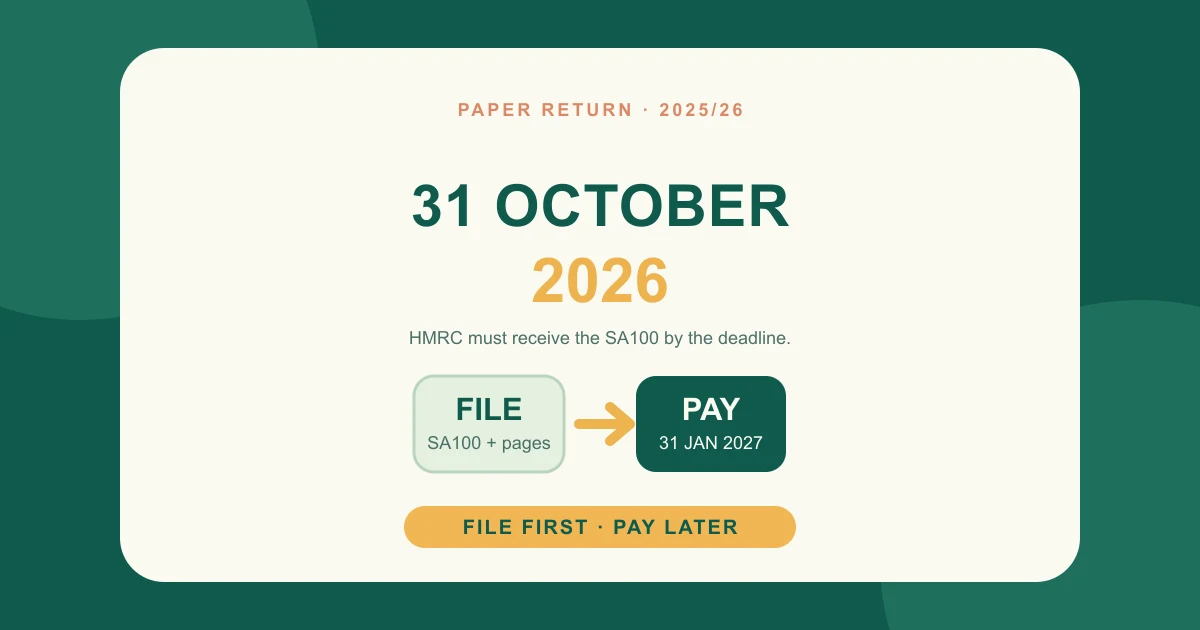
Self Assessment Paper Tax Return Deadline 2026: 31 October UK Guide
Self Assessment paper tax return deadline 2026 explained: what to post, where to send SA100, penalties, payment dates and a 31 October checklist.

HMRC Tax Investigation Letter: What to Do During a Compliance Check in 2026
Received an HMRC tax investigation letter? Learn what a compliance check means, what records to prepare, how penalties work and when to get help in 2026.

Self Assessment Registration Deadline 2026: How to Register by 5 October
Self Assessment registration deadline 2026 explained for new sole traders, freelancers and side hustles, with HMRC steps, dates and record tips.