HMRC Tax Investigation Letter: What to Do During a Compliance Check in 2026
Received an HMRC tax investigation letter? Learn what a compliance check means, what records to prepare, how penalties work and when to get help in 2026.
 Golden Tree Accounting 14 August 2026 17 min read
 On this page Show
- HMRC tax investigation letter: what the wording means
- What to do in the first 24 hours
- Build an evidence pack that answers the letter
- How an HMRC compliance check usually moves
- What to do if you find an error
- HMRC compliance check penalties explained with numbers
- If you disagree with HMRC or cannot pay
- When professional help is worth considering
- HMRC tax investigation letter FAQs
An HMRC tax investigation letter can make an ordinary working day feel rather less ordinary. The wording may sound serious, but a compliance check is not proof that you have cheated or that a large bill is waiting. HMRC uses checks to test whether the right tax was paid, the right allowances were claimed and the return or records support the figures.
HMRC normally calls the process a compliance check or tax enquiry. It can relate to a Self Assessment return, a Company Tax Return, VAT, PAYE or another tax position. The letter should tell you what HMRC wants to check, what information it needs and how to contact the officer dealing with the case.
Quick answer: verify that the contact is genuine, note the case reference and deadline, read the scope carefully, preserve the records that support the return and respond through the official channel. Keep filing other returns and paying tax that is due while the check is open. If the request is wide, technical or difficult to answer, ask an accountant to review it before you send anything.
Our Self Assessment service and bookkeeping support can help you reconstruct the evidence before a reply goes to HMRC. The useful work is usually done in the records and explanations, not in sending a panicked box of paperwork.

HMRC tax investigation letter: what the wording means
HMRC has the right to check whether a tax return is accurate and complete. A compliance check may be selected because figures look unusual, information from another source does not match, a claim needs evidence or the case forms part of a wider compliance programme. HMRC can check a return without the letter identifying one particular trigger. You cannot work out the reason simply from the fact that a letter has arrived.
The word “investigation” is common in everyday search queries, but it can imply more than the letter actually says. A routine request for evidence about one expense is not the same as a formal fraud investigation. Read the letter’s own description and scope before deciding what it means.
| Contact from HMRC | What it usually means | Your practical response |
|---|---|---|
| A nudge or reminder letter | HMRC wants you to review a possible issue. It may say that no formal check has started. | Check the figures, follow the instructions and keep a record of what you did. |
| Notice of a compliance check or tax enquiry | HMRC has opened a check into a return or tax position. | Identify the tax, period, questions, named officer and response date. |
| Request for information | HMRC wants particular documents or explanations. | Match each request to evidence and ask for clarification if a point is unclear. |
| Formal information notice | HMRC is using statutory information powers. | Treat the deadline seriously and get advice if the notice is unreasonable, unclear or difficult to meet. |
| Visit or inspection notice | HMRC wants to inspect premises, assets or records. | Check the proposed arrangements and have an adviser present if useful. |
A letter that asks you to check a return before HMRC decides whether to open a check is not automatically the same as a formal enquiry. That distinction matters because the response route and the effect of a later disclosure can differ. If the wording is unclear, ask the named HMRC contact what process has started and keep the question in writing.
What to do in the first 24 hours
The aim is to create a reliable record of the request before you start answering it. The following checks take less time than recovering from a missed deadline or a reply that covers the wrong tax year.
- Check the letter against HMRC’s guidance on genuine letters. Do not send identity documents or bank details to an address that is not confirmed through an official HMRC route.
- Write down the case reference, tax type, tax year or accounting period, named officer, telephone number, secure message route and exact response date.
- Read every question and mark the words that limit the scope, such as “business expenses for 2024/25” or “VAT invoices for the period ending 31 March 2026”.
- Tell your accountant or tax adviser straight away if they prepared the return, especially if HMRC has copied them into the letter.
- Keep the ordinary tax calendar running. HMRC’s tax compliance checks guidance says you should continue to file returns and pay taxes due while a check is open.
- If you cannot meet the stated date, contact the officer before it passes. Explain what is missing, what you can provide and when you expect to send it. Keep the request for extra time and the reply together.
Do not ring the general HMRC helpline and read the whole letter aloud if the case officer’s details are already provided. The named officer has the context and can tell you whether a question is relevant. If you call, make a note of the date, time, name and outcome. A short written summary afterwards prevents two different versions of the conversation from developing.
Worked example: turning a deadline into a small job list
Imagine a letter dated 14 August 2026 asks a sole trader for bank statements, sales invoices and an explanation of travel expenses by 12 September 2026. The deadline in the letter is the one that matters. Do not assume every HMRC request gives the same number of days, and do not wait until September to start.
Create three folders named “bank”, “sales” and “travel”. Put the request beside a one-page list of the documents needed, add the case reference to the file name and set an internal target of 5 September. If one supplier invoice is missing, tell the officer before 12 September and explain the steps you have taken to obtain a copy. That is a clear response plan, not an admission that the return is wrong.
Do not ignore a letter because the amount is small. A check can begin with one £90 expense and expand when the underlying records do not explain the figure. A calm, relevant reply is usually easier for everyone than silence.
Build an evidence pack that answers the letter
Gather the return and its working papers before you gather every document in the office. HMRC’s request should guide the pack. Sending unrelated personal statements or years of unsorted email attachments can create more questions and make it harder to see the evidence that actually answers the case.
For a small business or sole trader, the pack may include:
- the submitted Self Assessment or Company Tax Return, including the relevant pages and computations
- sales invoices, till reports, platform reports, credit notes and refund records
- business bank and card statements, with transfers and personal transactions identified
- purchase invoices, receipts, mileage logs and home-working calculations
- VAT returns, VAT account reports and evidence for input VAT claims
- payroll reports, P11D records and pension submissions where employment costs are in scope
- contracts, loan agreements, dividend vouchers, board minutes and director loan schedules for a limited company
- a short reconciliation that shows how the total in the records became the figure in the return
Use an index. A useful column set is HMRC question, document supplied, period covered, calculation or note, and outstanding item. This lets you see a gap before HMRC finds it and gives the officer a map through the material.
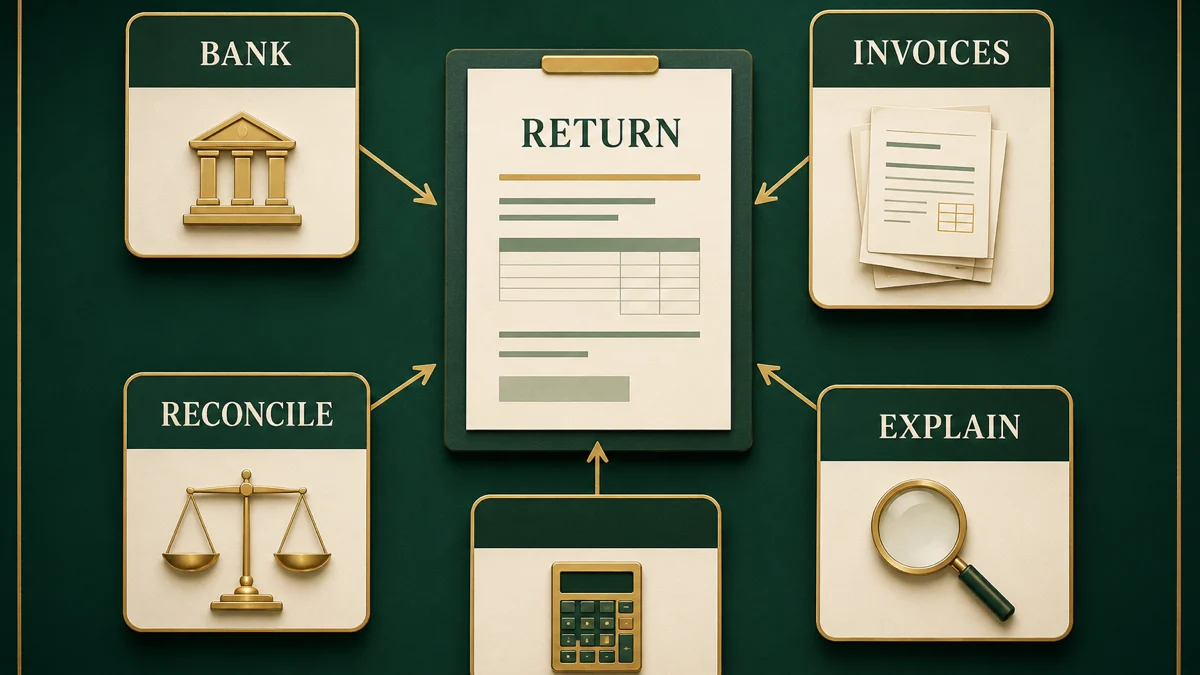
Reconcile differences instead of hiding them
Bank receipts are not always the same as turnover. A transfer from a savings account, a customer payment for an earlier year, a loan, a VAT-inclusive amount or a marketplace payout can make the bank total look different from the tax return. Your job is to explain the difference with evidence.
Suppose a freelancer’s business account shows £51,200 of incoming payments for the year, while the return reports £48,800 of turnover. The apparent gap is £2,400. A review finds that £1,600 was a client invoice raised in the previous tax year, and £800 was a transfer from the freelancer’s personal savings. The return may still be correct, but the explanation needs the earlier invoice, the bank transfer trail and a short reconciliation. Without those notes, the same figures can look like undeclared sales.
If the difference is a genuine error, do not edit the records to make the totals match. Keep the original evidence, calculate the correct position and tell the adviser or officer what changed. A clean explanation of a mistake is more useful than a tidy file that cannot be trusted.
Keep the records for the whole relevant period
Self-employed people generally need to keep records for at least 5 years after the 31 January submission deadline for the relevant tax year. HMRC’s record-keeping guidance gives the example that records for a return filed by 31 January 2024 should normally be kept until at least the end of January 2029.
Companies normally need to keep Corporation Tax records for at least 6 years from the end of the accounting period, and longer if the return was late or HMRC has started a check. The GOV.UK company records guidance explains the rule. A live compliance check is a reason to preserve the relevant records, even if an ordinary retention date appears to have passed.
How an HMRC compliance check usually moves
There is no single timetable for every check. A short question about one figure may close after a couple of exchanges. A case covering several returns, taxes, years or information notices can take much longer. The scope of the request, quality of the records, time taken to reply and any disagreement all affect the path.
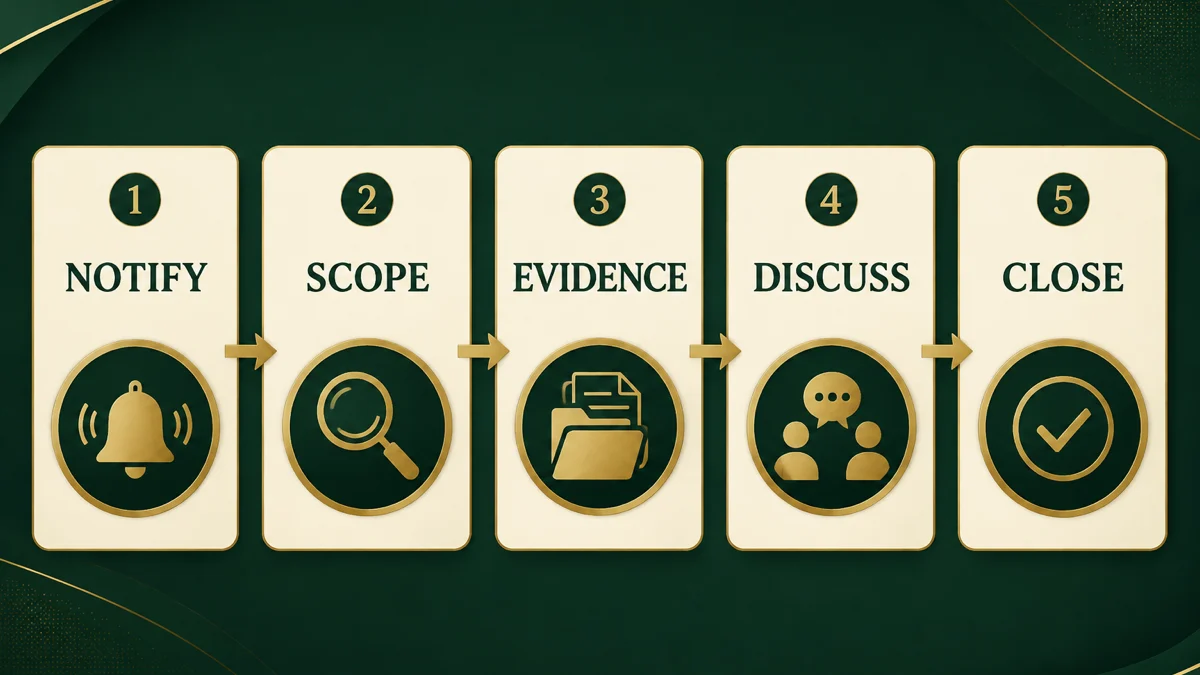
The process often follows this shape:
- Notification: HMRC writes or calls to explain what it wants to check.
- Scope: you and the officer identify the tax, period, figures and questions in play.
- Evidence: you provide records, calculations and explanations. HMRC may ask follow-up questions.
- Discussion: the officer tests the evidence, and you correct misunderstandings or identify any error.
- Outcome: HMRC closes the check, repays tax, or issues an assessment for extra tax, interest and possibly a penalty.
HMRC may ask to discuss your affairs, inspect business premises or visit an adviser’s office. You can have an accountant or legal adviser with you during a visit. If HMRC asks for information that seems irrelevant or unreasonable, say so promptly and explain why. Do not simply refuse to engage. The officer may issue a formal information notice, and failing to provide information or refusing a visit can lead to a penalty unless a reasonable excuse applies.
The request should be specific enough for you to understand what is needed. HMRC’s internal guidance says a formal notice must allow a reasonable period, but there is no universal minimum deadline. A standard request sent by post often allows around 30 days, yet the notice and the facts of the case control. Treat the date written on your letter as the working deadline.
Keep filing and paying while the check is open
An open check does not pause the rest of your tax obligations. File later returns by their normal deadlines and pay amounts due unless HMRC or your adviser confirms a different legal position. A compliance check into 2024/25 does not give you extra time for a VAT return, PAYE payment or 2025/26 Self Assessment task.
Make a short monthly note of any new issue that might touch the same records. If a later return uses the same expense category or sales system, do not change the treatment casually. Ask whether the new information belongs in the existing check or a separate return.
What to do if you find an error
Finding a mistake after the letter arrives is uncomfortable, but hiding it is worse. Preserve the original return and working papers, quantify the difference and ask for advice on the right disclosure or amendment route. Tell HMRC if the error is within the scope of the check, rather than hoping the officer will not spot it.
The word prompted matters for penalties. Once HMRC has started checking a particular issue, a disclosure about that issue will usually be treated as prompted. A disclosure made before you had reason to believe HMRC had found the issue can be unprompted. The distinction affects the penalty range, so do not label a disclosure yourself without checking the facts.
Reasonable care also matters. If you kept accurate records, checked an uncertain point and made a genuine mistake despite taking reasonable care, an inaccuracy does not automatically produce a penalty. “My accountant filed it” is not a complete defence if you supplied missing information or failed to review an obvious error. The right question is what steps you took, given your experience and circumstances, to make the return accurate.
HMRC compliance check penalties explained with numbers
If HMRC finds an inaccuracy that caused tax to be unpaid, understated or overclaimed, the penalty depends on the behaviour and whether the disclosure was prompted. HMRC’s current CC/FS7A penalty factsheet, updated in July 2026, gives these standard ranges for onshore inaccuracies:
| Behaviour | Unprompted disclosure | Prompted disclosure |
|---|---|---|
| Reasonable care | No penalty | No penalty |
| Careless | 0% to 30% | 15% to 30% |
| Deliberate | 20% to 70% | 35% to 70% |
| Deliberate and concealed | 30% to 100% | 50% to 100% |
The percentages are applied to the potential lost revenue, not simply to your turnover or the total tax bill. The final figure can be reduced for the quality of disclosure, often described as telling, helping and giving. Different rules can apply to offshore matters, specific taxes and older returns, so use the table as a guide to the structure, not a quote for your case.
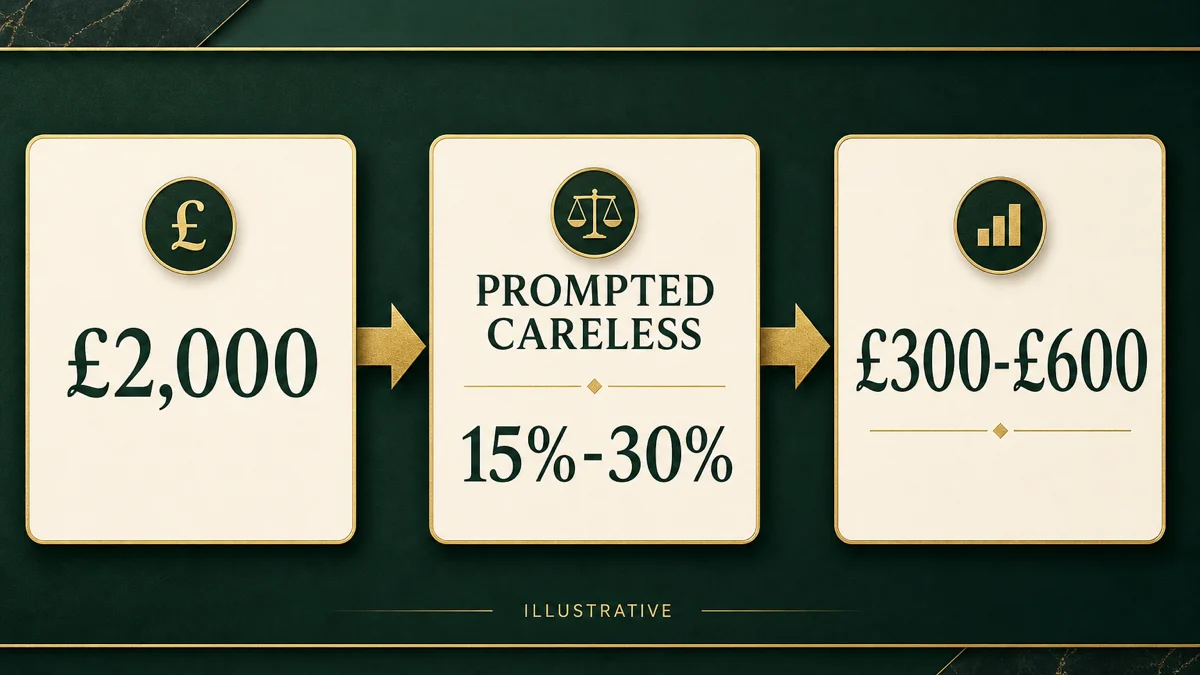
Worked example: what a range means
Assume a prompted check finds a careless inaccuracy that reduced tax by £2,000. The standard penalty range is 15% to 30%, so the starting range is £300 to £600 before any reduction for the quality of disclosure. That is separate from the £2,000 tax and any interest. It is not an automatic £600 penalty, and it is not a reason to guess at the behaviour category without reviewing the evidence.
If the error happened because a receipt was missing but the records otherwise show a sensible process, the explanation and evidence may support a reasonable-care position. If income was left out after several checks or records were altered, the risk is different. Facts matter more than the label you put on the mistake.
If you disagree with HMRC or cannot pay
Ask the officer to set out the disputed calculation and the evidence behind it. Reply point by point, identify the document that supports your position and state what remains unresolved. A disagreement is easier to handle when it is tied to a line in the return, rather than a general feeling that the result is unfair.
If HMRC should stop the check, you can write to the office that sent the letter and explain why. If the dispute is suitable, Alternative Dispute Resolution may help resolve the issue during the check. HMRC can also issue a formal decision, and the decision letter should explain the review and appeal route. Follow that letter rather than relying on a general deadline found in an old forum post.
If the outcome says extra tax is due, GOV.UK says it is normally payable within 30 days, with interest usually running from the original due date. Contact the officer if the amount cannot be paid in one go. Do not wait until the payment deadline to explain a cash-flow problem. A payment arrangement does not usually remove the tax, interest or any penalty, but early communication gives HMRC more information to work with.
When professional help is worth considering
You do not need an accountant for every simple question. A short check about one receipt may be manageable if the request is clear and your records are sound. Advice becomes more valuable when:
- the letter covers several tax years, returns or taxes
- HMRC has issued a formal information notice or arranged a visit
- the figures involve VAT, overseas income, property, R&D, share transactions or employment status
- the bank totals do not reconcile with the return
- you suspect income, gains or expenses were missed
- the letter mentions penalties, deliberate behaviour or a possible disclosure
- you are asked to attend a meeting and do not know how to present the records
- the result could affect the company, director and personal Self Assessment position at the same time
An adviser should review the underlying records, check the scope and agree the reply with you. Sending a generic template or every file on your laptop is not a substitute for understanding the numbers. Our annual accounts service can help where the check involves a limited company, and our VAT returns service covers VAT records and reconciliations. If you want a review before replying, use our contact page with the letter, return period and response date to hand.
HMRC tax investigation letter FAQs
Is an HMRC tax investigation the same as a compliance check?
HMRC usually calls it a compliance check or tax enquiry. It means HMRC is checking a tax position, return, accounts, VAT records or PAYE records. It does not prove that you have deliberately done anything wrong.
What should I do when I receive an HMRC compliance check letter?
Check that the contact is genuine, note the case reference and response date, read exactly what HMRC wants, preserve the relevant records and contact the named officer or your authorised agent before the deadline. Do not ignore the letter.
How long does an HMRC compliance check take?
There is no single published timetable for every compliance check. A short records query may close quickly, while a check involving several years, taxes or information notices can take much longer. The scope, quality of the records and speed of replies all affect the duration.
Can I use an accountant during an HMRC compliance check?
Yes. HMRC can deal with an authorised tax agent, and you can have an accountant or legal adviser with you during a visit. An adviser should understand the return and evidence, not simply forward a large unreviewed document bundle.
What records should I send to HMRC?
Send the records that answer the questions in the letter, such as bank statements, invoices, receipts, sales reports, VAT returns, payroll reports, contracts and working papers. Keep an index and explain any missing or unusual item rather than sending unrelated private information.
Can HMRC charge a penalty if my tax return is wrong?
A penalty may apply if an inaccuracy caused tax to be unpaid, understated or overclaimed and HMRC considers the behaviour careless, deliberate or deliberately concealed. If you took reasonable care, an inaccuracy does not automatically lead to a penalty.
What if I disagree with HMRC during the check?
Ask the officer to explain the point, provide evidence and keep your disagreement focused on the facts. You can ask HMRC to stop the check in writing, use Alternative Dispute Resolution in suitable cases and appeal a tax decision using the route and deadline in the decision letter.
Put the letter, case reference, return, evidence index and response date in one folder today. If the request goes beyond a single straightforward document, get the scope and figures reviewed before you reply. That is the practical step most likely to keep a frightening envelope from turning into a much larger problem.

About Golden Tree Consulting
ACCA Affiliated | MBA Qualified
Golden Tree Accounting & Business Consulting provides expert tax, bookkeeping, and advisory services to sole traders and SMEs across Croydon, London, Surrey, and Kent. With multilingual support and decades of combined experience, we help businesses stay compliant and grow.
Offices in Croydon and London Bridge.
Related guides

HMRC MTD Letter 2026: What to Check If You've Been Signed Up
Received an HMRC MTD letter? Check the £50,000 qualifying-income test, correct changed income sources and catch up with the 2026/27 steps.
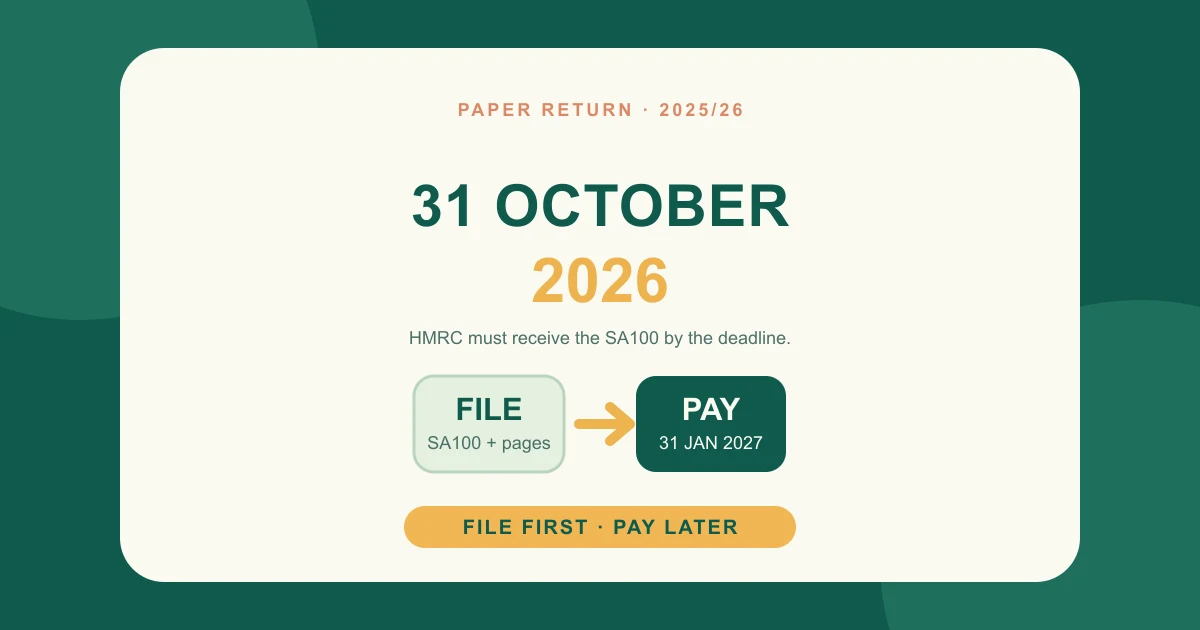
Self Assessment Paper Tax Return Deadline 2026: 31 October UK Guide
Self Assessment paper tax return deadline 2026 explained: what to post, where to send SA100, penalties, payment dates and a 31 October checklist.

Self Assessment Registration Deadline 2026: How to Register by 5 October
Self Assessment registration deadline 2026 explained for new sole traders, freelancers and side hustles, with HMRC steps, dates and record tips.