Trader Support Service New Platform: What to Do Before 20 October 2026
Trader Support Service new platform: pre-enrol before 20 October 2026, create a new password, check user access and keep movement records in order.
 Golden Tree Accounting 30 September 2026 14 min read
 On this page Show
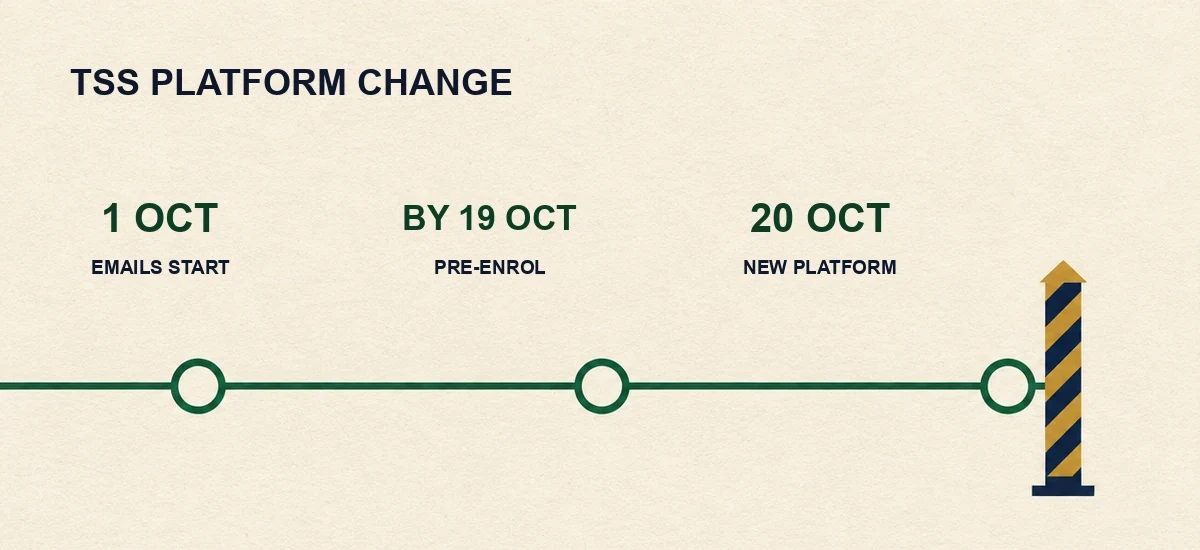
The Trader Support Service’s new platform goes live on 20 October 2026, when HMRC’s replacement service becomes available. If your business already uses TSS for goods moving between Great Britain and Northern Ireland, the practical task is to pre-enrol, create a new password and check who has permission to use the service. The current platform will not accept new movements from that date.
The change is close. HMRC says invitation emails will start going out from 1 October, with instructions for pre-enrolment and access to a test environment. You have less than three weeks between the first invitations and the switchover, so it is worth deciding now who will handle the setup.
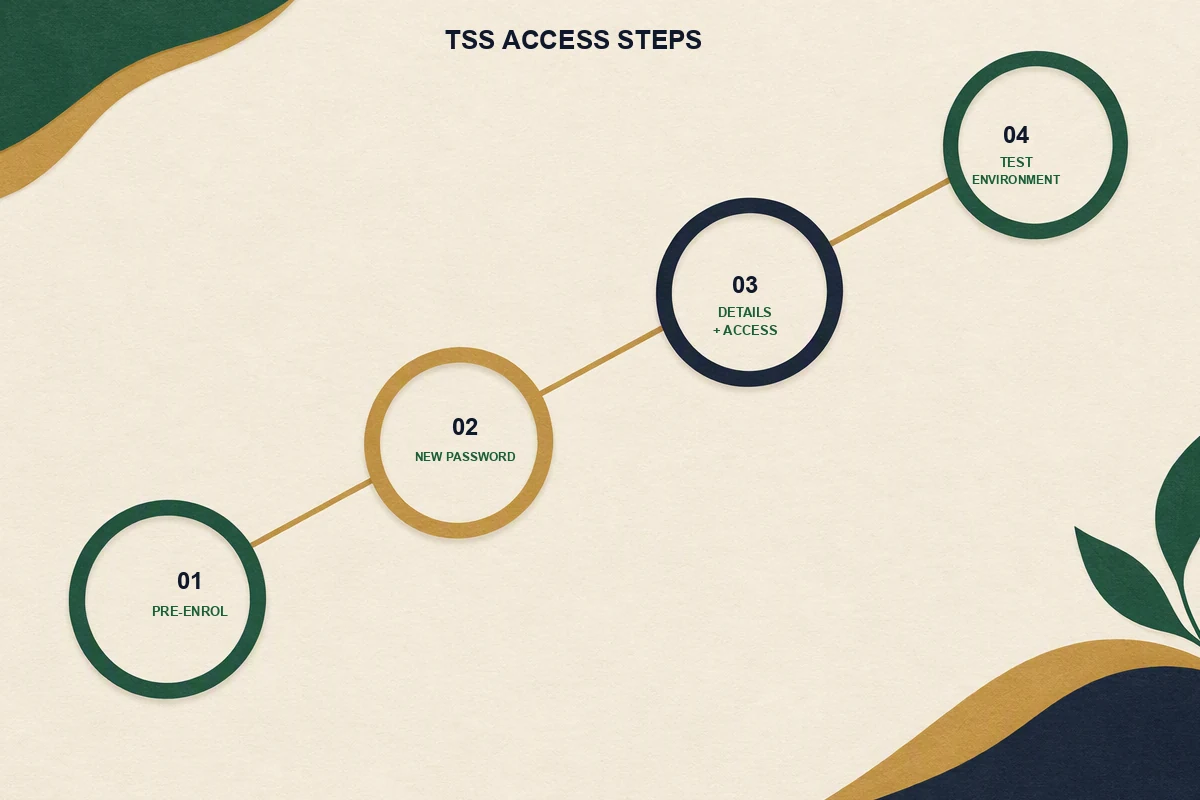
Quick answer: Existing TSS users will be migrated to the new service and do not need to register for TSS again. They do need to follow the invitation instructions, create a new password, confirm their details and permissions, and complete pre-enrolment before 20 October. Customs processes and legal obligations stay the same.

Trader Support Service new platform: what changes on 20 October
The Trader Support Service is a free-to-use government service for businesses moving goods between Great Britain and Northern Ireland. It can provide support with the Windsor Framework arrangements and submit customs and safety and security declarations on a business’s behalf where those declarations are required. It is not a general accounting system, and the platform move does not replace the business records that sit behind a movement.
HMRC announced the change on 22 September. The new platform will be operated by Netcompany and is due to go live for all users on 20 October. Existing TSS users are asked to look out for an invitation email from 1 October and pre-enrol before the switchover. HMRC also says users will need a new password and should check their business details and permissions.
| Date | What HMRC says will happen | What to do |
|---|---|---|
| From 1 October 2026 | Existing TSS users start receiving invitation emails and test-environment instructions | Check the email address connected to the current TSS account and watch for the invitation |
| Before 20 October 2026 | Users should pre-enrol on the new platform | Follow the email, create a new password, check details and permissions, then try the test environment |
| 20 October 2026 | The new platform goes live; the current TSS will not accept new movements | Use the new TSS platform for movements taking place on or after this date |
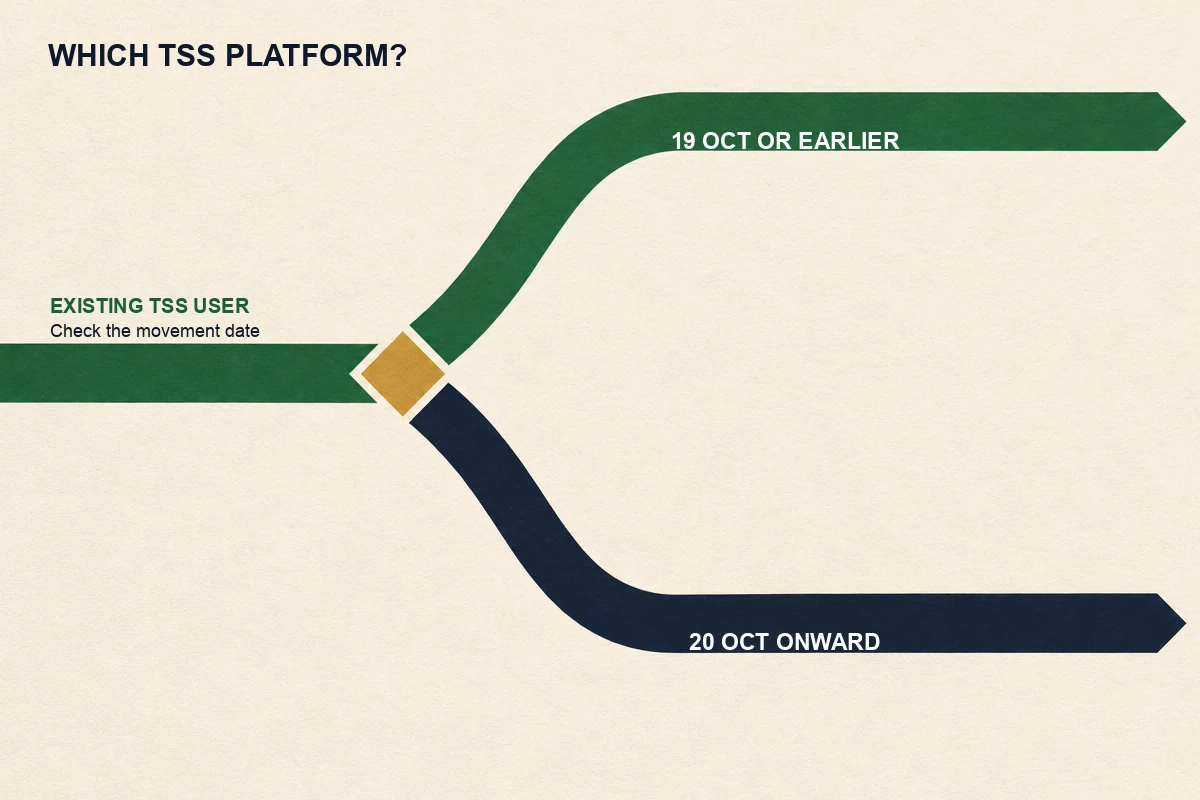
The key word is movement. The cutoff is not the date you issued a sales invoice, paid a supplier or entered a transaction in your bookkeeping software. If you use TSS, note when the goods movement itself is taking place and follow the instructions for the relevant declaration. If the timing of a declaration and the movement crosses the switchover date, check with TSS or your customs intermediary rather than assuming the old system will accept a late submission.
The current TSS service guidance says existing users will be migrated and do not need to register again. That does not mean you can ignore the invitation. Migration carries the existing service relationship forward, while the email explains how to access the replacement platform. Treat those as two separate steps: you do not reapply for TSS, but you still need to finish the access setup HMRC has requested.
Which businesses need to act?
Start with the way your business currently arranges its GB to Northern Ireland or Northern Ireland to GB movements. If you already have a TSS account and use it to submit or manage declarations, someone in the business needs to complete the platform setup. The same applies if a colleague or authorised representative signs in for you. Make sure the invitation reaches the person who can act on the account, not only a shared inbox nobody checks.
You may be a small retailer, wholesaler, manufacturer, online seller or haulier. The size of the business does not remove the need to switch if you rely on TSS. HMRC says updating a profile may take 5 to 30 minutes, depending on the business’s size and whether the needed information is available. A straightforward account may take only a few minutes. A business with several locations, users or permissions should allow longer to review its access carefully.
The message is different if your business does not use TSS. HMRC’s notice concerns the replacement TSS platform. If a customs intermediary handles your declarations through its own arrangement, ask that provider whether it needs any information from you. Do not create a second TSS account just because your business sells to Northern Ireland. The government describes TSS as a support service businesses can use, not a bookkeeping or VAT account that every UK business must open.
TSS access is also separate from other customs authorisations. For example, do not assume that a new TSS password creates, changes or renews a UK Internal Market Scheme authorisation. If your business relies on a specific authorisation or simplified declaration route, check its conditions with HMRC or the agent who manages the movement. The platform change does not decide whether your goods qualify for a customs arrangement.
The service itself is free to use. That does not mean every part of moving goods has no cost. A business may still pay an independent intermediary, carrier or adviser for a separate service. Keep those fees distinct from customs duties, import VAT and ordinary supplier charges in your accounts. If you are not sure what a bill covers, ask the supplier to identify the service before posting it.
What to do when the TSS invitation arrives
HMRC says the invitation emails will begin on 1 October. The message should include instructions for pre-enrolling in the new platform and accessing a test environment. Keep the invitation with your customs records so the person taking over the account can find the instructions later. If several people share responsibility for shipments, tell them who owns the setup and when it needs to be complete.
Use the email instructions to reach the new service and create the new password. Do not send a password in a shared spreadsheet or leave it in an invoice folder. If your business uses a password manager, store it under the company process your team already follows. Keep individual access under control and check that people who no longer handle movements do not retain permissions they no longer need.
Review the business details shown in the new service and check the account permissions. HMRC has not asked businesses to change their customs process as part of the platform move, but it does ask them to make sure their details and permissions are up to date. If a legal name, email address or staff responsibility has changed, do not guess which field to edit. Follow the instructions in the invitation or contact TSS support if the account does not match the business’s current position.
The test environment is there so users can become familiar with the new platform before a live movement depends on it. Use it if your invitation provides access. Try to locate the routine actions your team performs and confirm that the intended users can reach them. Do not enter a real declaration or sensitive customer information into a test environment unless HMRC’s instructions explicitly tell you to do so.
If the invitation does not arrive, check the email address linked to your existing account and the junk folder. Because the invitation schedule starts on 1 October, not receiving a message on the first day does not, by itself, show that your account is missing or that you have lost access. Ask the current account administrator to check the contact details, then contact the TSS service if you still cannot find the instructions or cannot complete pre-enrolment.
HMRC’s TSS guidance lists the contact number 0800 870 8173, open from 8am to 5:30pm, seven days a week. Use that route if the invitation link fails, the business details look wrong or your team cannot confirm the permissions needed for a movement. It is easier to resolve an access question before a shipment is booked than while the driver is waiting.
Worked examples: dates, access and recordkeeping
A movement on 19 October and another on 20 October
Suppose your business has two consignments, one taking place on 19 October 2026 and another on 20 October 2026. The first movement is before the stated switchover date. The second takes place on the go-live date, so HMRC says it must be submitted on the new platform. The old service will not accept new movements from 20 October.
Use the date of the goods movement in your planning, not the date on the sales invoice. If you invoice a customer on 16 October for goods that move on 20 October, the 20 October movement is still on the new-platform side of the change. If a declaration is due at a different time from the movement, check the current submission instructions before relying on this simple date example.
An invitation arrives on 15 October
If your invitation arrives on 15 October, the 20 October go-live date is only five calendar days away. HMRC says profile updates can take up to 30 minutes, but that estimate does not include time spent finding the right account holder, resolving a permissions question or contacting support. Start the setup as soon as you receive the email. Leaving it until the evening of 19 October leaves very little room to fix a problem.
A business has more than one person handling movements
Imagine a small company where the owner approves supplier purchases, an office manager handles paperwork and two warehouse colleagues arrange collections. Before migration, write down which people actually need to use TSS and what they do there. When the invitation arrives, compare the new permissions with those duties. The point is not to give every employee access. It is to make sure the person responsible for the next movement can reach the right part of the service.
If the person who receives the invitation is not the person who submits declarations, agree the handover before changing the password. Keep the confirmation that access was set up, but do not store the password in the movement spreadsheet. If your business cannot tell who currently manages its TSS login, ask the person responsible for customs before the invitation window closes.
Keep the platform change separate from your bookkeeping
The new login does not replace your sales ledger, purchase records or VAT Return. Keep the supporting record for a goods movement with the related supplier or customer paperwork. A useful file can include the invoice, order confirmation, dispatch or receipt evidence, the date the goods moved, the TSS confirmation or declaration information you receive, and any related customs or VAT documents. The exact documents depend on the movement and your role in it, so follow the instructions that apply to your business.
This matters when an invoice and a movement fall in different accounting periods. A supplier may invoice at the end of September while the goods move in October. If those dates are recorded as one event, it can be harder to reconcile stock, payment and movement evidence later. Record each date for its own purpose and keep the cross-reference that shows which goods and transaction belong together.
At month end, compare the movement records with your purchase and sales records. Follow up missing invoices, duplicate entries and movements with no supporting reference while someone still remembers what happened. If your business files VAT Returns, keep the underlying documents available for the period and treatment that applies. The platform migration does not change VAT rates or filing dates, so do not use the TSS switch as a reason to move a VAT transaction into a different period.
Our bookkeeping service can help keep invoices, movement evidence and account entries organised. If you need support preparing or checking a return, see our VAT Returns service. For help with your business records, contact Golden Tree and tell us which part of the reconciliation is causing difficulty. We do not provide TSS account access or customs declarations, so those questions should go to HMRC or your customs intermediary.
Keeping the records separate also makes handovers easier. If the person who manages TSS changes, the next person should be able to identify which invoices and movements are still open without using the previous employee’s password. A short list of pending movements, their owners and any unanswered questions is more useful than a shared login and a folder full of unlabelled downloads.
Trader Support Service platform FAQs
When does the new Trader Support Service platform go live?
HMRC says the new platform goes live on 20 October 2026. From that date, the current TSS platform will not accept new movements, so existing TSS users should complete the invitation and pre-enrolment steps before then.
Do existing TSS users need to register again?
HMRC says existing users will be migrated to the new service and do not need to register again. You still need to follow the invitation instructions, create a new password and check your business details and permissions.
What should I do when the TSS invitation arrives?
Follow the instructions in the email, pre-enrol on the new platform, create a new password, check your details and permissions, and use the test environment if you can. HMRC says a profile update could take 5 to 30 minutes, depending on the size of your business and the information available.
Does the TSS platform change alter customs rules?
No. HMRC says customs processes and legal and regulatory obligations remain the same. The change is to the TSS platform; it does not remove duties or change the evidence you need to keep.
Is the Trader Support Service free to use?
Yes. HMRC describes TSS as a free-to-use service for businesses moving goods between Great Britain and Northern Ireland. A separate customs intermediary or adviser may have its own charges, so check its terms.
How can I contact the Trader Support Service?
HMRC’s current TSS guidance lists 0800 870 8173, open from 8am to 5:30pm, seven days a week. Use the official contact route if the invitation or account steps do not work.
Does every business moving goods to Northern Ireland need to use TSS?
The October change is about the TSS platform. If your business uses a customs intermediary or another declaration route, ask them whether you need to do anything. Do not open a second TSS account solely because your goods move to Northern Ireland.
Put 19 October in your calendar as the last day to finish pre-enrolment before the stated 20 October changeover, then ask one named person to confirm the new login and permissions before the next movement.

About Golden Tree Consulting
ACCA Affiliated | MBA Qualified
Golden Tree Accounting & Business Consulting provides expert tax, bookkeeping, and advisory services to sole traders and SMEs across Croydon, London, Surrey, and Kent. With multilingual support and decades of combined experience, we help businesses stay compliant and grow.
Offices in Croydon and London Bridge.
Related guides
Vaping Products Duty UK 2026: Retailer Guide to Stock, Costs and Stamps
Vaping Products Duty UK starts 1 October 2026. See retailer approval rules, £2.20 per 10ml calculations, stamp checks, old-stock dates and records.

Crypto Tax UK 2026: Capital Gains, Staking Income and HMRC Records
Crypto tax UK 2026 explained with Capital Gains Tax rates, staking and mining income, exchange records, reporting routes and worked examples.
VAT Bad Debt Relief UK 2026: How to Reclaim VAT on Unpaid Invoices
VAT bad debt relief UK 2026 explained: check the six-month rule, calculate the VAT on unpaid invoices, claim it on your return and keep the right records.