How to Claim VAT Back in the UK: Input Tax Guide for Small Businesses 2026
How to claim VAT back in the UK in 2026: check input tax, VAT invoices, pre-registration costs, blocked expenses and your VAT return.
 Golden Tree Accounting 21 August 2026 18 min read
 On this page Show
- How claiming VAT back actually works
- Who can claim input VAT?
- How to claim VAT back on business expenses, step by step
- What evidence do you need for a VAT claim?
- Which business expenses let you claim VAT back?
- Can you claim VAT from before registration?
- Common VAT reclaim mistakes to avoid
- A practical VAT claim checklist
- FAQs about claiming VAT back in the UK
A £1,200 supplier invoice can contain £200 of VAT. How to claim VAT back in the UK is not a question of finding a refund button, though. You recover eligible input VAT through your VAT Return, and only after checking that you are registered, the purchase supports your taxable business and the evidence is good enough.
That distinction matters for a new VAT-registered business. A business can buy a laptop, pay for software or purchase stock, then discover that the invoice is a pro-forma document, the supplier is not VAT registered, or the item is partly private. The cost may still be a business expense, but the VAT claim can be wrong.
Quick answer: total the VAT on eligible business purchases, enter it as input tax in your VAT records and include it in the relevant VAT Return. Your claim normally reduces the VAT you pay to HMRC. If input VAT is higher than output VAT, HMRC will usually repay the difference.
Our VAT returns service can help if you have a first return to prepare, a large pre-registration claim or records that need sorting before submission. The useful check happens before the return is sent, while the invoices and business decisions are still easy to explain.
How claiming VAT back actually works
VAT-registered businesses normally collect VAT from customers and pay VAT on business purchases. The customer VAT is called output tax. The VAT on eligible purchases is input tax. You do not reclaim each receipt separately from HMRC. You record the input tax and offset it against the output tax on your VAT Return.
The basic calculation is:
output VAT on sales minus eligible input VAT on purchases = VAT payable or repayable
GOV.UK shows the main figures in Box 3 for VAT due on sales, Box 4 for VAT reclaimed on purchases and Box 5 for the net amount due or repayable. The GOV.UK VAT repayment guidance explains how those boxes lead to a repayment. There can be other boxes and adjustments, so this is a useful explanation of the core idea rather than a substitute for completing the whole return.
| VAT Return example | Output VAT | Eligible input VAT | Core result |
|---|---|---|---|
| Sales of £9,000 plus VAT, purchases of £4,000 plus VAT | £1,800 | £800 | £1,000 to HMRC before other adjustments |
| Same sales, but eligible purchases include £2,200 of VAT | £1,800 | £2,200 | £400 repayment before other adjustments |
The second line does not mean that every large purchase creates an automatic cash refund. HMRC can ask why the purchase was made, how it supports the business and how the VAT was calculated. A repayment is the result of a correct return, not permission to claim whatever happens to be on a card statement.
Who can claim input VAT?
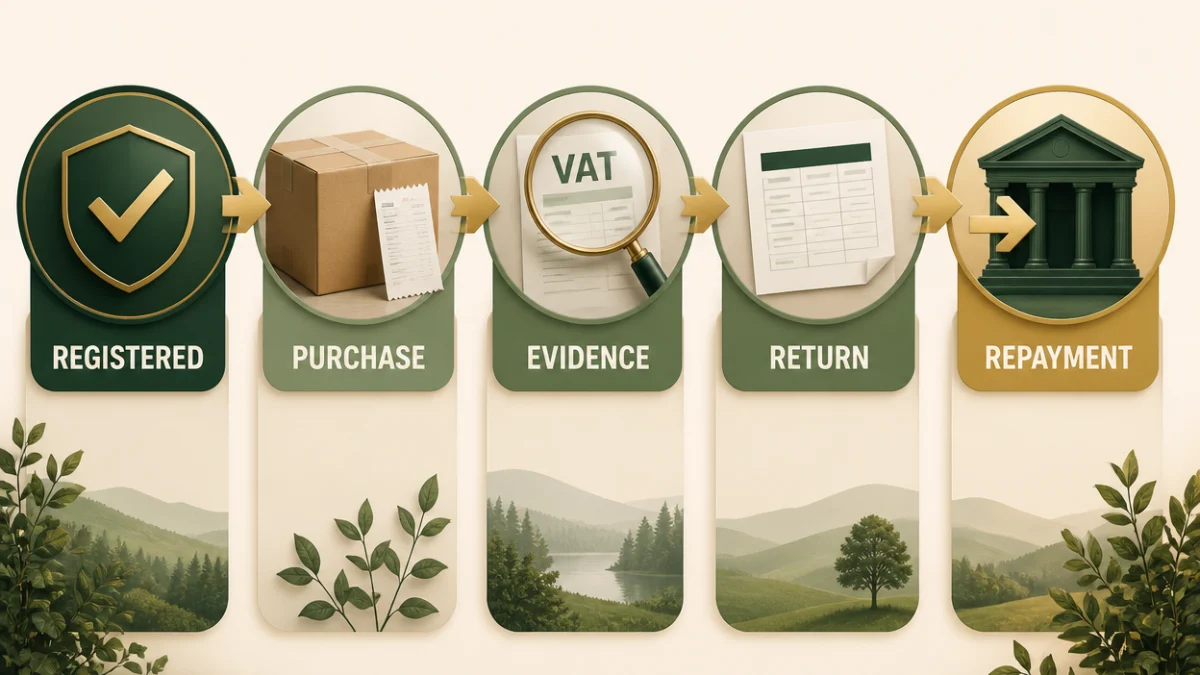
You normally need to be VAT registered, or be making a permitted pre-registration claim after registering. The business structure is not the deciding factor. A sole trader, partnership or limited company can all reclaim input VAT when the normal conditions are met.
The current UK VAT registration threshold is more than £90,000 of taxable turnover in the previous 12 months, or an expectation that taxable turnover will exceed £90,000 in the next 30 days. Voluntary registration is possible below that figure. Registration also means accounting for VAT on taxable sales, keeping the required records and submitting VAT Returns. You cannot register just to recover VAT while quietly leaving VAT off taxable customer invoices.
If you are weighing up voluntary registration, our VAT registration service can help you compare the likely output VAT, input VAT, customer mix and extra record keeping. A business selling mainly to VAT-registered customers may experience the pricing change differently from a consumer-facing business where customers cannot recover the VAT.
The purchase must also relate to the business’s taxable supplies. HMRC describes input tax as VAT on goods or services that form a cost component of taxable supplies in its input tax principles. That is why the same item can have a different answer depending on what the business does and how the item is used.
Taxable, zero-rated and exempt supplies are not the same
Zero-rated supplies are still taxable supplies, even though the rate is 0%. Costs connected with them can normally be part of an input tax claim. Exempt supplies are different. If your business makes both taxable and exempt supplies, the partial exemption rules may restrict the amount you can recover.
That is an area where a simple percentage can be misleading. A consultancy that makes only standard-rated supplies has a different starting point from a business with exempt finance or property income. If exempt income is part of your business, check the HMRC guidance on reclaiming VAT for business expenses before treating all purchase VAT as recoverable.
Your VAT scheme changes the calculation
Under the standard VAT scheme, you identify the input VAT shown on eligible purchases. Under the Cash Accounting Scheme, the timing follows the scheme’s cash rules. Under the Flat Rate Scheme, you generally cannot reclaim VAT on purchases except for certain capital assets costing £2,000 or more, including VAT. Our guide to the VAT Flat Rate Scheme in 2026 explains why a normal input VAT list cannot simply be carried across to that scheme.
How to claim VAT back on business expenses, step by step
1. Confirm the VAT status of the business and supplier
Check your effective VAT registration date before reviewing old purchases. For each supplier, check that VAT has actually been charged and that the supplier’s details appear on the invoice. A business expense from a non-registered supplier can be genuine, but it does not contain UK input VAT for you to reclaim.
Do not add VAT to your own sales invoices until you are entitled to charge it. If you have received a VAT number but are unsure which date applies, ask your accountant or HMRC rather than guessing. The effective date controls which sales and purchases belong in the VAT records.
2. Match every claim to a business purpose
Ask what the purchase does for the business and whether it is used to make taxable supplies. Office equipment, stock, software subscriptions, professional fees and advertising often pass this first check when they are genuinely business costs. A personal purchase that happens to be useful at work does not automatically become a full VAT claim.
Keep a short note for unusual items. “Laptop for client work, 80% business use” is more useful than a receipt sitting in an expense folder with no context. For a mixed-use purchase, record how you reached the business percentage and review it if the use changes.
3. Check the evidence before entering the number
The amount to reclaim is the VAT shown on acceptable evidence, not a guess based on the gross total. A valid VAT invoice is the usual evidence. A small retailer may issue a less detailed invoice for a VAT-inclusive supply of £250 or less, but a document still needs to meet the relevant VAT rules.
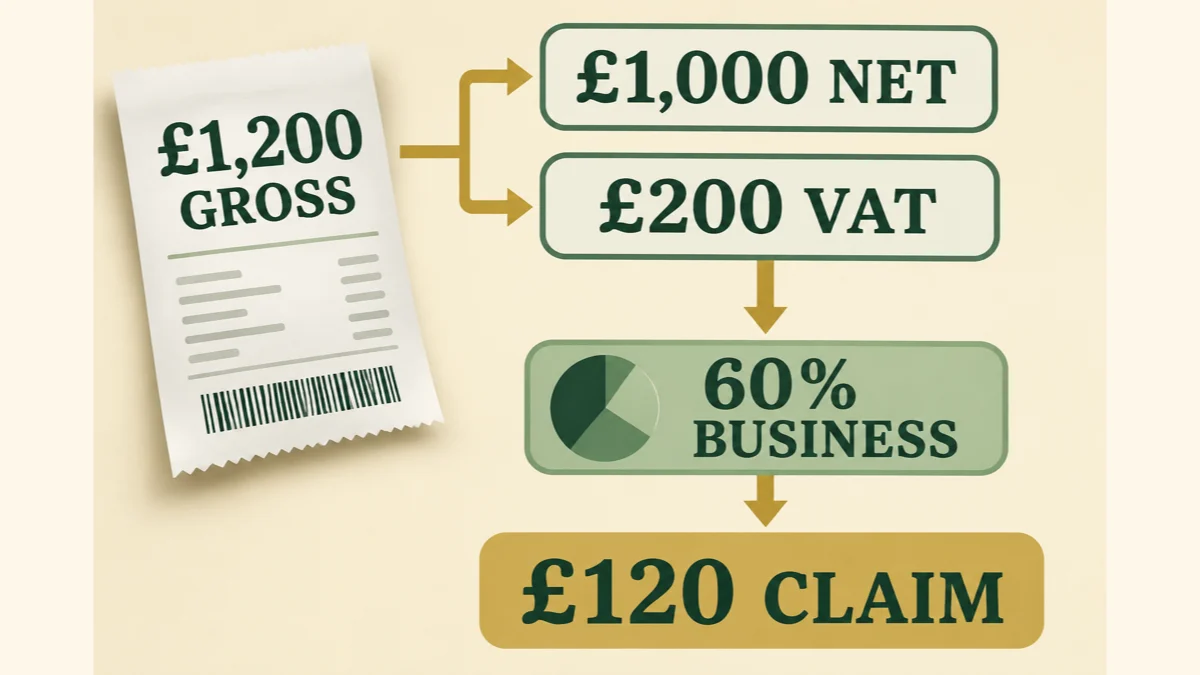
If the total including standard-rate VAT is £1,200, the net amount is £1,200 ÷ 1.2 = £1,000 and the VAT is £200. If the receipt shows only £1,200 with no VAT information and the supplier cannot issue acceptable evidence, do not reverse-engineer a £200 claim just because 20% is common.
4. Apportion private or non-taxable use
If a purchase is partly for business and partly personal use, claim only the fair business element where the rules permit. You need a reasonable method and records to support it. Mileage logs, usage records, floor-area calculations or a written explanation may be relevant, depending on the item.
Suppose a £1,200 computer invoice contains £200 of VAT and you use the computer 60% for taxable business work. The starting input VAT is £200. A simple business-use calculation gives £200 × 60% = £120 to consider for recovery, subject to the facts and any special rules. The remaining £80 is not input VAT for the business claim.
5. Record the purchase in the VAT account and software
Record the supplier, invoice date or tax point, net value, VAT amount, VAT rate, category and the business-use adjustment. Keep the invoice with the transaction. If you use accounting software, make sure the VAT code matches the actual treatment rather than accepting the software’s suggestion without checking it.
VAT-registered businesses are generally required to keep certain VAT records digitally under Making Tax Digital for VAT, unless an exemption applies. The GOV.UK VAT records guidance explains what must be kept and linked. The digital record needs to preserve the link between the transaction and the figures submitted. A spreadsheet can be part of a compliant process, but copying a total into a return with no supporting trail is not a good control.
6. Submit the VAT Return and keep the reconciliation
Before submission, reconcile the input VAT total to the invoices and the VAT account. Compare the return to the previous quarter and investigate a sharp change. A refund is not suspicious by itself, especially after buying stock or equipment, but you should be able to explain it.
HMRC usually processes VAT repayments automatically after a return. GOV.UK says repayments are usually made within 30 days of HMRC receiving the return, but a check can take longer. Check your business tax account and respond promptly if HMRC asks for invoices or a calculation.
What evidence do you need for a VAT claim?
For a full VAT invoice, look for the supplier’s name, address and VAT registration number, a unique invoice number, the invoice date, the tax point where different, a description of the goods or services, the net value, the VAT rate and the VAT amount. HMRC’s VAT invoice guidance sets out the full requirements. The customer details also matter, particularly for higher-value or unusual purchases.
You cannot normally reclaim VAT using a pro-forma invoice, statement or delivery note. A card receipt can prove payment, but it does not always contain the VAT information required to support input tax. Ask the supplier for a proper VAT invoice while the transaction is recent.
The invoice should support the business making the claim. If an employee or director paid personally, keep the expense claim, reimbursement record and supplier evidence together. If the document is addressed to a different person or entity, do not assume the company can claim it without checking the facts.
You also need evidence that the supply took place and that you paid for it. If you reclaim VAT on goods or services that you have not paid for and the rules require a later adjustment, HMRC may require a repayment of the VAT previously reclaimed. Keep credit notes and corrected invoices with the original record rather than deleting the first version.
Which business expenses let you claim VAT back?
The answer depends on the item, the use and your VAT scheme. This table gives a starting point, not a blanket approval.
| Purchase | Usual starting position | What to check |
|---|---|---|
| Stock, materials and software | Often recoverable | Taxable business use, VAT invoice and correct VAT rate |
| Advertising and professional fees | Often recoverable | The service is for the registered business and the supplier charged UK VAT |
| Customer meals, theatre tickets and hospitality | Usually blocked | Business entertainment rules normally prevent recovery |
| Staff event or team activity | May be recoverable | Employee benefit, not director-only entertainment or customer hospitality |
| Car purchase | Usually blocked | Exclusive business use or a specific exception may change the result |
| Car hire or lease | Special rules | A 50% restriction often applies to a lease or hire charge where there is private use |
| Fuel and vehicle running costs | Depends on use | Fuel scale charge or detailed business mileage may be relevant |
| Home office costs | Business proportion only | Use a fair, documented method and keep the supporting bill |
| Flat Rate Scheme purchases | Usually not recoverable | Certain capital assets over £2,000 are an exception |
Business entertainment
VAT on entertaining customers, potential customers and other non-employees is normally blocked, even when the meeting is intended to win work. Employee entertainment can be recoverable when it is provided for staff, but a meal or event for only the directors, partners or sole proprietor needs a closer look. If staff and customers attend the same event, separate the relevant parts where possible.
Cars, fuel and travel
Normal passenger cars are a common source of overclaims. HMRC may allow full recovery on a new car used only for business, or on a car mainly used as a taxi, driving-school vehicle or self-drive hire car. That is a narrow set of facts. A car that travels between home and work is not automatically business-only.
Leasing and hire have their own restrictions. HMRC says a business can usually reclaim 50% of the VAT on a car hire charge where private use is possible, while running costs such as repairs and maintenance may be treated separately. Fuel can involve a choice between reclaiming the business fuel with detailed mileage records or reclaiming all the VAT and accounting for the fuel scale charge. Keep the mileage and ask for help if the numbers are material.
Can you claim VAT from before registration?
Often, yes, but the time windows and use conditions are important. GOV.UK says you can reclaim VAT paid on:
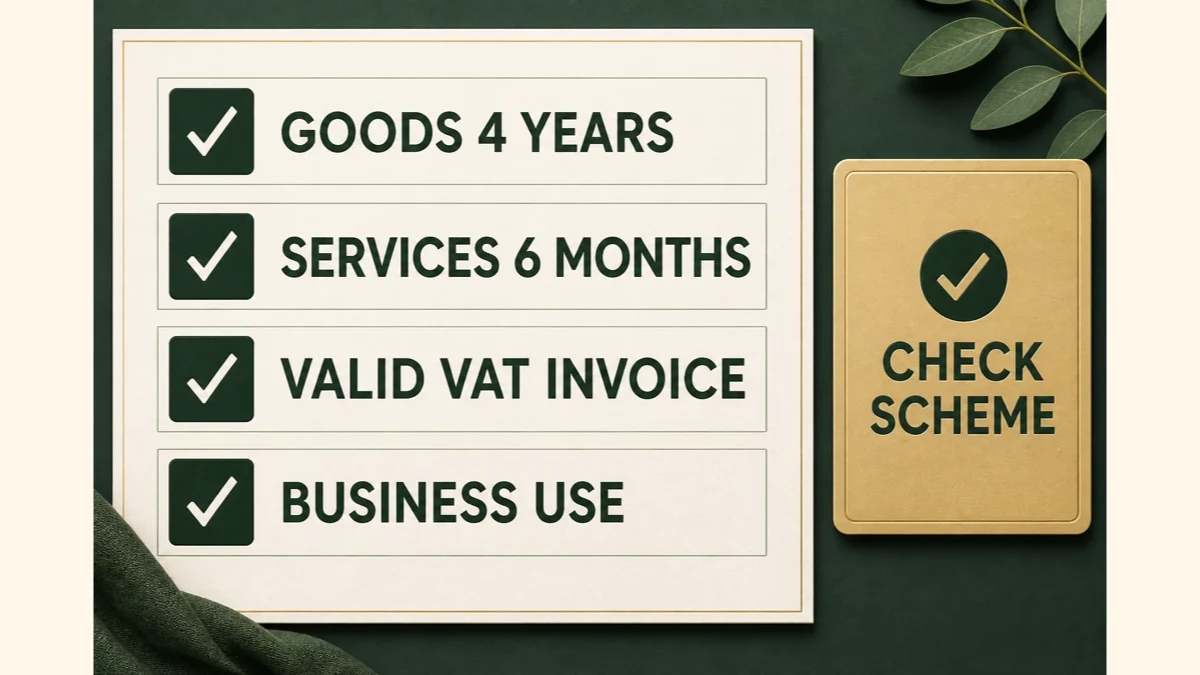
- goods bought within four years before registration, where you still have the goods or they were used to make other goods that you still have
- services bought within six months before registration
The purchases must relate to the business that is now VAT registered and to taxable business supplies. You cannot treat every old receipt as a pre-registration claim simply because it is in the four-year period.
Here is a worked example. A business registers for VAT on 1 September 2026. It has:
- a £1,200 computer bought on 12 October 2024, still used in the business, with £200 VAT shown on the invoice
- a £600 bookkeeping service bought on 15 March 2026, with £100 VAT shown
- a £900 website service bought on 10 January 2025, with £150 VAT shown
The computer is within the four-year goods window and is still held for the business. The bookkeeping service is within the six-month services window. The website service is outside the six-month services window, so it would not normally qualify as a pre-registration service claim. If the first two purchases meet the other rules, the starting claim is £200 + £100 = £300, before any business-use or scheme adjustment.
Keep the original invoices and a schedule showing the purchase date, VAT amount, registration date, business purpose and treatment. If stock has been sold, consumed or used privately before registration, the answer may change.
Common VAT reclaim mistakes to avoid
The same errors appear in small-business records again and again. A short review before filing can prevent an overclaim and a long explanation later.
- Claiming VAT without being registered. A business can be below the compulsory threshold and still register voluntarily, but it cannot reclaim input VAT before it has a valid route to do so.
- Treating every receipt as a VAT invoice. A receipt may show a total without showing recoverable VAT. A pro-forma invoice, statement or delivery note is not enough on its own.
- Claiming the gross amount. If a standard-rate invoice totals £1,200 including VAT, the input VAT is £200, not £1,200.
- Ignoring private use. A laptop, phone, vehicle or home cost may need an apportionment. Keep the method and update it when the use changes.
- Using the standard rules on the Flat Rate Scheme. Check the scheme before entering input VAT, especially for equipment or other capital assets.
- Missing the pre-registration window. Four years applies to qualifying goods, while six months applies to services. They are not interchangeable.
- Claiming hospitality for customers. A business meeting can be commercially sensible and still be blocked for VAT.
- Double-counting recovered VAT. Keep your income tax or Corporation Tax records consistent with the VAT treatment. Recovered VAT is normally not part of the business cost, while irrecoverable VAT may need a different treatment.
- Forgetting credit notes and unpaid invoices. A refund, cancellation or unpaid supply can change the input tax that remains claimable.
If a return has already been submitted with a possible error, do not quietly change the next quarter’s figures without checking the correction rules. Start with the VAT account, identify the original transaction and calculate the net difference. Our bookkeeping service can help rebuild a missing purchase trail, and our VAT returns service can review the correction route.
A practical VAT claim checklist
Before you submit, ask:
- Was the business VAT registered on the relevant date?
- Is the supplier VAT registered, and does the evidence show VAT?
- Does the purchase support taxable business supplies?
- Is the VAT invoice valid, rather than a pro-forma, statement or delivery note?
- Is any private or exempt use excluded or apportioned?
- Does the VAT scheme change the claim?
- Are pre-registration dates within four years for goods or six months for services?
- Does the input VAT in the return agree with the VAT account and supporting invoices?
- Are repayments, credit notes, imports or unusual items explained in the working papers?
If the answer to all nine is clear, the claim is usually in a much better place. That does not remove the need to follow special rules for partial exemption, vehicles, imports, property, finance or large capital purchases. It does give you a sensible base for the return.
FAQs about claiming VAT back in the UK
Can a sole trader claim VAT back?
Yes. A sole trader can reclaim input VAT when the business is VAT registered, the purchase is for taxable business activity and acceptable evidence supports the claim. Sole trader status does not prevent a VAT claim, but registration also means charging and reporting VAT on taxable sales.
How do I claim VAT back from HMRC?
Record eligible input VAT and include it in the relevant VAT Return. HMRC compares output VAT with input VAT, and a repayment normally arises when the eligible input VAT is higher, after other return figures and adjustments are considered.
Can I claim VAT from before I registered?
Qualifying goods bought within four years and services bought within six months before registration may be claimed, subject to the goods, business-use and taxable-supply conditions. Keep the original VAT invoices and a pre-registration schedule.
Can I reclaim VAT without a VAT invoice?
Usually not. A valid VAT invoice or another accepted form of evidence is normally needed. Ask the supplier to replace a pro-forma invoice, statement or delivery note with the correct VAT invoice before claiming.
Can I claim VAT on business entertaining?
VAT on entertaining customers and other business contacts is normally blocked. Employee entertainment can be recoverable in the right circumstances, but director-only entertainment and mixed staff/customer events need a careful split.
Can I claim VAT on a car?
Usually not on a normal car purchase. Full recovery may be possible for exclusive business use or specific uses such as taxi, driving instruction or self-drive hire. Hire, leasing, fuel and running costs follow separate rules.
How long do I have to keep VAT records?
VAT records normally need to be kept for at least six years. You should also preserve the invoices, calculations and digital links that explain each claim, particularly where a repayment or unusual purchase could prompt a question.
The practical next step is to export your purchase list for the relevant VAT period, mark each item as eligible, blocked, apportioned or needing evidence, then reconcile the result to your VAT account. If that list contains a large pre-registration claim or mixed-use items, send it with the invoices to our contact page before the return deadline so the treatment can be checked while the evidence is still available.

About Golden Tree Consulting
ACCA Affiliated | MBA Qualified
Golden Tree Accounting & Business Consulting provides expert tax, bookkeeping, and advisory services to sole traders and SMEs across Croydon, London, Surrey, and Kent. With multilingual support and decades of combined experience, we help businesses stay compliant and grow.
Offices in Croydon and London Bridge.
Related guides
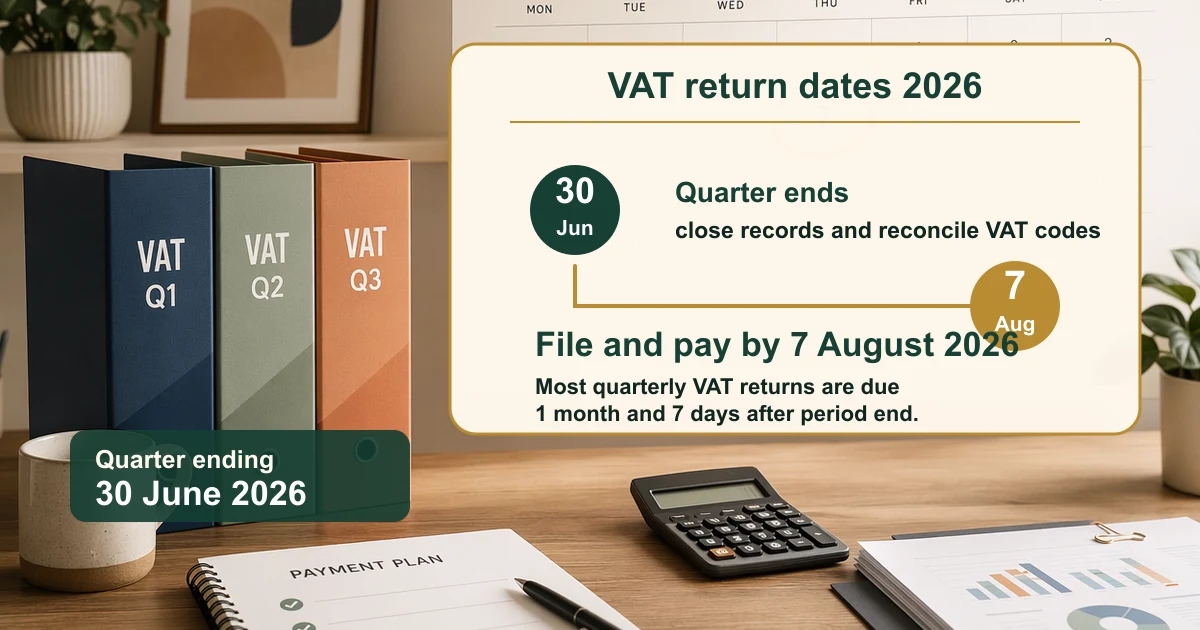
VAT Return Dates 2026/27: UK Quarterly Deadlines for Small Businesses
VAT return dates for 2026/27 explained for UK small businesses: the next quarterly deadlines for every stagger, payment rules, how to submit, fixing errors and penalties.
VAT Cash Accounting Scheme UK: 2026 Guide for Small Businesses
VAT Cash Accounting Scheme UK rules for 2026, with thresholds, cash-flow examples, eligibility checks, and record-keeping tips.
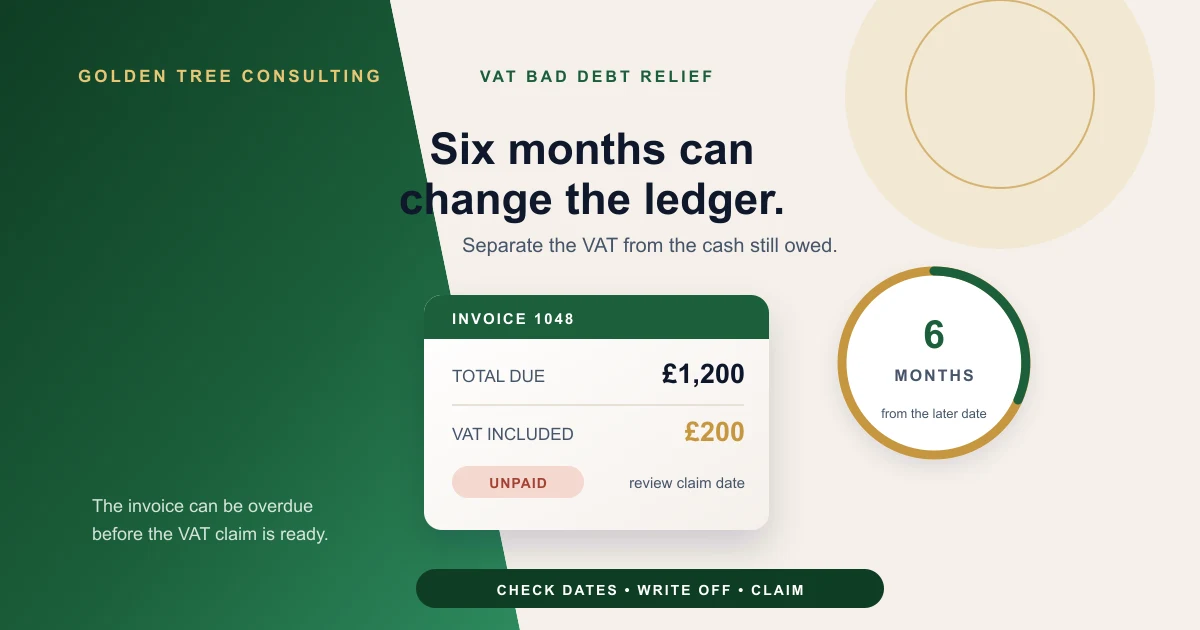
VAT Bad Debt Relief UK 2026: How to Reclaim VAT on Unpaid Invoices
VAT bad debt relief UK 2026 explained: check the six-month rule, calculate the VAT on unpaid invoices, claim it on your return and keep the right records.