VAT Online Marketplace Rules UK: 2027 Guide for Small Sellers
VAT online marketplace rules in the UK change from October 2027. See the £90,000 per-platform test, exclusions and checks for small sellers.
 Golden Tree Accounting 6 November 2026 18 min read
On this page Show
- VAT online marketplace rules UK: what changes in 2027?
- Who is affected by the marketplace VAT change?
- The £90,000 marketplace threshold is not the VAT registration threshold
- Three practical examples for small sellers
- Will the marketplace VAT change increase tax bills or prices?
- What marketplace sellers should do before October 2027
- What is still waiting for final guidance?
- VAT online marketplace rules UK: common questions
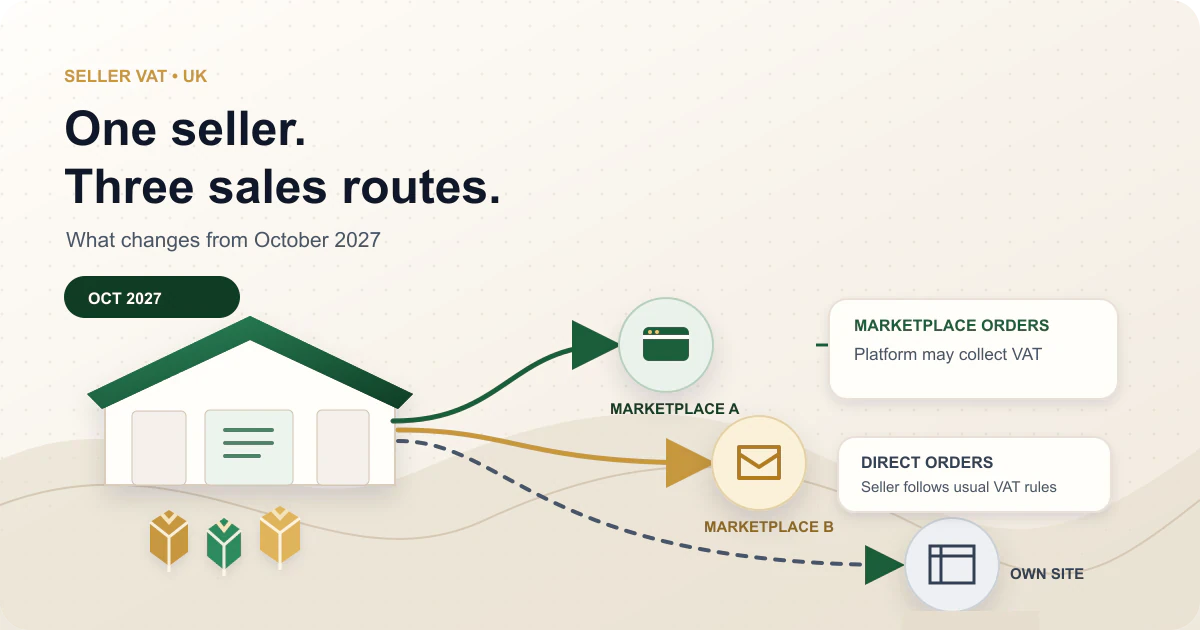
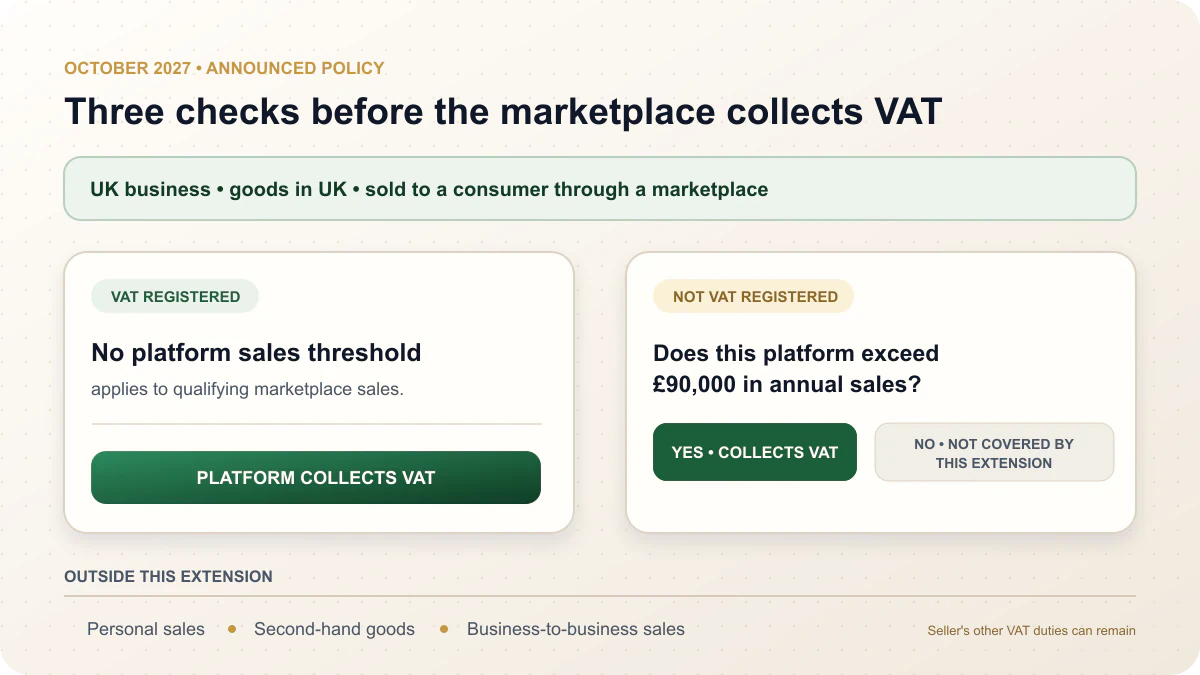
The VAT online marketplace rules UK sellers need to know are due to change from October 2027. The government plans to make online marketplaces collect VAT on qualifying sales of goods by UK businesses to consumers. A VAT-registered seller will be covered on relevant marketplace sales, whatever the sales total on that platform. A seller who is not VAT registered may also be covered if annual sales on one marketplace exceed the announced £90,000 threshold.
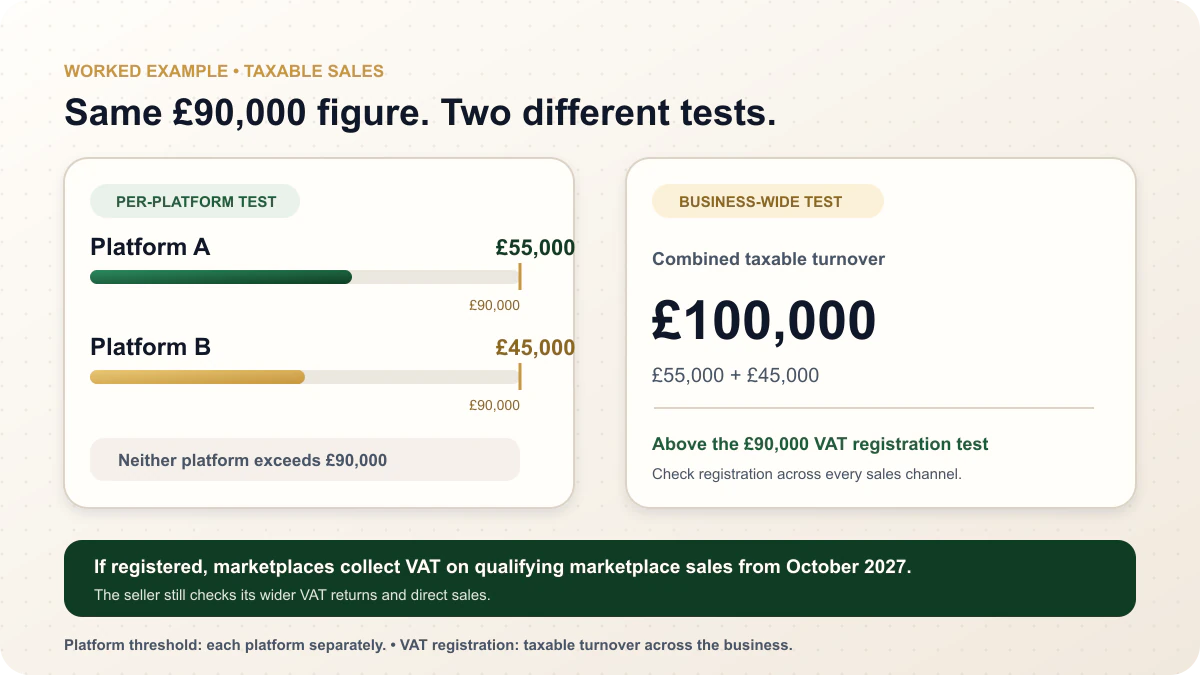
The £90,000 figure needs careful handling. It is also the current VAT registration threshold, but the two tests are different. The marketplace test is applied separately to each platform. The VAT registration test looks at the business’s taxable turnover across its channels. If you sell through two marketplaces and your own website, do not treat the platform threshold as permission to ignore the wider VAT rules.
At a glance: the planned start is October 2027. The government has announced £90,000 a year per platform for sellers who are not VAT registered. VAT-registered sellers are in scope for qualifying marketplace sales without that platform threshold. Personal sales, second-hand goods and business-to-business sales are excluded from this extension. The detailed accounting steps are still being developed.
VAT online marketplace rules UK: what changes in 2027?
Today, UK businesses generally account for VAT on their own taxable sales. The Budget 2026 announcement extends the existing online marketplace rules so that a platform will collect VAT on certain sales by UK-based businesses. The change applies to goods located in the UK when sold to a consumer through an online marketplace. It does not cover every sale made by every online business.
An online marketplace lets other businesses offer goods to customers through its website or app. HMRC’s current guidance describes how marketplace VAT rules work for goods sold by overseas businesses and low-value imports. The new extension brings some UK business sales into the platform collection rules as well. See the GOV.UK factsheet on the new VAT marketplace rules and the HMRC policy paper explaining the extension.
For example, a maker selling a new product to a private customer through a marketplace may have the VAT on that sale collected by the platform once the change applies, if the seller meets the conditions. A separate sale through the maker’s own website does not become a marketplace sale simply because the business also has an Etsy or Amazon shop. That direct sale remains part of the seller’s VAT records and existing VAT obligations.
The government says the policy is intended to address VAT non-compliance and competition between businesses. For a compliant seller, the practical change is about which party accounts for VAT on particular marketplace transactions. It does not remove the need to keep sales records or submit any VAT returns that remain due. The platform’s reports and the seller’s books will need to agree, even if the VAT on some orders is reported by the marketplace.
Who is affected by the marketplace VAT change?
The announced extension is aimed at UK businesses selling goods to consumers through online marketplaces, where the goods are in the UK at the point of sale. The marketplace collection rule will apply if the business is VAT registered. It can also apply to a business that is not VAT registered when its annual sales on an individual marketplace exceed the announced £90,000 minimum platform threshold.
| Seller or transaction | What the government has announced |
|---|---|
| UK business registered for VAT | Marketplace collects VAT on qualifying sales through that marketplace, even below £90,000 on that platform. |
| UK business not registered for VAT | Marketplace collection applies if annual sales on that individual platform exceed £90,000. |
| Occasional personal sale | Personal sales, such as clearing household belongings, are outside this business rule. |
| Sale of second-hand goods | Excluded from the new marketplace collection rule. A VAT-registered seller continues to account for VAT under the rules that already apply. |
| Sale to another business | Business-to-business sales are excluded from this extension. |
| Sale through the seller’s own website | Not a marketplace sale under this rule, so the seller continues to follow the normal VAT treatment. |
The table reflects the Budget announcement and current factsheet, not a final operating manual. The final rules need to explain how marketplaces identify sellers and transactions, how returns and refunds are handled, and what information a seller will receive. HMRC says it will publish detailed guidance before implementation. Do not assume your marketplace’s current payout report will show the new VAT information in the same way as it does now.
The exclusions also need to be read narrowly. Selling a few personal belongings is different from running a business that trades in second-hand goods. Personal sales are outside the policy. Business sales of second-hand goods are also excluded from marketplace collection under the extension, but a VAT-registered business must continue to account for them under its existing VAT treatment. A dealer using a second-hand goods margin scheme should not change that process based on a headline about marketplaces.
If you sell services, rather than goods, through a platform, this particular announcement does not set out a new collection rule for those services. Digital services and other cross-border supplies can have their own VAT rules. Check the treatment with an accountant before applying a goods policy to a service transaction.
The £90,000 marketplace threshold is not the VAT registration threshold
The same amount appears in two places, which makes it easy to confuse them. The new minimum platform threshold is announced as £90,000 of annual sales on an individual marketplace. The existing VAT registration threshold applies to a business’s taxable turnover overall. HMRC’s registration test generally looks at whether taxable turnover has exceeded £90,000 in the previous 12 months, or whether the business expects it to exceed £90,000 in the next 30 days. The GOV.UK VAT registration guidance explains the current tests.
Your VAT registration calculation can include taxable sales from several marketplaces, your own website, a shop, services and other taxable activity. The marketplace threshold is measured per platform under the Budget announcement. A seller could therefore have less than £90,000 on each marketplace while still passing the ordinary VAT registration threshold across the whole business.
Worked example: two platforms, two separate tests
Suppose a UK business sells taxable goods worth £55,000 through Marketplace A and £45,000 through Marketplace B in a 12-month period. Neither platform individually exceeds £90,000. The platform threshold is not combined across A and B. But the business has £100,000 of taxable turnover before counting any other sales, so it has crossed the existing VAT registration threshold and should check whether it needs to be registered.
Once the business is VAT registered, the October 2027 marketplace rule applies to its qualifying sales on each marketplace, even though neither platform has individually passed £90,000. The VAT registration test and the marketplace collection test answer different questions. Keep both calculations and their dates in your records.
Do not wait for a marketplace to tell you that you have crossed its threshold before checking your VAT registration position. HMRC’s normal threshold is based on taxable turnover, not only marketplace receipts. It can include taxable supplies that are not made through a marketplace. The registration date may also depend on when the threshold was crossed or when you expected to cross it, so a retrospective total is not always enough to establish the correct date.
If you are already VAT registered, the platform threshold does not create a separate £90,000 allowance for each account. The new rule applies to your qualifying marketplace sales regardless of the value on an individual platform. Your sales outside marketplaces continue under the normal rules. Our VAT registration threshold guide explains the current registration test, while our Etsy seller tax guide covers the wider records and tax duties for a marketplace business.
Three practical examples for small sellers
The examples below use the policy as it has been announced. They do not replace a check of your own sales, VAT status or product type. The threshold rules and the reporting process may be clarified in later legislation and HMRC guidance.
A VAT-registered seller with small marketplace totals
Priya is VAT registered and sells handmade products through two marketplaces. Over the year she records £24,000 through one platform and £18,000 through the other. Each amount is below £90,000, but the new collection rule is not limited to sellers above that figure. From October 2027, each platform is expected to collect VAT on Priya’s qualifying sales made through it.
Priya still needs a complete record of orders, fees, refunds, postage, stock and direct sales. She will need to understand how each marketplace reports the VAT it collects and how those reports fit into her accounting records. The precise entries for VAT returns have not yet been published, so she should not make up a new bookkeeping code now. She can ask her software provider how it plans to identify marketplace VAT transactions once the final rules are available.
A seller below £90,000 on each platform
Omar is not VAT registered. He sells £38,000 through one marketplace and £22,000 through another. If his total taxable turnover across all channels stays below the normal VAT registration threshold and the announced platform threshold is implemented as described, neither marketplace would collect VAT under this new rule on those sales.
That does not grant a permanent exemption. If Omar’s sales grow, he must monitor the existing VAT registration tests. If he registers voluntarily or becomes required to register, his marketplace sales may fall within the rule even if each platform remains below £90,000. Sales through a direct website also matter to his VAT registration calculation, even though they are not marketplace sales.
A business with marketplace and direct sales
Leah runs a VAT-registered homeware business. She sells £42,000 through a marketplace, £28,000 through a second marketplace and £55,000 through her own website. Under the announced change, the marketplaces are expected to collect VAT on qualifying consumer sales made through their platforms. Leah remains responsible for the VAT treatment of the direct website sales and any other transactions that the rule does not cover.
Leah should keep sales reports separate by channel and reconcile them to bank receipts and platform fees. A payout is often net of commissions, refunds or other deductions, so it cannot be treated as gross sales without checking the report behind it. For wider record-keeping ideas, see our guide to how long to keep business records in the UK.
Will the marketplace VAT change increase tax bills or prices?
HMRC’s Budget policy paper says the measure does not increase VAT liabilities by itself. For a business already accounting for VAT correctly, the change is about which party collects and accounts for VAT on qualifying marketplace sales. A previously non-compliant seller may see VAT applied to sales that were not being reported, and the government notes that a seller could pass that cost on to customers. The official factsheet says most compliant businesses should not need to raise prices because of the change.
HMRC estimates that around 100,000 businesses may be affected. Its impact note expects marketplaces to collect and remit VAT on in-scope sales, while sellers may need to review listings, update software, give platforms evidence and revisit settlement arrangements. Some sellers could move into a VAT repayment position. The exact effect on your payout or VAT return depends on how the final platform reports orders, fees, refunds and VAT, so do not estimate it from a headline alone. Read the current HMRC policy paper and wait for platform-specific instructions before changing your routine.
Will a marketplace keep more of each payout?
It may change how money is shown or settled, but the final payout and reporting process is not set out in the factsheet. The policy paper flags cash flow and settlement arrangements as things businesses may need to review. Compare the platform’s gross order report with its fees, refunds and bank payout, then check the VAT section separately when the platform publishes its new report format. A lower net payout is not automatically a new tax cost; it may reflect VAT being remitted by the platform instead of by the seller.
What marketplace sellers should do before October 2027
The start date is about eleven months away. You do not need to change your prices or replace your accounting software today based on details that have not been finalised. You can make your records easier to check now, then review the final implementation guidance when HMRC and your marketplace publish it.
Keep a separate sales total for each platform. Export or save the platform’s sales report monthly. Record gross order value, refunds, discounts, fees, postage and the date of each transaction. The new threshold is platform-specific, and the final rules may explain exactly which figures and period count. A monthly total gives you a useful starting point without pretending that the measurement method is already final.
Check your total taxable turnover across all channels. Add taxable marketplace sales to direct website, shop and other taxable sales when reviewing VAT registration. Keep the date you crossed, or expect to cross, the relevant threshold. If your records use cash received instead of gross sale value, make sure the registration calculation is based on the correct VAT turnover rather than the net amount paid out by a platform.
Separate product and customer types. Mark personal sales, second-hand goods, business-to-business sales and consumer sales clearly in your records. Keep evidence of where goods are held at the time of sale if you sell from stock in more than one country. The announced extension is aimed at qualifying UK business sales to consumers of goods located in the UK, so a product or order label can help you see which transactions need closer review.
Ask each marketplace how it will report the change. The useful questions are practical: when will the platform start applying the rule, which transactions does it believe are in scope, how will it show VAT on order and settlement reports, how will cancellations and refunds appear, and where can you download the records? Wait for the platform’s written details and compare them with HMRC’s final guidance.
Ask your bookkeeping or software provider what will need to change. Do not settle for a general statement that a package is “ready”. Ask how marketplace-collected VAT will be identified in the sales feed, what happens to fees and refunds, how to reconcile gross orders to net payouts, and whether any manual review remains. If the provider cannot answer yet, note when it expects to update its guidance.
Our bookkeeping service can help you organise marketplace reports, direct sales and bank records into a clear monthly reconciliation. If you are unsure whether you have crossed the VAT threshold, our VAT returns team can review the turnover calculation and the records behind it.
What is still waiting for final guidance?
The government factsheet says that the marketplace threshold is £90,000 per platform and that the rules will apply from October 2027. The policy paper says the measure will be legislated for in Finance Bill 2026-27 and that later secondary legislation will set the threshold’s level and operation, the treatment of second-hand goods, the implementation date and other details. For now, use £90,000 as the announced figure, but do not treat every calculation detail as settled law.
The final rules need to explain how a platform identifies a seller’s annual sales, what happens when a seller has more than one account or business, how VAT is shown in a seller’s account and which records the seller must keep for its return. There may also be specific procedures for discounts, refunds, bundles, different VAT rates and goods stored outside the UK. HMRC says detailed guidance will be published ahead of implementation.
For businesses using the Flat Rate Scheme or a margin scheme, the new platform collection process may affect the way they reconcile receipts and report sales. The Budget factsheet does not provide the full transaction-level accounting method. Continue following the rules that apply now and ask your accountant to review any platform advice before changing your VAT return process. Our UK VAT invoice requirements guide covers the current evidence to keep for taxable sales and purchases.
There is also a difference between a policy announcement and a live marketplace setting. Even after the law is final, platforms may roll out seller notices, reports and account changes at different times. Save the notices you receive, compare them with HMRC guidance and keep a dated record of the first transactions affected. If the platform’s explanation does not match your seller status or product range, raise that question before filing the next VAT return.
VAT online marketplace rules UK: common questions
What are the new UK VAT rules for online marketplaces?
From October 2027, the government plans for online marketplaces to collect VAT on qualifying UK business sales of goods to consumers where the goods are in the UK. The rule applies to VAT-registered sellers and, under the announced £90,000 annual per-platform threshold, some sellers who are not VAT registered. Personal sales, second-hand goods and business-to-business sales are excluded from this extension.
Does the £90,000 marketplace threshold mean I do not need to register for VAT?
No. The marketplace threshold is a separate test for each platform. The existing VAT registration test looks at taxable turnover across the business, including sales through different platforms and direct channels. Check the rolling 12-month and next-30-day tests separately.
Will an online marketplace collect VAT on all my sales?
The announced rules cover qualifying sales of goods through the relevant marketplace. Sales through your own website and business-to-business sales are outside this extension, and the final accounting process is still to be confirmed. VAT-registered sellers will remain responsible for their other VAT obligations.
Are personal sales and second-hand items included?
Occasional sales of personal belongings are outside the announced business rules. Sales of second-hand goods are also excluded from marketplace collection under this extension. A VAT-registered business selling second-hand goods must continue to account for VAT under the rules that already apply to it.
Does the new rule apply to Etsy, Amazon and eBay sellers?
The policy is for qualifying sales made by UK businesses through online marketplaces. Etsy, Amazon and eBay are examples of platforms where businesses sell goods, but each seller should wait for the marketplace’s implementation details and HMRC’s final guidance before changing its VAT process.
When do the new online marketplace VAT rules start?
The government announced an October 2027 start. Finance Bill 2026-27 and later secondary legislation are expected to set the full rules, including how the threshold operates. Check HMRC guidance as the implementation date approaches.
Will the marketplace VAT change increase my tax bill or prices?
The HMRC policy paper says the measure does not increase VAT liabilities by itself, though VAT may be applied to sales by businesses that were not accounting for it before. A marketplace may change how VAT is shown in orders or payouts, so check its final seller guidance before changing prices or cash flow plans.
Before adjusting a listing price or VAT code, make one monthly sales schedule for every marketplace and compare the totals with your business’s full taxable turnover. That gives you a clear baseline for checking the final rules when HMRC publishes them.

About Golden Tree Consulting
ACCA Affiliated | MBA Qualified
Golden Tree Accounting & Business Consulting provides expert tax, bookkeeping, and advisory services to sole traders and SMEs across Croydon, London, Surrey, and Kent. With multilingual support and decades of combined experience, we help businesses stay compliant and grow.
Offices in Croydon and London Bridge.
Related guides
VAT Error Correction UK: How to Fix a Return After Filing
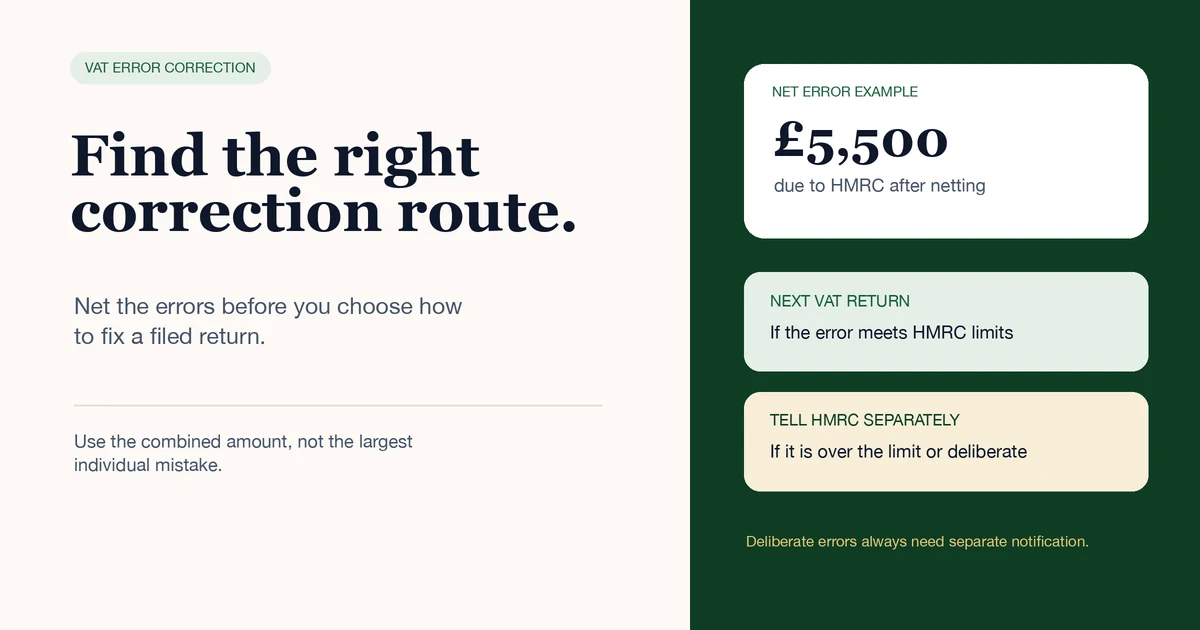
VAT error correction UK guide: learn when to adjust your next return, when to notify HMRC, how to calculate the net error and what records to keep.
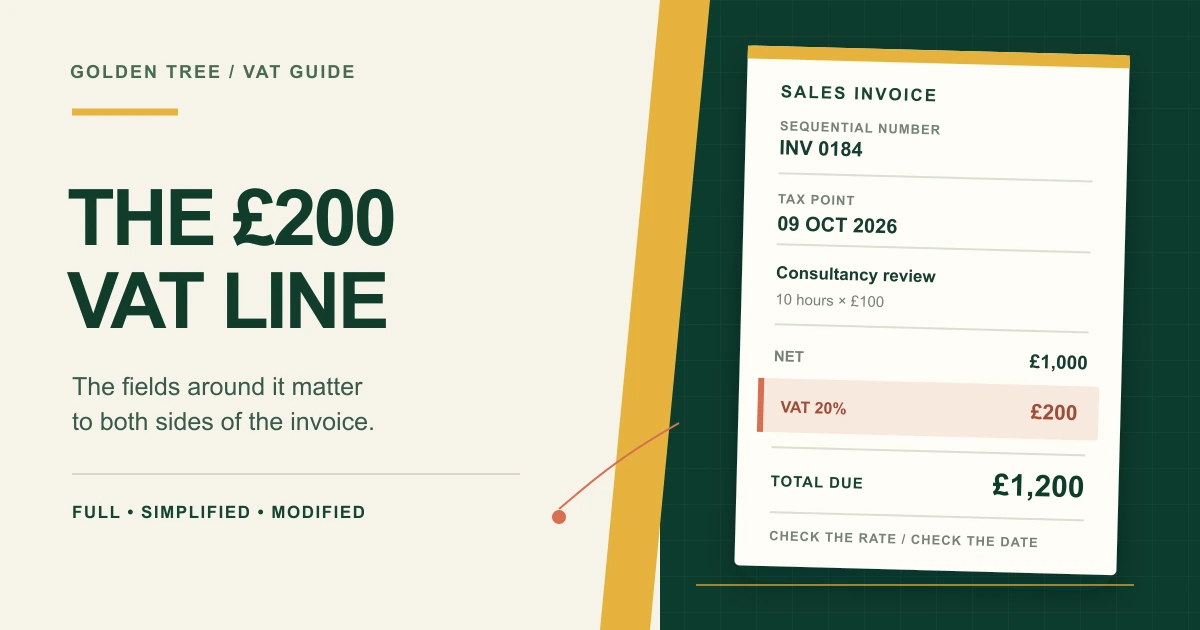
VAT Invoice Requirements UK: Full and Simplified Invoices in 2026
VAT invoice requirements UK explained for small businesses, including full and simplified invoices, the £250 threshold, VAT calculations and records.
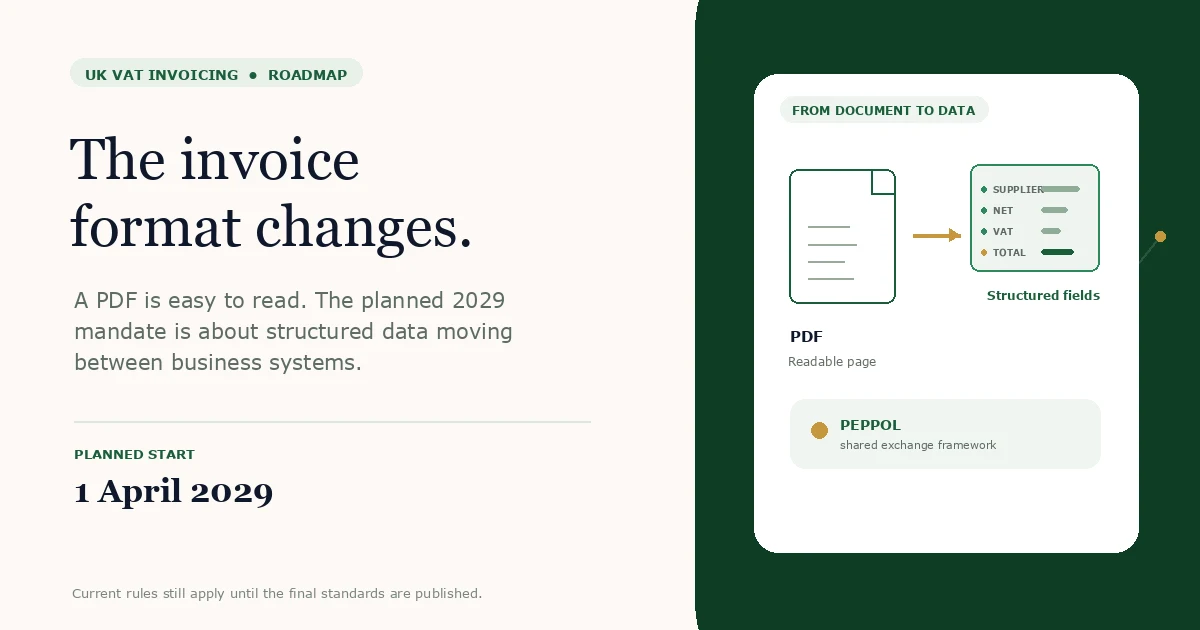
UK E-Invoicing 2029: What Small Businesses Need to Know
UK e-invoicing 2029: the planned VAT invoice mandate explained. Learn what counts, who is affected, what PDFs mean and how small businesses can prepare.